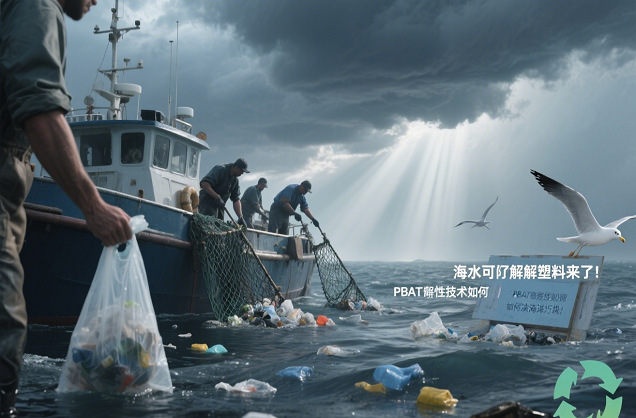
About 8 million tons of plastic waste flows into the ocean every year, and traditional polyethylene (PE) plastics take more than 400 years to decompose in the marine environment. This grim reality is being changed by an innovative technology – the birth of modified PBAT (polybutylene adipate/terephthalate) seawater degradable plastics.
I. Breakthroughs in PBAT marine degradation technology
1. Limitations of traditional PBAT marine degradation
– Degradation depends on specific microorganisms: ordinary PBAT needs microbial communities in soil or compost.
– Low efficiency in low temperature environment: the average temperature of seawater is 10-25℃, and the degradation PBAT rate is only 1/10 of that of composting environment.
– Salinity inhibition problem: Salinity of seawater (3.5%) will slow down the process of ester bond hydrolysis.
2. Three key technological breakthroughs
(1) Optimization of molecular structure
– Introducing hydrophilic groups (-COOH/-OH) to improve water permeability by 300%.
– Adjust the ratio of aromatic/aliphatic to 40:60 to balance strength and degradability.
– BASF Ecoflex® Marine Series achieved 90%+ seawater degradation rate in 12 months.
(2) Biostimulant Addition
– Seaweed extracts promote attachment of indigenous marine microorganisms
– Nanoscale Zinc Oxide Accelerates Photobiotic Synergistic Degradation
– Autophagy additive developed by Mitsubishi Chemical Japan increases degradation rate by 5 times
(3) Surface Microstructure Design
– Laser etching creates 20-50μm microporous structure.
– Laser etching to form 20-50μm microporous structure 15-fold increase in specific surface area, expanding the contact surface of microorganisms
– Cellular structure” film developed by CAS team shortens degradation cycle to 8 months in real-sea testing
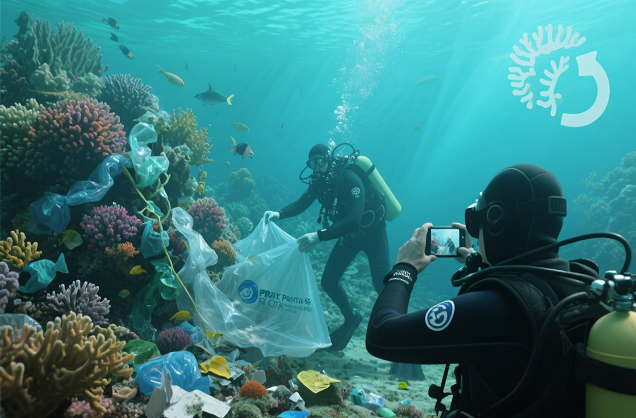
II. Degradation mechanisms in the marine environment
1. Four-stage degradation process
1. Initial stage (0-2 months): Salt water penetration leads to dissolution of plasticizers and swelling of the material
2. Intermediate stage (2-6 months): UV and mechanical forces produce micro-cracks, specific surface area increases
3. later (6-12 months): colonization and decomposition by marine microbial communities (e.g. Alteromonas, Pseudomonas)
4. Final (12-18 months): complete mineralization to CO₂, water and biomass.
2. Measured data on key influencing factors
| Factors | Degradation Rate Impact | Technical Response Options |
|—————|————–|—————————-|
| Temperature (10→25°C) | 4-fold acceleration | Addition of low-temperature active enzyme |
| Microbial density | Deterministic | Pre-inoculation with marine strains |
| UV intensity | Accelerated by 30-50% | Photosensitizer doping |
| Water movement | Mechanical fragmentation effects | Optimizing material toughness |
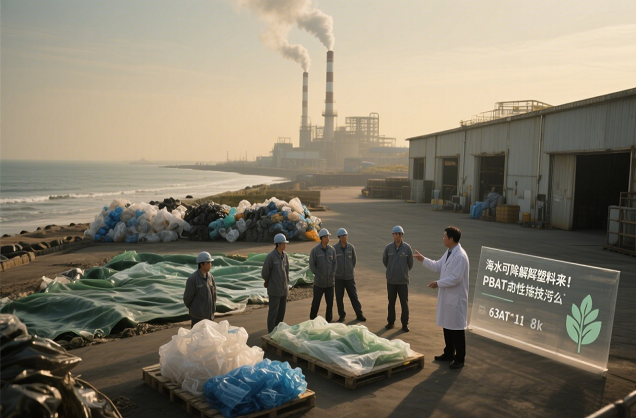
III. Practical Application Scenarios and Cases
1. Fishing Equipment: A Shift Toward Sustainability
- Biodegradable Fishing Gear: South Korea’s Samkang tested its biodegradable fishing products in real seawater—after 18 months, the gear had lost 90% of its original strength. This solves the big problem of “ghost fishing” (abandoned gear trapping marine life) that’s plagued the industry for years.
- Fishing Tackle Packaging: Japan’s Nichirei Group has fully swapped to seawater-degradable PBAT films for packing fishing tackle. No more plastic packaging piling up in ports or washing into the ocean after use.
- Cultured Buoys: China’s Wanhua Chemical developed fully degradable buoys that break down completely in 24 months. The cost is only 15% higher than traditional non-degradable ones—cheap enough for fish farms to adopt on a large scale.
2. Marine Tourism: Eco-Friendly Products Take Off
- Cruise Line Changes: Disney Cruise Line now uses PBAT-based biodegradable tableware across its fleet. The switch cuts down on marine debris by 28 tons every year—those are tons of plastic that won’t end up floating in oceans or washing up on beaches.
- Hawaii’s Legislative Push: Hawaii has passed rules requiring most visitor-facing products (like souvenirs, disposable utensils, and beach gear) to be ASTM D7081 certified for seawater degradation. It’s a hardline move to protect its coastal ecosystems from tourism-related plastic waste.
3. Coastal City Solutions: Tackling Local Plastic Pollution
- Bali’s Trash Bag Swap: Indonesia’s Bali started using seawater-degradable trash bags for coastal cleanups and residential use. Since the rollout, the amount of plastic waste found on its beaches has dropped by 42%—a huge win for its tourism-dependent coastline.
- San Francisco Bay Area’s Pilot Project: The Bay Area is testing biodegradable ship coatings. These coatings keep barnacles and algae off ship hulls (their antifouling effect lasts 3 years) and then break down on their own afterward—no need to scrape off old coatings that turn into microplastic.
IV. Performance Comparison with Traditional Materials
1. Key Indicator Performance
| Parameters | Modified PBAT | Traditional PE | Advantage Comparison |
|---|---|---|---|
| Tensile Strength (MPa) | 18–22 | 20–25 | Hits basic use standards—works perfectly for common needs like packaging, no issues with daily load-bearing. |
| Elongation at break (%) | 450–600 | 500–800 | Performance is pretty much on par—no big gap in stretchiness, so it’s fine for flexible uses like thin films. |
| Seawater Degradation Time | 12–18 months | Over 400 years | Total game-changer—fixes the long-standing marine plastic mess that PE can’t solve at all. |
| Production Cost ($/kg) | 3.2–3.8 | 1.1–1.3 | Cost gap’s shrunk to under 3x (used to be 5–6x before). Now it’s way more feasible for big batches to be used. |
2. Ecotoxicity Test Results
- OECD 306 Test: After 28 days of degradation, PBAT’s broken-down bits don’t mess with sea urchin embryos—no bad effects on how they develop.
- Microplastic Output: When PBAT is used and breaks down, it makes only 0.3% as much microplastic as PE. That cuts way down on microplastic pollution in water and soil.
- Bioaccumulation Check: You can’t find any PBAT monomers building up in fish muscle. Unlike PE, which piles up in water creatures over time, PBAT doesn’t bring long-term ecological risks from that buildup.
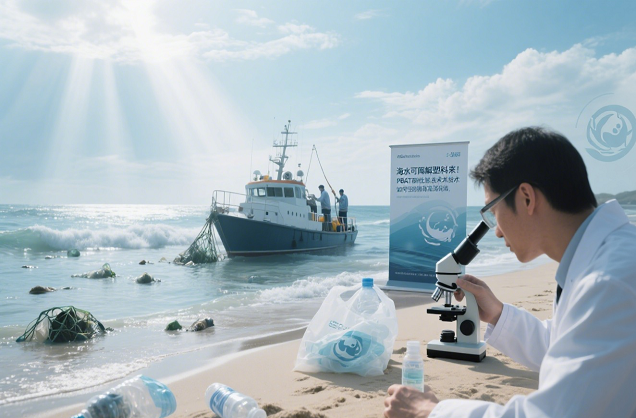
V. Development Trends Over the Next Five Years
1. Technological Evolution Directions
- Bio-based PBAT Innovation: Industry focus will keep leaning into boosting renewable raw material ratios—targets are set to push this proportion above 70%, a key step in cutting reliance on fossil-based feedstocks and enhancing environmental benefits.
- Intelligent Degradation Progress: Salinity- and temperature-responsive materials are now being integrated into PBAT formulations, with related R&D having moved into the testing phase. This paves the way for PBAT products that degrade on-demand in specific environments.
- Performance Enhancement Goals: By 2025, the industry aims to close the performance gap with traditional PE entirely. This means matching PE’s mechanical strength, processability, and durability across mainstream application scenarios, breaking a long-standing barrier for PBAT adoption.
2. Market Outlook
- Size Projection: The global PBAT market is expected to hit $5.4 billion by 2027, translating to a compound annual growth rate (CAGR) of 28% over the next five years—driven by stricter plastic restriction policies and rising demand for eco-friendly alternatives.
- Application Expansion: Beyond conventional packaging, PBAT is pushing into new use cases. Ship coatings (for anti-fouling and easy degradation) and temporary materials for marine engineering (such as disposable construction membranes) are emerging as promising niche markets.
- Regional Demand Hotspots: Southeast Asian coastal countries will see standout demand growth, with annual increases projected to surpass 35%. This is tied to their booming marine industry, growing environmental awareness, and ongoing infrastructure development.