In today’s rapidly evolving corporate landscape, Environmental, Social, and Governance (ESG) reporting has transitioned from a voluntary initiative to a critical business imperative. Among the various environmental metrics, carbon neutrality stands out as a particularly challenging yet essential target. While companies explore numerous pathways to reduce their carbon footprint, one solution is demonstrating remarkable potential: the strategic integration of biodegradable materials across business operations.
The Carbon Neutrality Imperative in ESG Frameworks
Carbon neutrality has become a centerpiece of corporate environmental strategies, driven by both regulatory pressures and growing stakeholder expectations. According to recent reports from leading sustainability organizations, companies with robust carbon reduction strategies are seeing improved investor confidence and enhanced market positioning. The challenge, however, lies in identifying solutions that deliver meaningful environmental benefits while maintaining economic viability.
Biodegradable Materials: Beyond Waste Management
Traditional approaches to biodegradable materials have focused primarily on their end-of-life advantages. However, their true value in carbon neutrality strategies extends much further:
- Reduced Carbon Footprint in Production
The manufacturing processes for advanced biodegradable materials, particularly those derived from renewable resources like PLA (Polylactic Acid) and PBAT (Polybutylene Adipate Terephthalate), typically generate significantly lower greenhouse gas emissions compared to conventional plastics. Life cycle assessment studies demonstrate reductions of up to 70% in carbon emissions during production phases. - Carbon Sequestration Potential
Plant-based biodegradable materials act as temporary carbon sinks during their growth phase. When managed within a circular framework, this carbon remains captured throughout the product lifecycle, contributing to net carbon reduction goals. - Energy Recovery Advantages
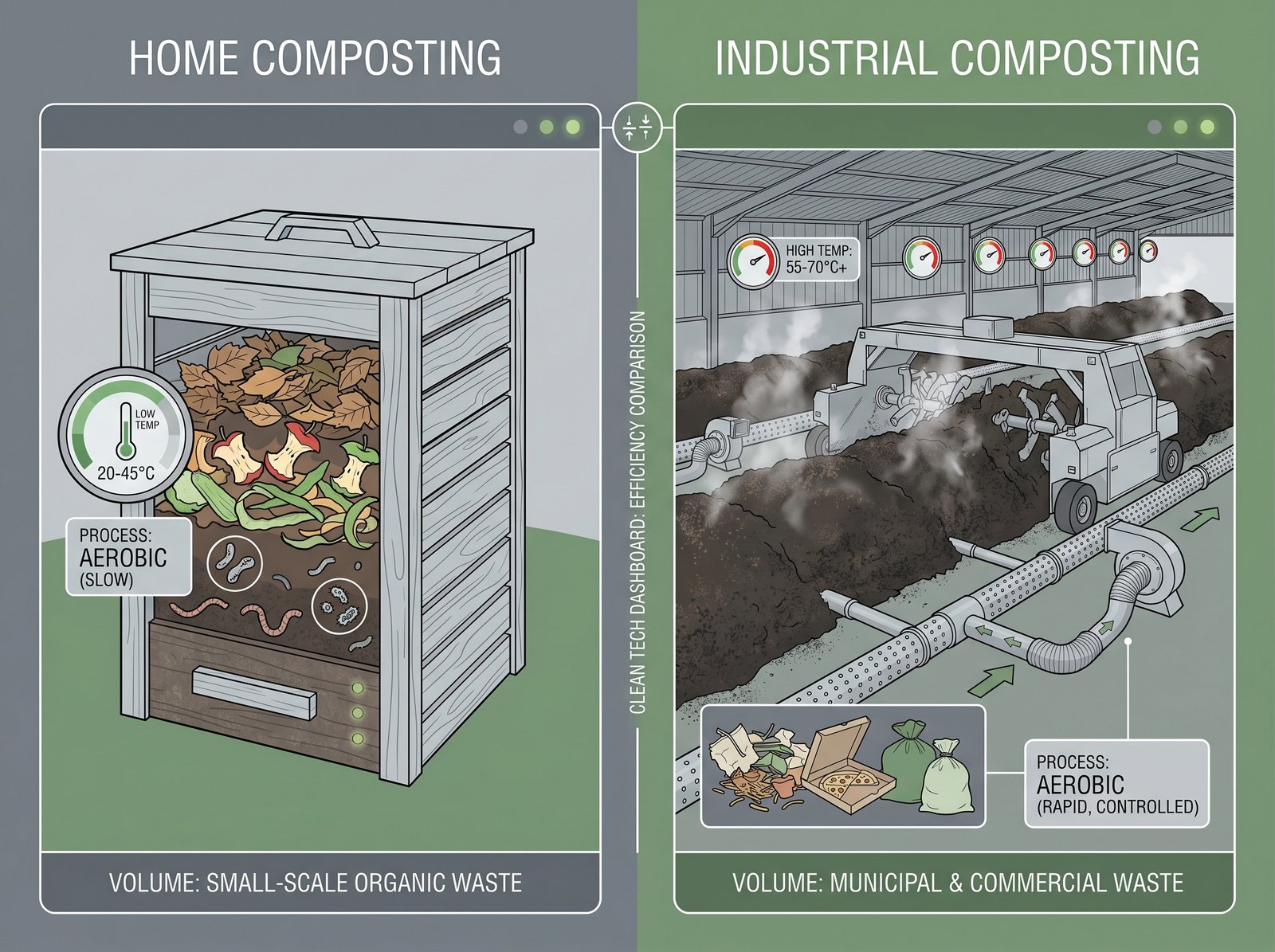
At end-of-life, properly managed biodegradable materials can be processed in anaerobic digestion facilities, generating renewable energy that displaces fossil fuel-based power generation.
Why are biodegradable materials key to ESG strategies?
According to the Global ESG Development Report 2024, more than 70% of listed companies have included “carbon neutrality” in their corporate strategies, with the carbon footprint of packaging materials becoming a key area of reduction. Biodegradable materials are becoming a “golden indicator” in corporate ESG reports due to their compostable properties and renewable raw materials.

Part I: How do biodegradable materials contribute to carbon neutrality?
1. Full Life Cycle Carbon Footprint Comparison (1 ton packaging material as an example)
Material Type Carbon Emission from Production (CO₂e) Carbon Emission from Degradation Process Total Carbon Emission
Conventional PP Plastic 3.2 ton +0.5 ton (incineration) 3.7 ton
Industrial Composting PLA 1.8 ton -0.3 ton (Carbon Sequestration) 1.5 ton
Nano-cellulosic composite 1.2 ton -0.6 ton (Soil Sequestration) 0.6 ton
(Data Source) (Data source: LCA 2024 database)
Key findings:
Up to 80% carbon reduction can be achieved using composted degradable materials
Even negative carbon emissions can be achieved when combined with renewable energy production (e.g. PLA from solar energy)
2. Three international standard certification schemes
ISO 14067: the gold standard for quantifying the carbon footprint of a product
PAS 2050: the British Standards Institution’s (BSI’s) specification for carbon-neutral management
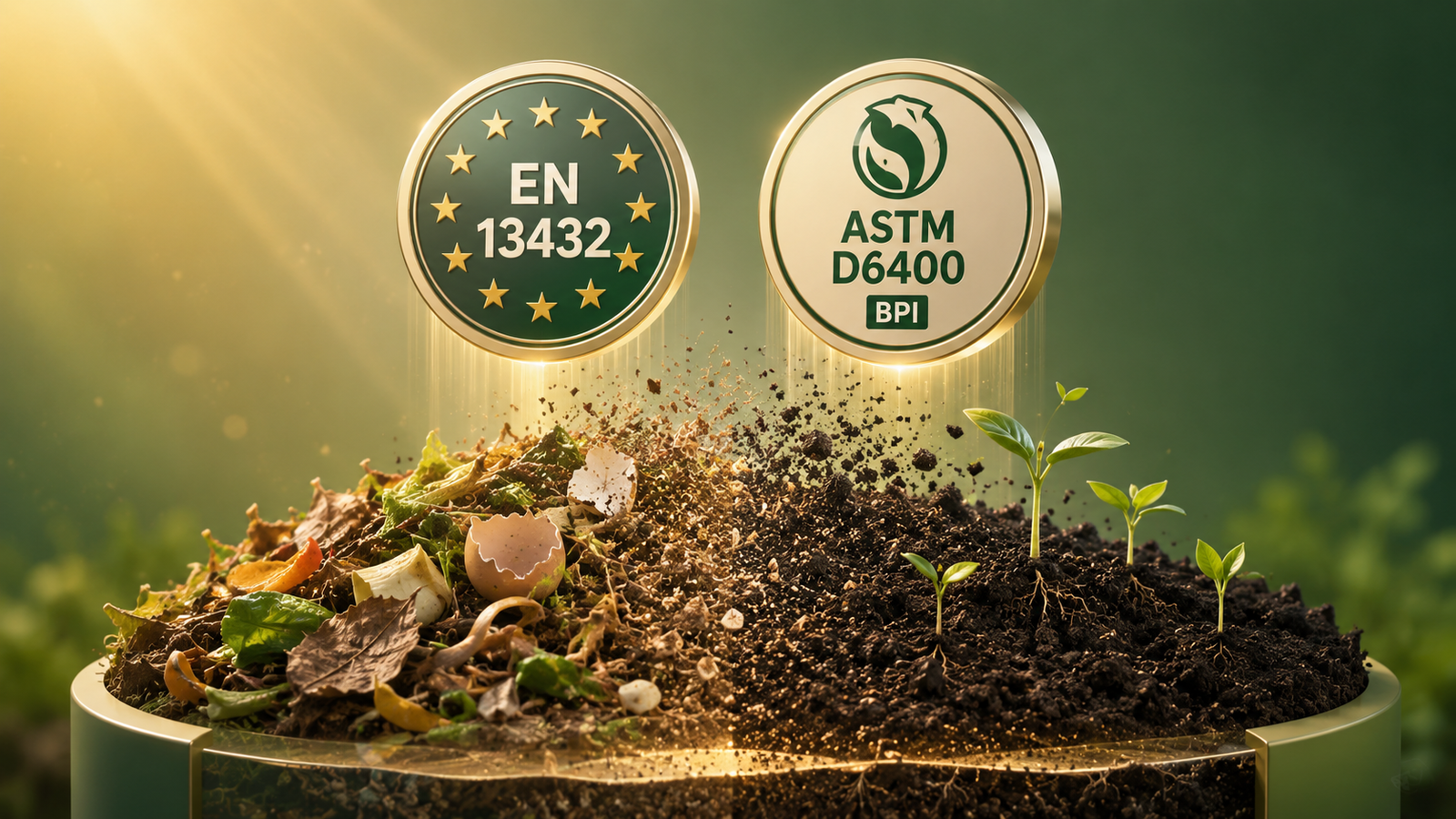
OK Compost INDUSTRIAL: Ensuring that materials degrade without producing methane

Part II: 5 Industry Benchmarking Cases
Case 1: Unilever – Biodegradable Tea Bag Program
Initiative: Replacement of Lipton tea bag material from PET to PLA+PBAT composite
ESG Benefits:
Annual carbon reduction of 12,000 tonnes (equivalent to carbon sequestration by 7,000 trees)
Achieved CDP Climate Change “A” rating in 2024 “A” rating from CDP Climate Change 2024
Case 2: Amazon – Compostable Courier Bags
Technology: Algae-based film + starch composite
Data highlights:
Degradation time reduced from 500 years to 6 months
Customer satisfaction increased by 22% (2024 research data)
Case 3: Starbucks – Fully degradable cup lid solution Innovation: 12,000 tons of carbon reduction (equivalent to 7,000 trees sequestering carbon) -Fully degradable cup lid solution
Innovation: heat resistance up to 100°C using nanocellulose-reinforced PLA
Business value:
Leads to $120 million investment from ESG funds
Listed in Dow Jones Sustainability Indexes

Part III: Beware of the Three Traps of “Fake ESG”
Trap 1: False Degradation Certification
Identification method: Check whether the certification number can be found on
BPI official website
TÜV Austria database
Trap 2: Carbon Offset Dependency
Correct practice: Prioritize the actual reduction of emissions (Scope 1&2), and the carbon offsets should not exceed 20% of the total reduction of emissions
Trap 3: Neglecting the back-end treatment
Typical case: a company claims to use PLA packaging, but 90% of the products are incinerated. A company claims to use PLA packaging, but 90% of the product ends up being incinerated
Solution:
Sign a partnership agreement with a local composting facility
Print QR codes for composting guidelines on product packaging

Part IV: Future Trends – Policies and Innovations
1. Global Policy Trends in 2025
EU: €0.8/kg “Carbon Border Tax” on non-degradable plastics
China: Mandatory disclosure of the proportion of biomaterials used by listed companies
California: Banning all non-compostable food packaging by 2030
2. Tracking the Frontier
Enzyme-promoted degradation technology: BASF’s enzyme formulation for rapid decomposition of PLA in 2 hours Enzymatic degradation: BASF’s 2-hour enzyme for rapid PLA decomposition
Carbon Negative Materials: Direct synthesis of PHA from atmospheric CO₂ developed at Cambridge University