Pseudo-environmentally friendly plastics are eating into corporate profits
2024 A new McKinsey study shows that companies using pseudo-environmentally friendly plastics bear an average of 23% more in hidden costs each year, often hidden in the supply chain, brand reputation and legal risks.

Part I: 3 types of high-risk pseudo-environmental plastics
1.1 Oxo-degradable plastics (Oxo-degradable)
False features:
Claims “12-24 months natural degradation”
Price is only 5-10% higher than traditional plastics
Actual hazards:
Produces micro-plastic pollution (banned by the EU legislation)
Faces fines of up to 4% of the annual turnover from 2024 onwards
1.2 Low-content starch blended plastics
Typical formulations:
30% starch + 70% PP/PE
Often labeled as “bio-based” “partially degradable”
Risks for companies:
Contamination of recycling streams (increase in sorting costs by $120/tonne)
Doubling of disposal fees due to refusal of composting sites
1.3 Off-standard industrial PLA
Nature of the problem:
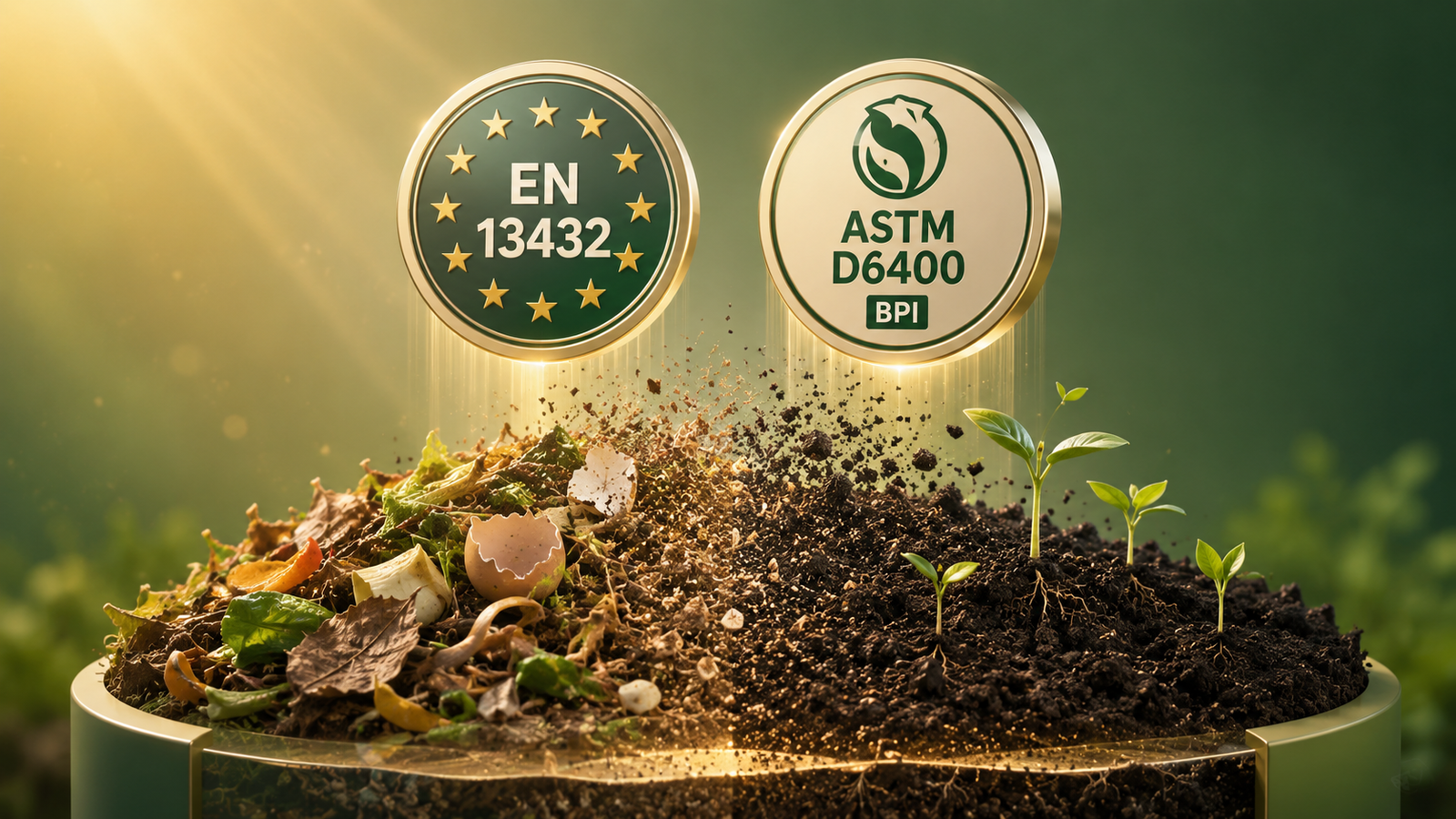
Failure to comply with EN 13432 certification
Degradation requires specific conditions of temperature and humidity
Consequences of use:
Increase of 42% in customer complaints (Consumer Goods Association 2024) (Consumer Goods Association data, 2024)
Ineligible for government environmental subsidies

Part II: 5 Hidden Costs in Detail
2.1 Surge in Compliance Costs (new regulations in 2024)
Region Penalty Standards for Violations Typical Cases
EU 4% of annual turnover or €20M A fast food chain was fined €8M in 2023
China Green Label revocation + $500K fine 3 mulch film makers were blacklisted in 2024
California USA $2,500 civil damages per product $12M in class action settlement in 2023 Lawsuit settlement $12 million
2.2 Supply chain cost increases
Comparison of measured data (per ton):
| Cost items | True eco-friendly plastics (e.g., PHA/PBAT) | Pseudo eco-friendly plastics |
|---|---|---|
| Sorting labor | $15 (compatible with automated optical sorting) | $80 (manual sorting required for contamination) |
| Special handling | $0 (fits municipal composting streams) | $150 (hazardous waste disposal fees) |
| Scrap rate | 2% (stable material processability) | 15% (inconsistent melt flow index) |
| Source: Supply Chain Management Association (SCMA) 2024 Sustainable Material Cost Benchmark Report |
2.3 Loss of brand value
Consumer research (2024):
- Pseudo eco-friendly incident led to 35% decline in brand reputation scores (per Nielsen IQ ESG Tracker)
- Requires 2.7x the marketing spend on reputation repair campaigns (e.g., third-party sustainability audits) to recover
Typical example:An apparel brand’s ESG rating was downgraded from AA to B by MSCI ESG Research after its oxo-degradable packaging was found to release MPFs; its share price fell 11% in one week due to investor ESG divestment.
2.4 Missed Policy Dividends
Subsidies available in 2024:
EU Circular Economy Fund: up to 30% equipment renovation subsidy
China Comprehensive Utilization of Resources: 50% VAT refund on demand
US Cleaner Production: $200 per ton carbon tax credit
2.5 Accumulation of Litigation Risks
Typical Litigation Causes in 2024:
False Environmental Propaganda (52% of cases)
Microplastic Pollution (28%)
Destruction of Recycling Systems ( 20%)
Average settlement: $3.8 million/case

Part III: Successful Case References
3.1 Transformation of FMCG Industry
An international beverage brand (top 5 in global sales):
- Eliminated oxo-degradable labels; switched to PHA (polyhydroxyalkanoate) caps (compliant with EN 13432)
- Partnered with on-site composting facilities to track end-of-life disposal
- Result: ESG rating upgraded from A to AA by S&P Global ESG Scores; $1.2 million carbon tax rebate under US Inflation Reduction Act (IRA)
3.2 E-commerce Packaging Innovation
A cross-border e-commerce company (specializing in electronics):
- Replaced EPS (expandable polystyrene) with mycelial cushioning material (grown from agricultural waste)
- Despite 15% higher material cost, achieved 28% decrease in customer complaint rate (due to better shock absorption performance)
- Qualified for China’s cross-border e-commerce green packaging subsidy, reducing overall logistics costs by 8%