Composting, as an effective method for treating organic waste, is gaining increasing attention. However, many people don’t understand the concepts of “industrial composting” and “home composting,” and are unaware of the differences between the two. This article will systematically analyze the differences between these two composting methods to help you make an informed choice based on your specific circumstances.
I. Industrial Composting: A Professional Organic Waste Treatment System
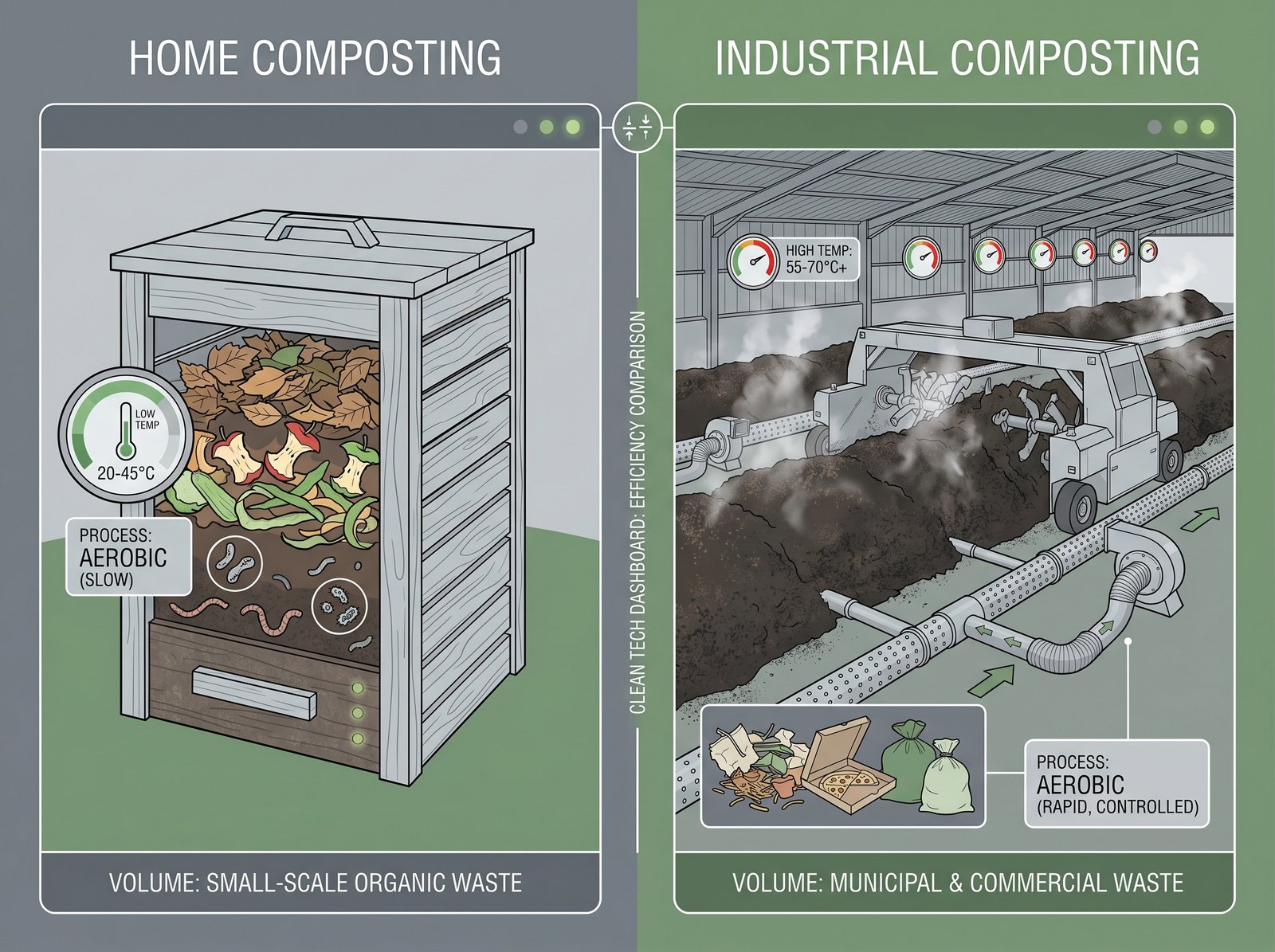
Industrial composting is a professional organic waste treatment system that processes waste on a large scale in specialized facilities equipped with advanced equipment. It utilizes microorganisms to decompose organic materials by precisely controlling temperature (55-65℃), humidity, and ventilation.
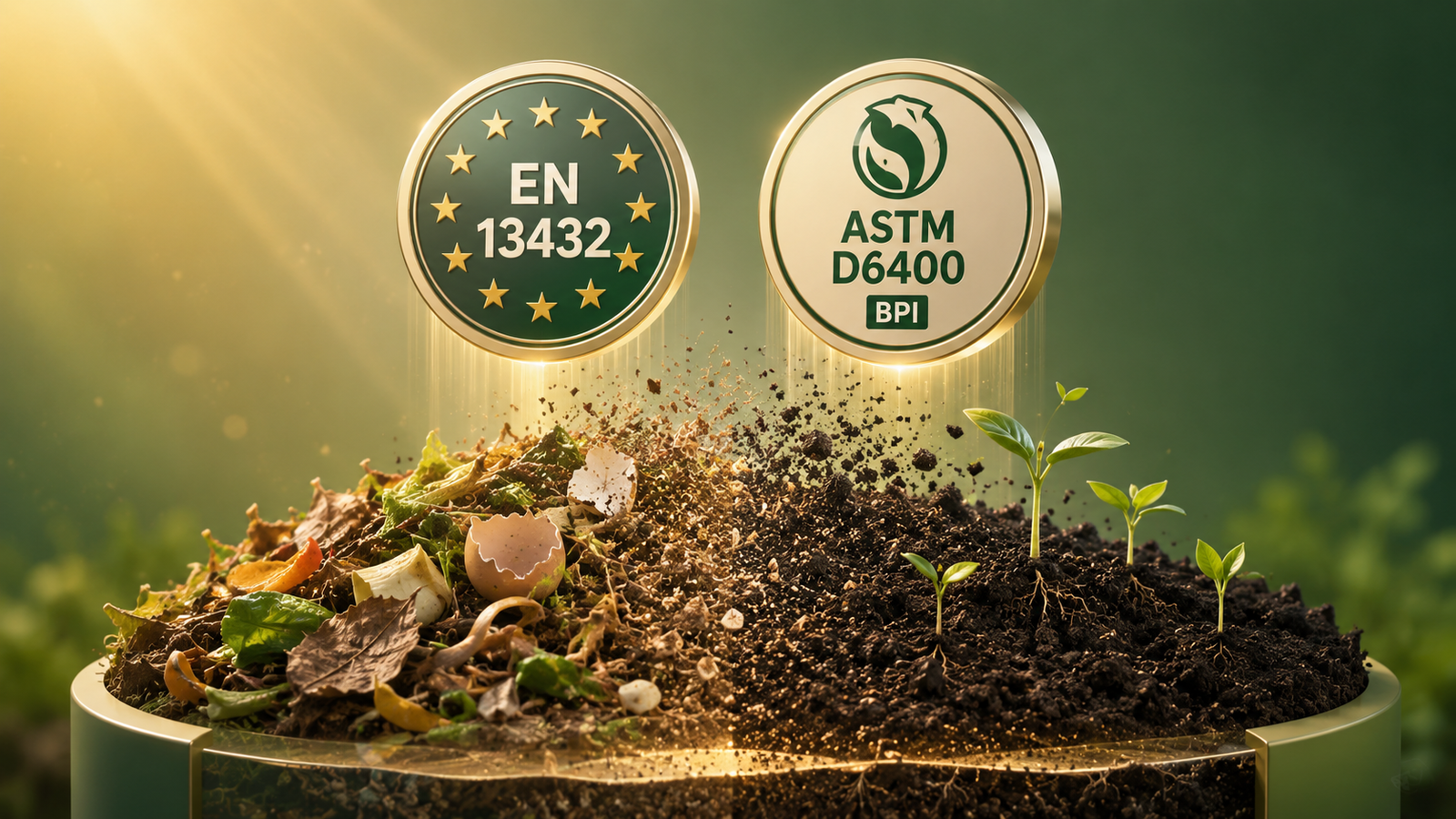
The standard process for industrial composting includes stages such as raw material sorting and crushing, high-temperature fermentation, and post-fermentation. It can effectively treat various organic materials, including municipal organic waste and agricultural waste, and thoroughly kill pathogens. This system can process several tons of organic waste daily, producing high-quality compost products that meet national standards. Suitable for landscaping and soil improvement, it is an important way to achieve the resource utilization of organic waste.
1. Definition and Core Characteristics:
Industrial composting refers to the process of accelerating the decomposition of organic materials in specialized facilities by precisely controlling environmental parameters. Industrial composting has the following characteristics:
(1) Large-scale processing in specialized composting plants
(2) Use of automated equipment and advanced technology
(3) Daily processing capacity can reach several tons to hundreds of tons
(4) Requires professional technical personnel for management and operation
2. Standard Process Flow:
(1) Raw Material Receiving and Pre-treatment: Receiving municipal organic waste, agricultural waste, etc., removing impurities such as plastics and metals through sorting equipment, and then crushing and adjusting the particle size of the materials.
(2) The main fermentation stage is carried out in a bioreactor or fermentation chamber, with the temperature maintained at 55-65℃ for 5-7 days. A forced ventilation system ensures oxygen supply, and regular turning promotes uniform decomposition.
(3) The post-maturation stage occurs as the temperature gradually decreases to ambient temperature, during which microorganisms continue to decompose lignin and other recalcitrant substances, typically lasting 3-6 weeks.
3. Main advantages of industrial composting:
(1) High processing efficiency and thorough decomposition
(2) Effectively kills pathogenic microorganisms
(3) Applicable to all types of organic waste
(4) Stable and controllable product quality
II. Home composting is a convenient and practical environmental protection solution for individuals.
Home composting is a convenient way for individuals to practice environmental protection, allowing kitchen waste to be reborn in the yard or balcony. Simple equipment such as compost bins or worm towers can transform everyday kitchen waste such as fruit and vegetable scraps, tea leaves, and eggshells into fertile organic fertilizer.
This method not only effectively reduces the amount of household waste but also provides high-quality nutrients for horticulture, achieving resource recycling. Although the decomposition speed is relatively slow and requires basic operating skills, it serves as an environmental link between urban life and the natural cycle.
1. Home composting is the process of using microorganisms to decompose organic matter such as kitchen waste. The characteristics of this composting method include: it is carried out in the yard, balcony, or kitchen; it is small in scale and easy to operate; the equipment investment cost is low; and it is suitable for processing everyday kitchen waste.
2. The main implementation methods are:
(1) Traditional compost bins:
Composting with dedicated compost bins or homemade compost boxes:Suitable for families with yard space, it can handle kitchen waste and yard garbage.
(2) Vermicomposting towers:
Utilizes earthworms to decompose organic waste, suitable for homes with limited space such as apartments, and the resulting vermicompost is high-quality organic fertilizer.
(3) Bocasi barrel fermentation:
Uses EM bacteria to promote fermentation, conducts anaerobic fermentation in a sealed barrel, suitable for kitchen use and odorless.
3. Key points for home operation:
(1) Maintain an appropriate carbon-to-nitrogen ratio (25-30:1)
(2) Turn the compost regularly to ensure ventilation and oxygen supply
(3) Control humidity within the range of 40-60%
(4) Monitor temperature changes regularly.
4. Advantages of home composting:
(1) Reduces household waste generation
(2) Effectively produces fertilizer that can be directly used in gardening
(3) Simple operation and low cost.
III. Comparative Analysis of Core Differences between Industrial and Home Composting:
The core differences between industrial and home composting lie mainly in the scale of processing and technical standards. Industrial composting relies on specialized facilities, with daily processing capacities reaching several tons. It achieves efficient decomposition through precise temperature control (55-65℃) and forced ventilation, processing various organic wastes and producing compost products that meet national standards.
Household composting, measured in kilograms, relies on natural fermentation and has a longer processing cycle. It is mainly suitable for kitchen waste and yard garbage, and the quality of the output varies depending on the operator’s skill. There are significant differences between the two in terms of technical complexity, processing efficiency, and product consistency.
IV. Common Problems and Solutions
1. Temperature Control Key Points
Industrial composting: Precise adjustment through automatic temperature control systems
Household composting: Adjustment through material ratios and turning the compost pile
2. Odor Management Methods
Industrial composting: Employing professional deodorization systems such as biological filters
Household composting: Correctly proportioning raw materials and avoiding the use of perishable materials
3. Pest and Disease Prevention Measures
Industrial composting: Thoroughly killing insect eggs and pathogens with high temperatures
Household composting: Avoiding the use of meat, dairy products, and other materials that attract insects.