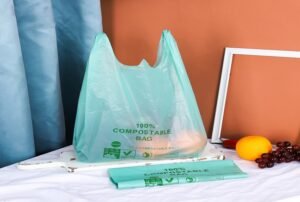
Walk into any store today, and you’ll likely see them: bags labeled “biodegradable,” “compostable,” or “plant-based.” They feel different, they sound virtuous, and they promise a cleaner, greener alternative to the traditional plastic bag. But what does “biodegradable” really mean? And are these bags the environmental superheroes we hope they are?
Let’s untangle the truth behind biodegradable bags.
What Does “Biodegradable“ Actually Mean?
In simple terms, a biodegradable material is one that can be broken down by microorganisms like bacteria and fungi into natural elements like water, carbon dioxide, and biomass. It’s the same process that happens to a fallen leaf in a forest.
However—and this is a crucial point—not all biodegradable bags are created equal. The term “biodegradable” is broad and doesn’t specify the time frame or the conditions required for this breakdown to happen.
This is where the important distinction comes in:
Biodegradable: Will break down eventually, but this could take years or even decades in a landfill, and it might leave behind microplastics or toxins.
Compostable: A specific type of biodegradable. Compostable bags are designed to break down into non-toxic, nutrient-rich compost (humus) within a specific time frame (usually 90-180 days) in a industrial composting facility. These facilities provide the ideal conditions of heat, moisture, and aeration for the process to work.
The Materials Behind the Magic
So, what are these bags made of? Instead of petroleum-based plastic, they use renewable resources like:
Corn Starch (PLA): Polylactic acid is a popular bioplastic derived from the sugars in corn. It’s commonly used for compostable bags.
Vegetable Oils: Oils from sources like soy or palm can be used as a base material.
Potato Starch: Another common agricultural source for bioplastics.
The Big Challenge: Conditions are Everything
Here’s the catch that many consumers miss: a biodegradable bag won’t simply vanish in your backyard compost bin or in a landfill.
In a Landfill: Landfills are often anaerobic (lacking oxygen). In this environment, even biodegradable materials break down very slowly and can release methane, a potent greenhouse gas. Your “eco-friendly” bag might be trapped intact for years, just like a regular plastic bag.
In a Composting Facility: This is where certified compostable bags are meant to go. They need the high temperatures (around 60°C/140°F) and specific microbial activity of an industrial composter to break down correctly.
The Problem? Many cities lack the infrastructure for curbside collection of compostable plastics. If a compostable bag ends up in the recycling bin, it can contaminate the entire batch of recyclable plastics.
Biodegradable Bags vs. Traditional Plastic Bags
Feature Traditional Plastic Bag Biodegradable/Compostable Bag
Source Material Petroleum (finite resource) Plants like corn or potato (renewable)
Decomposition Hundreds of years; breaks into microplastics Weeks to months in correct conditions
End-of-Life Landfill, incineration, or (poorly) recycled Commercial composting facility
Toxicity Can leach chemicals Should break down into non-toxic compost
So, What’s the Verdict? Are They a Good Choice?
Biodegradable and compostable bags are a step in the right direction, but they are not a perfect solution. They are best seen as a tool for specific situations.
When they are a GOOD choice:
For collecting food scraps and yard waste if your city accepts them in its green bin program.
In settings where organic waste collection is the goal, like in certain cafes or food courts.
When they are a BAD choice:
As a general-purpose bag that will likely end up in a landfill.
If you don’t have access to industrial composting.
If they encourage a “single-use” mentality.
The Bottom Line: Reduce and Reuse First
The most eco-friendly bag is the one you already own. No bag, whether biodegradable or not, has zero environmental impact. Its production still requires water, land, and energy.
Before you reach for any bag, ask yourself:
Can I go without a bag? The best option is always to refuse one when possible.
Can I use a reusable bag? A sturdy cloth or canvas bag used dozens of times has a far smaller footprint than any single-use option.
If I need a single-use bag, is it for compost? If you have access to composting, a certified compostable bag is a responsible choice.
Biodegradable bags are a promising piece of the puzzle in our fight against plastic pollution, but they are not a silver bullet. True change starts with shifting our habits from a culture of disposal to one of reduction and reuse.