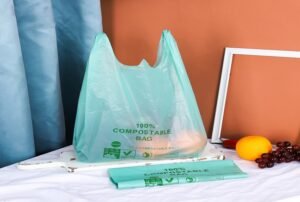
In this era surrounded by plastics, each of us is a consumer of plastic products, and may also become a victim of plastic pollution. According to statistics, more than 1 million plastic bags are used every minute in the world, and less than one tenth of them will be recycled. These discarded plastics are changing the world in a way that we can’t see-they break down into micro-plastics, appearing in the ice and snow in Antarctica, fish in the deep sea, and even human blood.
Ecological alarm: the truth and cost of plastic pollution
When we deeply analyze the life cycle of traditional plastic products, we will find that its environmental cost far exceeds imagination. From oil exploitation to refining, every link is emitting greenhouse gases into the atmosphere. The carbon footprint of an ordinary plastic bag is about 0.48 kilograms of carbon dioxide equivalent, which is multiplied by the trillions of plastic bags consumed worldwide every year. The result is shocking
What is even more worrying is that plastics will release greenhouse gases such as methane and ethylene in the process of degradation in the natural environment, and at the same time, chemical additives such as plasticizers and stabilizers will be precipitated. These substances are bioaccumulating through the food chain, and finally appear on our dining table, even in human blood. Microplastics is everywhere in the Antarctic ice and snow and deep-sea fish, and this ecological crisis is imminent.
Technological Innovation: Scientific Breakthrough of Biodegradable Materials
Modern biotechnology provides a brand-new solution for solving plastic pollution. Real biodegradable materials need to meet three core conditions at the same time: renewable raw materials, pollution-free production process and non-toxic final products. From the molecular structure, the ideal biodegradable material can be recognized by microorganisms in the natural environment and used as a carbon source. By secreting enzymes, the polymer chain is broken into low molecular fragments, and finally it is metabolized into carbon dioxide, water and biomass.
At present, biodegradable materials certified by international authorities have achieved a major breakthrough in technology. These materials have not only passed the strict certification of European EN13432 standard and American ASTM D6400 standard, but also can be completely degraded within 12 weeks under industrial composting conditions. Its degradation products will not only not burden the soil, but also provide organic matter and improve the soil aggregate structure. In the domestic composting environment, although this process takes longer, it can also ensure that it will eventually return to nature completely.
Application Panorama: Green Transformation from Daily Life to Industrial Development
In daily life, biodegradable bags are showing their outstanding value in many scenes:
Retail and catering industry
Daily necessities such as take-away bags, shopping bags and food packaging are undergoing green changes. Large supermarkets gradually adopt transparent compostable packaging bags, which not only meets the needs of commodity display, but also conforms to the concept of environmental protection. After use, these packages can be co-processed with organic waste to realize real recycling.
Modern home application
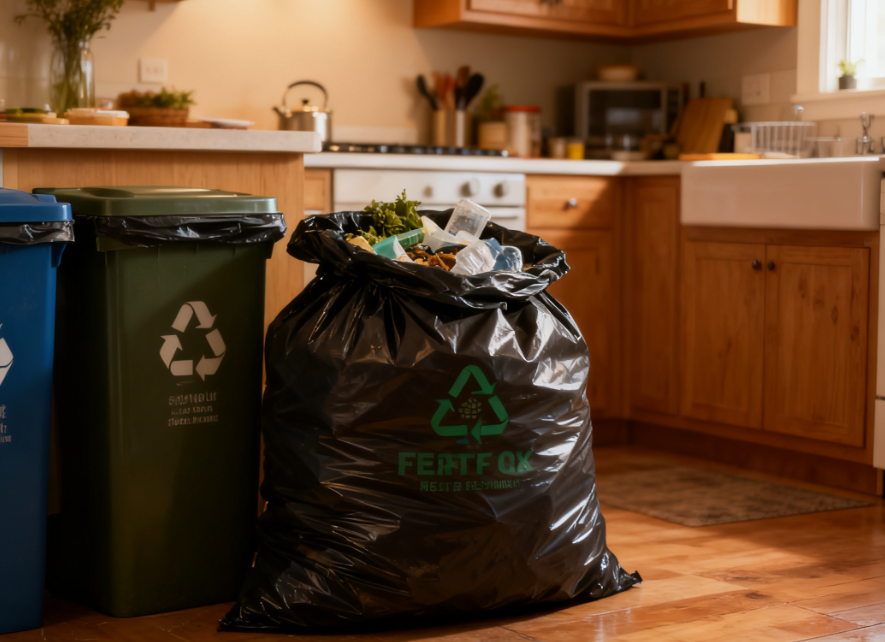
Daily necessities such as kitchen garbage bags and pet feces bags are being updated. With the garbage sorting policy, composting garbage bags and organic garbage can be treated together, realizing the “integration of bags and wastes”, which fundamentally solves the pollution problem caused by traditional plastic garbage bags.
Innovation of agriculture and horticulture
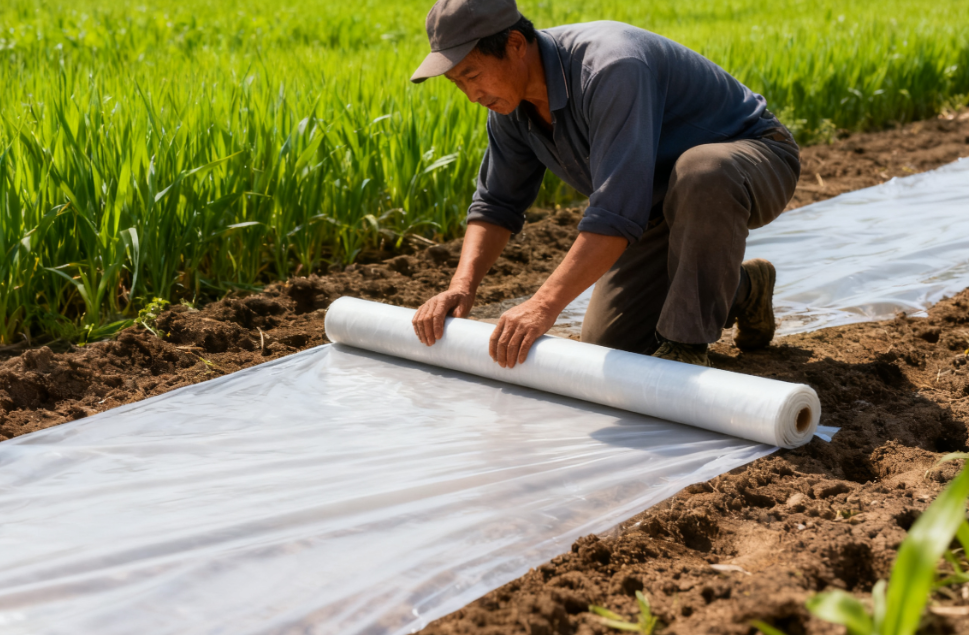
Agricultural materials such as degradable plastic film and seedling bags are changing agricultural production methods. These materials can be directly ploughed into the soil after completing the task of moisture conservation and heat preservation, avoiding the damage of plastic residues to the soil structure and providing organic nutrients for the soil.
In addition, in modern composting facilities, these compostable packages can be co-processed with organic wastes, which not only improves the recycling purity of organic wastes, but also avoids the influence of plastic pollution on composting quality. This synergistic effect of “1+1>2” is the best practice of circular economy concept.
Industrial prospect: the future trend of biodegradable materials
On a global scale, “plastic restriction” and “plastic prohibition” have become an irreversible wave. From EU’s SUP directive to China’s plastic pollution control action under the goal of “double carbon”, policies and regulations are strongly driving the expansion of green packaging market. At the same time, consumers’ awareness of environmental protection is unprecedented, and more and more brands are actively seeking sustainable packaging solutions.
The current research focus is expanding to many frontier fields. Scientists are committed to developing new raw materials such as seaweed-based and mycelium-based, so as to further reduce dependence on crops. In terms of performance optimization, researchers have made the mechanical properties of biodegradable materials gradually approach those of traditional plastics through nano-cellulose reinforcement and surface modification.
What’s more exciting is that smart biomaterials are emerging. These materials can not only achieve controllable degradation, but also release beneficial microorganisms during the degradation process, and actively improve the soil environment. Some innovative materials can even automatically adjust the degradation rate according to the change of environmental temperature and humidity, so as to achieve more accurate life cycle management.
Action guide: the practical path to build a sustainable future together
Choosing compostable packaging is not only a consumer behavior, but also an environmental protection practice that everyone can participate in. As consumers, we can:
Give priority to the use of compostable packaging products, and support environmental protection innovation with consumer votes.
Correctly distinguish compostable materials from recyclable materials to ensure that wastes are properly treated.
Actively participate in community composting projects to turn organic waste into valuable resources.
Disseminate correct environmental protection knowledge to people around you and expand the influence of green consumption.
For enterprises, this is both a social responsibility and a development opportunity. Laying out green packaging solutions in advance can not only meet the increasingly stringent requirements of environmental protection laws and regulations, but also win consumers with environmental awareness and take the lead in the wave of sustainable development. From product design to supply chain management, from manufacturing to marketing, every link contains the possibility of green innovation.
Create the future together: change the world from choice.
When we pick up a bag again, we are actually making a multiple-choice question about the future: whether to continue the linear economy that depends on fossil fuels or embrace the circular model that comes from nature returning to nature? Biodegradation technology gives us not only an alternative, but also an opportunity to rethink the relationship between man and nature.
Every environmental choice is a vote for our common future. From supermarket shopping to online ordering, from kitchen cleaning to garden care, we can support sustainable development with practical actions in these seemingly ordinary daily moments.