With increasing global environmental awareness and the promotion of circular economy models, biodegradable pet bags, as an important alternative to traditional plastics, have evolved from a single product innovation into a complete environmental solution. True “end-to-end environmental protection” is not limited to the product use stage, but includes the entire process from raw material acquisition, production and manufacturing, consumption, to end-of-life disposal.
I. Raw Material Selection: Establishing an Environmental Foundation from the Source
We strictly select renewable plant raw materials, primarily using starch from non-grain crops such as corn and cassava as core materials. By establishing a complete traceability system, we ensure that the raw material planting process complies with sustainable agricultural standards, controlling carbon footprint and water consumption at the source.
We insist on using non-GMO crops to avoid chemical pesticide residues, laying a solid foundation for the end-to-end environmental protection of our products.
1. Priority Principle of Renewable Raw Materials
(1) Mainly use starch from non-grain crops such as corn, cassava, and sugarcane as the main raw materials.
(2) Select sustainably grown crops to avoid competition with grain crops for arable land resources.
(3) Proactively establish a raw material traceability system to ensure that the raw material planting process meets environmental protection standards.
2. Environmental Assessment Standards for Raw Materials
(1) Carbon Footprint Calculation: Carbon emission accounting throughout the entire process from planting to harvesting.
(2) Water Resource Management: Evaluation of water resource utilization efficiency for crop irrigation.
(3) Soil Health Protection: Impact of the planting process on soil quality and biodiversity.
II. Production and Manufacturing: Green Processes and Technological Innovation
We fully implement a clean production system, using closed-loop processes to achieve near-zero emissions of wastewater and waste gas. Through equipment upgrades and heat recovery systems, energy consumption per unit product is reduced by more than 30%.
Renewable electricity accounts for over 40% of the total electricity consumption, and a resource utilization platform for production waste has been established to ensure that 95% of scrap materials are recycled, building an environmental protection defense line from the source of manufacturing. 
1. Clean Production Technology Application
(1) Adopting closed-loop production processes to reduce wastewater and exhaust gas emissions
(2) Optimizing the energy structure, with renewable energy accounting for no less than 30% of power supply
(3) Achieving a resource utilization rate of over 95% for production waste
2. Key Energy Saving and Consumption Reduction Measures
(1) Equipment Upgrade: Adopting high-efficiency and energy-saving extrusion and blown film equipment
(2) Process Optimization: Reducing unit product energy consumption through parameter optimization
(3) Waste Heat Recovery: A heat energy recovery and reuse system during production
III. Product Design: Full Life Cycle Environmental Considerations
While ensuring basic functions, we maximize environmental benefits through multi-dimensional design innovation. We adopt a reduced-weight structure to optimize and reduce the average thickness by 18%, and standardize dimensions to improve compatibility with recycling facilities; we use a single biodegradable material system to avoid sorting difficulties caused by traditional composite structures; and we embed a temperature-responsive degradation control layer to ensure that the product only decomposes under composting conditions.
Every design detail has been verified through life cycle assessment to ensure environmental optimization across the entire chain from raw materials to waste. 
1. Balanced Design of Function and Environmental Protection
(1) Minimize material usage while ensuring performance
(2) Optimize structural design to improve material utilization efficiency
(3) Use single materials or easily separable composite structures for easy recycling
2. Environmentally Friendly Design Elements
(1) Reduced material usage: Thickness controlled to the minimum required to meet functional needs
(2) Standardized design: Standardized dimensions and specifications to improve compatibility
(3) Labeling system design: Clear labeling of environmental information and disposal guidelines
IV. Quality Control: Ensuring the Authenticity of Environmental Commitments
To ensure the authenticity and credibility of our environmental commitments, we have established a strict three-tiered quality inspection system. All raw materials undergo heavy metal and hazardous substance testing, the production process is verified according to international degradation standards such as ASTM D6400, and third-party organizations are regularly commissioned to conduct composting safety and ecotoxicity tests.
Each batch of products is equipped with a traceable QR code to ensure transparent and verifiable environmental data throughout the entire chain from raw materials to finished products. 
1. Rigorous Verification of Degradation Performance
(1) Third-party laboratory testing according to ASTM D6400 standard
(2) Simulation of degradation under different environmental conditions
(3) Regular sampling for market supervision and inspection
2. Dual Guarantee of Safety and Environmental Protection
(1) Raw Material Safety: Prohibition of heavy metals and harmful additives
(2) Degradation Safety: Ensuring that degradation products are harmless to soil
(3) Usage Safety: Compliant with food contact material standards
V. Consumer Use: Guiding Environmentally Friendly Habits
In the consumer use stage, we guide users to establish environmentally friendly habits through multi-dimensional guidance. We provide clear illustrated usage guides to ensure correct operation; the packaging includes a built-in QR code linking to an environmental knowledge base and local recycling point query system; we regularly conduct community workshops to explain waste sorting and composting practices; we design simple home composting solutions with accompanying toolkits; and we encourage continuous participation in environmental protection actions through a points reward mechanism.
At the same time, we optimize product details, such as easy-tear design and capacity labeling, to reduce waste from the source.
1. Consumer Education System
(1) Provide clear product usage instructions and environmental protection guidelines
(2) Convey environmental information through packaging labels and QR code links
(3) Conduct community environmental education and practical activities
2. Suggestions for Optimizing Usage Scenarios
(1) Correct Use: Use products reasonably according to their characteristics
(2) Appropriate Use: Avoid unnecessary waste
(3) Proper Storage: Maintain product performance and extend service life
VI. Recycling and Disposal: Complete the Resource Cycle
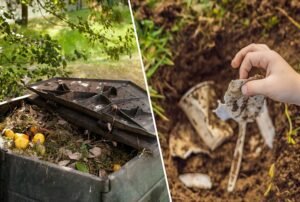
Establish a classified recycling system connected with municipal sanitation departments, and set up dedicated collection containers in communities; rely on professional composting facilities to achieve large-scale processing, ensuring the safe return of degradation products to nature.
At the same time, provide guidance on home composting, enabling users without industrial processing capabilities to complete the environmental cycle and truly achieve resource recycling from use to regeneration.
1. Construction of a Classified Recycling System
Establish dedicated recycling channels in cooperation with municipal sanitation systems
Set up dedicated collection containers for biodegradable waste in communities
Develop intelligent identification systems to improve classification accuracy
2. Professional Processing Facilities
(1)Industrial composting plants: Establish standard-compliant processing capacity
(2)Home composting guidance: Provide home composting solutions and technical support
(3)Emergency response plans: Develop backup plans for situations where composting is not possible
VII. Conclusion: Environmental protection is a systematic project
The realization of full-process environmental protection for biodegradable pet bags requires transcending the single-product mindset and constructing a complete environmental value chain from source to end. This is not only a technical challenge, but also a systematic project involving all links of the industrial chain, policy support, and consumer participation.
To achieve true full-process environmental protection, we should:
(1) Adhere to a full life-cycle perspective: Consider environmental impact at every stage
(2) Establish a transparent and credible system: Make environmental protection effects measurable and verifiable
(3) Promote multi-party collaborative participation: Enterprises, government, and consumers form a joint force
(4) Maintain a continuous improvement attitude: Environmental protection has no end, only continuous progress
Choosing a fully environmentally friendly biodegradable pet bag is not just choosing a product, but also choosing to participate in building a sustainable future. Every bag’s eco-friendly journey contributes to our shared green planet.