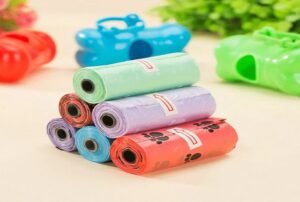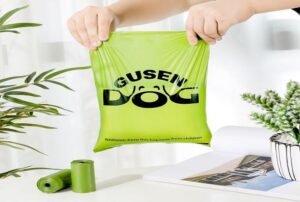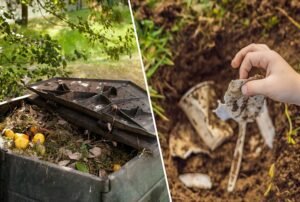
In daily life, more and more consumers will take the initiative to choose reusable shopping bags marked “Biodegradation”.According to the latest market survey, more than 68% consumers are willing to pay 15%-20% more for plastic bags marked with environmental certification. But when we ponder over the question, is the self-thought environmental protection choice really as green as imagined?
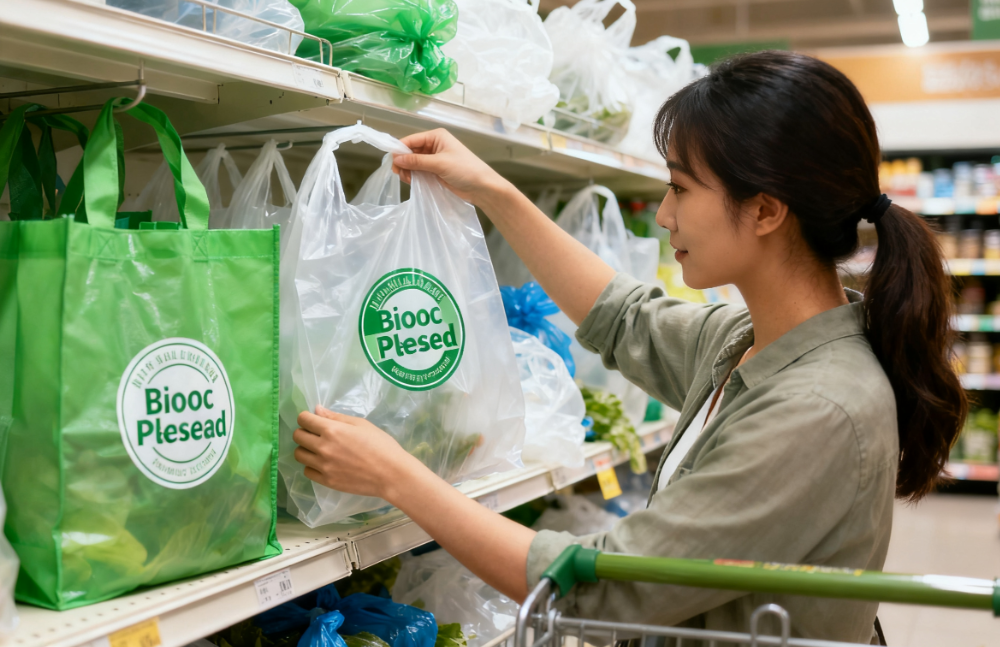
The cruel truth behind scientific certification
The biodegradable materials of our products are PLA/PBAT.After 18 months of research and development testing, it finally obtained many international certifications such as BPI, EN13432 and OK Compost. Behind these certifications are strict scientific standards and perfect testing system. Taking industrial compost certification as an example, it is necessary to meet several key conditions at the same time: the temperature should be kept at 58-65℃ continuously, the humidity should be controlled at 50-60%, and professional composting equipment should be provided with sufficient oxygen, and the carbon-nitrogen ratio of compost materials should be maintained at the optimal range of 20:1 to 40:1.
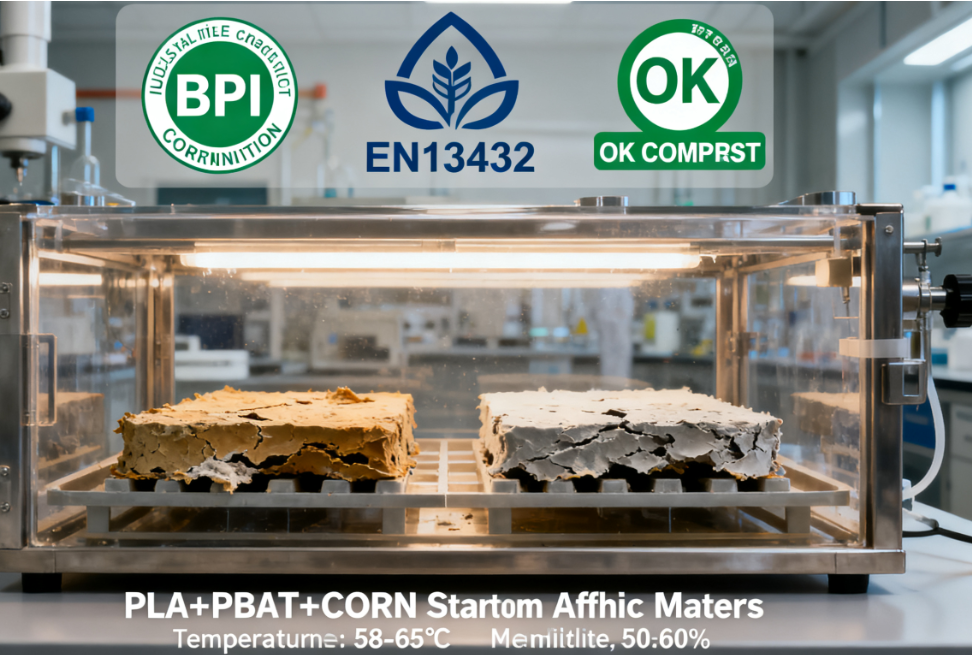
In the actual test, our biodegradable products showed obvious signs of disintegration on the 45th day in the standard industrial composting environment, and basically decomposed into pieces on the 90th day, and finally the biodegradation rate reached 93.7% within 180 days, which fully met the certification requirements. This data seems ideal, but it faces many challenges in the real environment.
Realistic dilemma and hidden threat
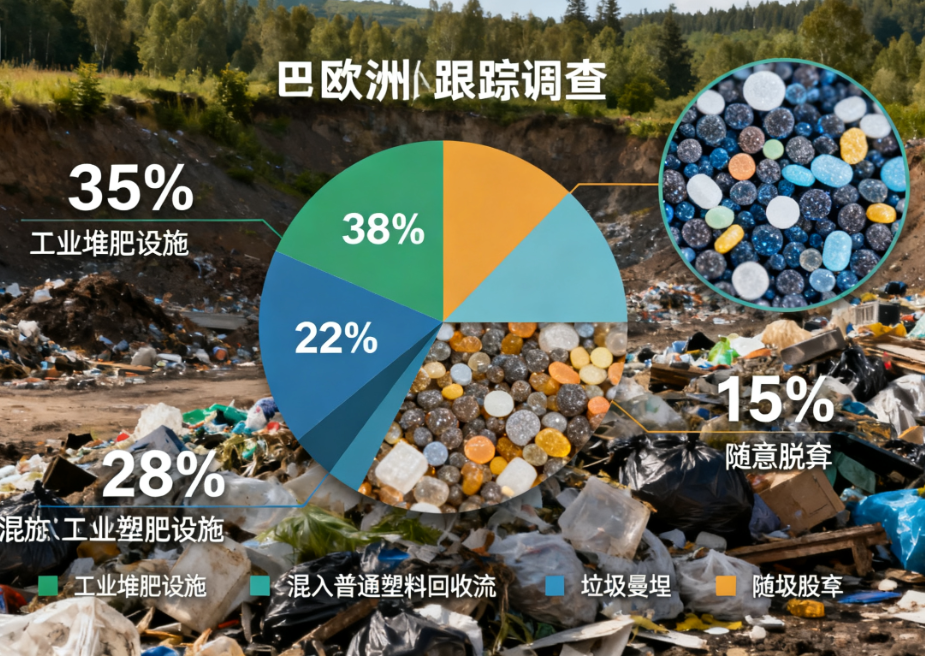
Let’s look at the essence through the data: a two-year follow-up survey in Europe shows that even in areas with relatively perfect environmental protection infrastructure, the actual recycling of biodegradable bags is still not optimistic. It was found that only 35% of compostable bags were put into industrial composting facilities correctly, and the rest were either mixed into ordinary plastic recycling stream (28%), or buried as ordinary garbage (22%), and even 15% were randomly discarded in the natural environment.
What deserves more attention is the microplastics issue. A study by the European Bioplastics Association in 2023 shows that some biodegradable materials do pose microplastics risks in non-ideal environment. Our accelerated aging test shows that a standard shopping bag made of PLA/PBAT will remain intact in the natural environment at normal temperature for the first three months, but it will gradually become brittle and break down into hundreds of thousands of micron-sized particles during 6-9 months. Although these particles will eventually continue to degrade, this process may take 2-3 years.
Enlightenment from real cases
The case of Hamburg, Germany is quite representative. This city with a population of 1.8 million implemented a special recycling plan for stackable waste bags in 2022. The initial statistical results are surprising: less than 60% of the bags in special recycling points are truly compostable products. Further analysis shows that 21% of them are ordinary plastics, 14% are other biodegradable materials requiring different treatment conditions, and 5% are unrecognizable composite materials.
This situation has caused serious economic and environmental losses. Dr. Mueller, the head of the city’s environmental department, calculated an account: every ton of contaminated compost raw materials will generate an additional sorting cost of 85 euros and a treatment cost of 150 euros. More seriously, once the proportion of pollutants exceeds 3%, the whole batch of compost has to be degraded or sent directly to the incineration plant.
Responsibility and action of enterprises
As a company with many international certifications, we are well aware of our responsibilities. In addition to providing products that meet the standards, we are taking the following actions:
First of all, in the product packaging, we clearly marked the signs of industrial composting with diagrams, and provided the inquiry methods of local composting facilities. Secondly, we also cooperate with sanitation departments in several cities to carry out consumer education activities and popularize relevant knowledge to the public. According to the data, after six months of education and publicity, the public’s correct classification rate has greatly increased from the initial 18% to 65%, which has also increased our confidence.
Provide practical suggestions to consumers
1,Priority reuse: Statistics show that an environmental protection bag needs to be reused at least 12 times, and its environmental impact can be better than that of traditional plastic bags.
2, Confirm local facilities: Before using compostable bags, please check whether there are supporting industrial composting facilities in your area.
3, Correct classification and delivery: our products are clearly marked on the packaging, please follow the instructions to classify and deliver them.
4, Look at certification rationally: understand the actual meaning of different certifications, for example, our products have obtained multiple certifications at the same time, just to meet the processing conditions in different regions.
look into the future
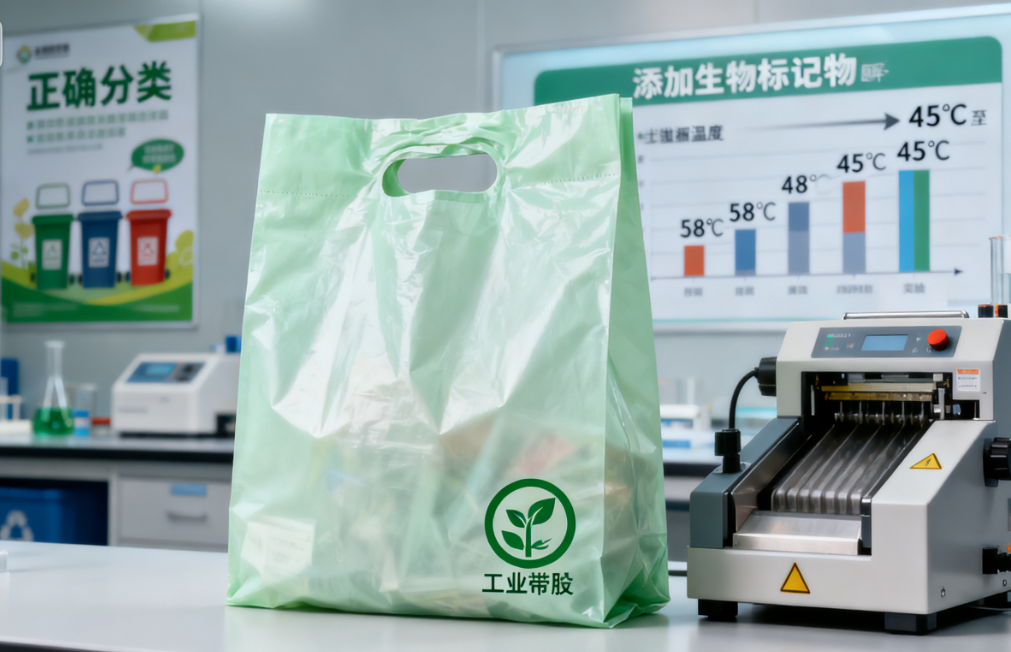
Our ongoing research and development project of “a new generation of biodegradable materials” has achieved initial results. According to the laboratory data, the new formula can reduce the optimal degradation temperature from 58℃ to 45℃, which will enable more common composting sites to treat our products. At the same time, we are also exploring a traceability system based on blockchain technology, so that the life cycle of each bag can be traced back.
We are convinced that biodegradable technology is only one part of sustainable solutions. Real environmental protection needs to establish a complete ecosystem-from raw material selection, product design, consumption and use to terminal treatment, every link is crucial. We look forward to working with all parties in the industrial chain to make every environmental protection choice truly realize its value.
(The data in this paper comes from the 2023 annual report of the European Bioplastics Association, the test results of our laboratory, the recycling statistics of partner cities, and the 2022 waste treatment report of the German Environment Agency.)