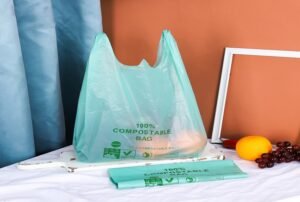
Against the backdrop of a global green transition, the standardization and certification of compostable packaging has become crucial for the healthy development of the industry. EN 13432, as a widely recognized European standard for compostable materials, not only provides clear technical guidance for manufacturers but also offers consumers a reliable basis for identifying truly environmentally friendly products.
I. Definition and Background of EN 13432 Certification
EN 13432 is an authoritative certification standard for compostable packaging materials issued by the European Committee for Standardization (CEN). It specifies the technical requirements for the safe and complete degradation of packaging under industrial composting conditions. This standard officially came into effect in 2000 and has become a core basis for compostable products recognized in the EU and many other regions globally.
The background of EN 13432 stems from the desire to promote the resource utilization of packaging waste, curb “pseudo-environmental” propaganda, and promote the construction of an organic waste recycling system. Through rigorous biodegradation, disintegration, and ecological safety testing, EN 13432 provides manufacturers with clear production guidelines and consumers with a reliable basis for identifying truly environmentally friendly products.
II. Core Technical Requirements for EN 13432 Certification
1. Biodegradability Requirements
The material must meet strict biodegradability standards under specific conditions:
(1) Time Limit: 90% or more biodegradation must be completed within 6 months in an industrial composting environment.
(2) Test Method: Standardized laboratory testing procedures must be used (refer to ISO 14855 standard).
(3) Reference Standard: Cellulose is used as the reference material for 100% biodegradation.
2. Disintegration Performance Test
The material needs to be fully disintegrated during composting:
(1) Screening through a 3 mm sieve, the residue must not exceed 10% of the original mass.
(2) The test period is 12 weeks, simulating the actual conditions of industrial composting.
(3) Ensure that the fragments do not negatively affect the quality of compost and subsequent use.
3. Ecological Safety Assessment
Compost products must meet strict environmental safety standards:
(1) Heavy metal content limits: Strict control over the content of heavy metals such as cadmium, mercury, and lead
(2) Phytotoxicity testing: Passing growth tests on specific plants (such as oats and watercress)
(3) Chemical safety: Ensuring the absence of toxic substances that harm composting microorganisms
4. Material Composition Requirements
(1) Organic content not less than 50% (calculated by dry weight)
(2) Must not contain traditional plastic components (such as polyethylene, polypropylene, etc.)
(3) The use of additives must comply with relevant EU regulations
III. Practical Application Value of Certification
EN 13432 certification is not only a “green passport” for enterprises to enter the European market, but also significantly enhances the environmental reputation and brand value of products.
It ensures that packaging can be safely decomposed in industrial composting, effectively supports the organic waste recycling system, and provides consumers with credible purchasing information, promoting the coordinated development of the entire industry chain towards sustainability. 
1. Significance for Manufacturing Enterprises
(1) Obtaining a “green pass” to the EU market
(2) Promoting technological innovation and process optimization
(3) Enhancing product environmental reputation and brand value
(4) Reducing compliance and legal risks
2. Protection for Consumers
(1) Providing a basis for identifying truly compostable products
(2) Ensuring safe product decomposition and avoiding secondary pollution
(3) Supporting sustainable consumption and promoting the development of a circular economy
3. Support for Recycling Systems
(1) Providing composting plants with quality-controlled raw materials
(2) Ensuring the normal operation of composting systems
(3) Promoting coordinated management of the entire life cycle of packaging
IV. Industry Impact and Development Trends
EN 13432 certification has become a key driving force for innovation in biodegradable materials, accelerating the research and development of new environmentally friendly materials and process upgrades. This standard not only sets a unified entry threshold for the EU market but also influences the green transformation direction of the global packaging industry.
With increasingly stringent environmental policies and heightened consumer awareness, the application of certified products is expanding from packaging to agriculture, daily necessities, and other scenarios. Technical standards are also evolving towards greater efficiency and internationalization, providing crucial technical support for building a global circular economy system.
1. Driving Technological Innovation
(1) Promoting the research and development of new biodegradable materials
(2) Promoting innovation in environmentally friendly additives and printing technology
(3) Promoting energy conservation and emission reduction improvements in production processes
2. Policy Synergistic Effects
(1) Supporting the implementation of the EU Packaging Waste Directive
(2) Providing a basis for corporate environmental responsibility reports
(3) Becoming one of the reference standards for government procurement
3. Market Development Trends
(1) The scope of certification is expanding from packaging to more fields
(2) Testing technology is developing towards greater efficiency and accuracy
(3) Regional standards are gradually moving towards international harmonization and unification
V. Frequently Asked Questions
1. Q: Are products certified under EN 13432 suitable for home composting?
A: This certification mainly targets industrial composting conditions. Home composting requires separate certification under relevant standards.
2. Q: How long is the certification valid?
A: Usually 3 years, but a surveillance audit is required annually.
3. Q: How can I verify the authenticity of the certification?
A: You can check it on the certification body’s official website or scan the product traceability code.