Choosing compostable pet bags is a crucial first step for pet owners, but what should you do with those bags after your pet’s waste? How can you ensure you’re committed to environmental protection? This article provides a detailed guide to help you achieve a truly environmentally friendly cycle.
I. Is it a genuine compostable bag?
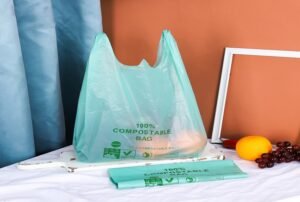
To confirm a bag is truly compostable, carefully check the packaging for authoritative certification marks such as ASTM D6400, OK compost INDUSTRIAL, or BPI, rather than vague claims like “compostable/degradable.“
These certifications ensure the bag will completely decompose under specific composting conditions, preventing microplastic residue. Products without clear certification marks may not achieve true environmental degradation.
Here are some points to consider when choosing compostable bags; please carefully check the certification marks on the packaging:
1. ASTM D6400 certification is the American Society for Testing and Materials (ASTM) industrial composting standard.
2. OK compost INDUSTRIAL certification is the Belgian industrial composting mark.
3. BPI certification is from the Biodegradable Products Institute of North America (BPI).
II. Understanding Your Area’s Composting Capacity
Before disposing of used compostable pet bags, you need to understand your area’s composting capacity. If you live in a city with industrial composting facilities, you can dispose of certified bags in designated organic waste bins.
If you live in an area lacking professional processing facilities, we recommend prioritizing home composting (provided product suitability is confirmed), or using it as a last resort for general waste disposal. We suggest checking specific policies through your local sanitation department’s website or calling the 12319 service hotline, or using our website’s regional processing facility database for the latest guidance.
1. Areas with Industrial Composting Services
If your city or community provides organic waste collection services, you can dispose of used certified compost bags in designated organic waste bins for composting.
This ensures the bags are not contaminated by other plastic products; you must follow local sorting requirements for proper disposal.
2. Areas Lacking Professional Processing Facilities
If your area lacks composting facilities, you can consider home composting first, but you need to confirm that the bags are suitable for home composting.
Home composting is only a general waste disposal method; therefore, you need to choose appropriate products for your facility.
III. How to Properly Perform Home Composting?
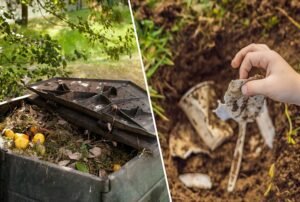
To start home composting, the following key points should be met: Choose a well-ventilated, shady location for the covered compost bin. Mix “green materials” (pet feces, fruit peels) and “brown materials” (dried leaves, shredded paper) in a 1:3 ratio, maintaining a humidity level of 40%-60%. Turn the bin weekly to ensure ventilation.
Decomposition takes approximately 2-3 months in summer and 4-6 months in winter. Avoid including feces from sick pets; the final compost is recommended for use on ornamental plants. It is recommended to use a thermometer to monitor the compost temperature; maintaining it at 50-65℃ can effectively kill pathogens. Therefore, if choosing home composting, the following steps should be met:
1. Choose a suitable compost bin and a cool, shady corner to avoid rainwater accumulation and prevent odors and pests.
2. Mix “green materials” (feces, fruit peels) and “brown materials” (dried leaves, shredded paper) in a 1:3 ratio. Turn the bin weekly to maintain sufficient oxygen and a humidity level of 40-60%.
3. Under suitable conditions, complete decomposition typically takes 6-12 months. The resulting compost is recommended for use on flowers and green plants, avoiding its use on edible plants. Patience is required.
IV. From Individual to Group: Driving Systemic Change
The core of systemic change lies in the collaboration from individuals to groups. Each person’s small actions converge into collective strength. This change does not exist in isolation, but rather transforms scattered individual actions into cross-domain, cross-group collaborative practices through the dissemination of ideas, the linkage of mechanisms, and the integration of resources. 
From individual practice to organizational response, and then to the formation of social consensus, the inherent system is ultimately broken down, building a more efficient, inclusive, and sustainable new ecosystem, allowing systemic change to take root and continuously iterate through collective resonance.
Choose a Responsible Brand
At [Esinle], we not only provide fully certified compostable pet bags, but also have established a city disposal facility query system and print clear disposal instructions on product packaging.