With the rise of global environmental awareness, biodegradable garbage bags have emerged as an alternative to traditional plastics. However, their widespread adoption has been accompanied by ongoing controversy.
These controversies stem not only from differing consumer perceptions but also from deeper issues such as technical standards, infrastructure, business models, and regulatory systems. This article systematically analyzes the root causes of these controversies from six dimensions to help readers view this environmentally friendly product more rationally.
I. Ambiguous Definitions: The Source of Market Chaos
Terms such as “degradable,” “biodegradable,” and “compostable” are often used interchangeably or abused, lacking unified standards. Some products, which can only decompose under specific laboratory conditions, are labeled as “fully biodegradable,” misleading consumers.
This ambiguous definition not only exacerbates disorderly market competition but also weakens the credibility of environmentally friendly products, making it difficult for truly compliant and high-quality products to stand out.
1. Terminology Confusion and Misuse
Common confusing terms in the market include:
(1) Degradable: The broadest concept, only indicating that the material will change
(2) Biodegradable: Requires microbial decomposition, but the time and conditions are unclear
(3) Compostable: Requires decomposition under specific composting conditions, with strict standards
(4) Oxo-degradable: Adding additives to promote fragmentation, which may produce microplastics
2. Consequences of Lack of Standards
(1) Companies arbitrarily label “environmentally friendly” and “degradable,” making it difficult for consumers to distinguish
(2) Similar Product degradation performance can vary by more than 10 times.
(3) Lack of supervision leads to “bad money driving out good money”.
3. International Case Comparison
(1) EU: Banned the use of vague labels such as “biodegradable” from 2021.
(2) US: Federal Trade Commission strictly investigates misleading environmental propaganda.
(3) China: Issued the “Standard for Labeling of Biodegradable Plastics” in 2020, but the enforcement is uneven.
II. Technical Limitations: The Gap Between Ideal and Reality
The “ideal conditions” of laboratory testing differ significantly from the actual application environment: biodegradable bags degrade by more than 90% in a certified environment with constant temperature and humidity for 180 days, but may degrade by less than 40% in natural landfills after three years, and may produce methane or microplastics.
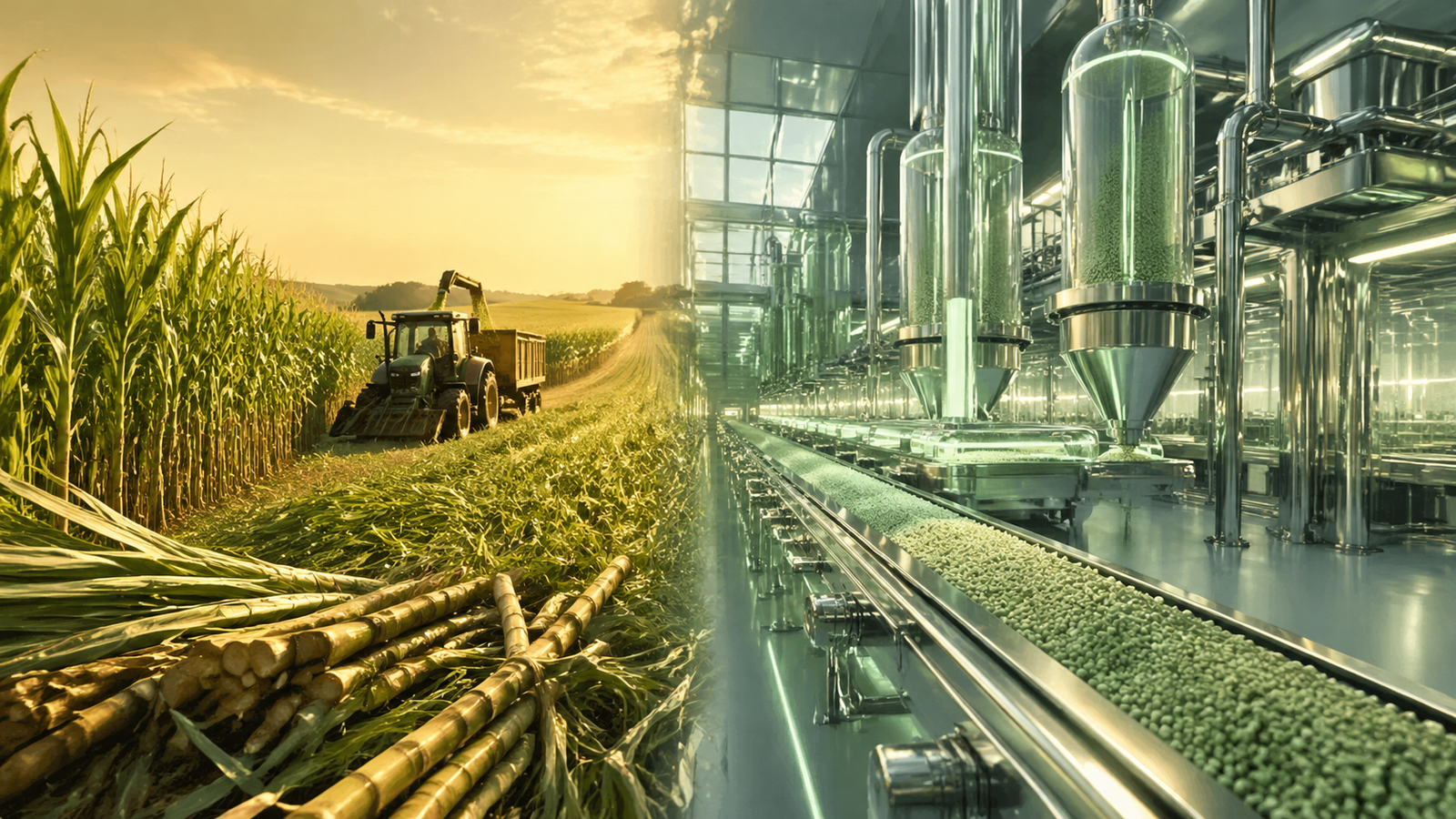
In terms of materials, PLA requires industrial composting, PBAT is expensive, and starch-based materials are susceptible to moisture. Technical bottlenecks significantly reduce the environmental commitment in practice.
1. The disconnect between laboratory and reality
The main technical contradictions are:
(1) Differences in conditions: There are huge differences between laboratory testing (constant temperature, humidity and oxygen enrichment) and actual environment (variable conditions)
(2) Time mismatch: The certification requirement of 180 days of degradation period may take 2-3 years in reality
(3) Product control: Theoretically, it decomposes into CO₂ and water, but in reality, it may produce methane or microplastics
2. Bottlenecks in materials technology
Current technical limitations include:
(1) PLA materials require industrial composting conditions and are extremely difficult to degrade in the natural environment
(2) Although PBAT has better degradability However, the cost is 2-3 times higher than that of traditional plastics.
(3) Starch-based materials are easily affected by moisture and deteriorate, resulting in a short shelf life.
3. Comparison of Real Data
(1) Certified Laboratory: PLA degradation rate ≥90% after 180 days under 58℃ composting conditions
(2) Actual Landfill: The degradation rate of the same material is less than 40% after 3 years, and methane is produced.
(3) Natural Environment: Some “degradable” bags remain intact in seawater after 5 years.
III. Mismatched Infrastructure: Systemic Challenges
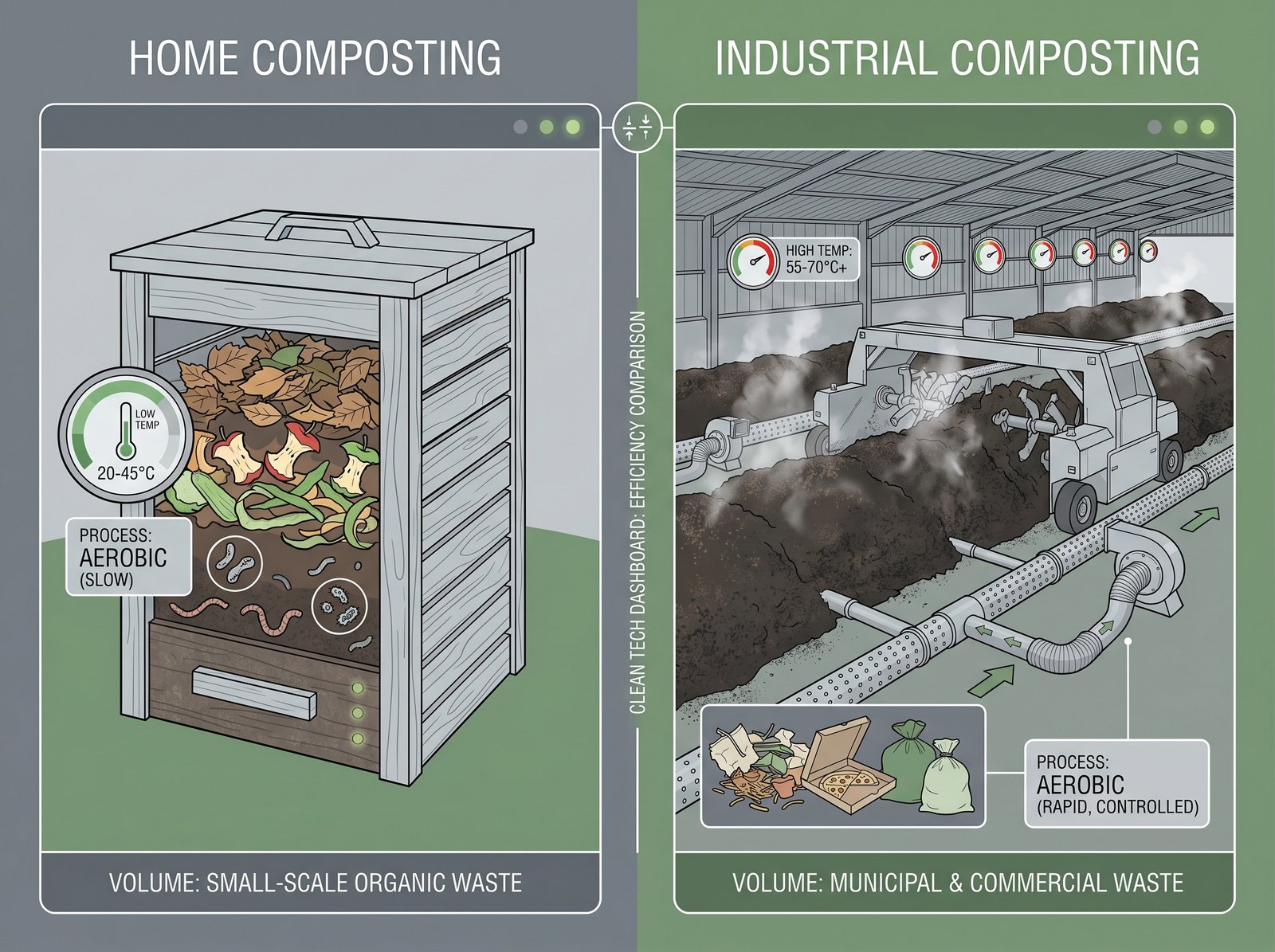
Degradable bags require industrial composting conditions to achieve efficient decomposition, but most regions in the world lack professional processing facilities. Many cities have not established a classified recycling system, resulting in products being mixed into ordinary waste for landfill or incineration.
This not only fails to realize environmental value but may also exacerbate the environmental burden by producing methane through anaerobic decomposition.
1. Lack of processing facilities
The global situation is worrying:
(1) Industrial composting plant coverage: about 30-40% in major European and American cities, less than 10% in Asia
(2) Classified recycling system: only 15% of cities have dedicated biodegradable waste recycling channels
(3) Home composting conditions: most urban apartments do not have composting conditions
2. Chaos in recycling systems
The consequences of biodegradable bags entering the traditional recycling system:
(1) Pollution of recycled plastic quality, reducing recycling value
(2) Interference with sorting equipment, increasing processing costs
(3) Incorrect classification may cause more serious environmental hazards
3. Typical case analysis
(1) San Francisco: After establishing a complete composting system, the utilization rate of biodegradable bags increased to 65%
(2) Shanghai: After the implementation of biodegradable bags in 2019, the landfill volume increased due to insufficient processing capacity
(3) Berlin: Mandatory use of compostable bags, but the actual composting rate is only 28%
IV. Environmental impact: Unexpected side effects
When there is a lack of professional processing facilities, biodegradable bags may produce methane, a strong greenhouse gas, through anaerobic decomposition in landfills. Some materials leave microplastic residues or release chemical additives that pollute the soil during degradation.
If these residues are mistakenly channeled into traditional plastic recycling, they can further contaminate the quality of recycled materials, thus increasing the burden on environmental remediation.
1. Greenhouse Gas Emissions
Studies have shown that biodegradable bags may bring new environmental problems:
(1) Landfill decomposition: Methane is produced under anaerobic conditions, and its greenhouse effect is 25 times that of CO₂
(2) Production process: PLA production energy consumption is 30% higher than that of traditional PE, and its carbon footprint advantage is limited
(3) Transportation process: Low density leads to increased emissions per unit weight of transportation
2. Ecotoxicity Risks
Some degradation additives have an inhibitory effect on soil microorganisms
(1) Some products release harmful monomers during decomposition
(2) The degradation rate in the marine environment is extremely slow, and it may still cause accidental ingestion by organisms
3. Life Cycle Assessment (LCA) Results
The latest research shows (based on 1kg garbage bags):
(1) Traditional PE bags: Carbon footprint 1.8kg CO₂e, mainly from oil extraction
(2) PLA biodegradable bags: Carbon footprint 1.2kg CO₂e, but the methane risk is not included
(3) Optimal solution: Paper bags + reuse, carbon footprint 0.3kg V. Economic Costs: A Sustainability Challenge
Biodegradable garbage bags face significant economic challenges: their production costs are typically 2-3 times higher than traditional plastics, and they require dedicated recycling facilities.
While consumers recognize their environmental value, they are generally unwilling to pay excessive premiums, leading to a significant contradiction between market acceptance and environmental goals. This cost dilemma directly restricts their large-scale promotion and long-term sustainability.
1. Price Competitiveness Dilemma
Cost Comparison Analysis (Taking Medium-Sized Garbage Bags as an Example):
(1) Traditional PE Bags: 0.05-0.08 RMB/bag
(2) PLA Biodegradable Bags: 0.15-0.25 RMB/bag
(3) High-Quality Compostable Bags: 0.30-0.50 RMB/bag
2. Hidden Cost Considerations
(1) Enterprises need to invest in new production lines, resulting in high equipment modification costs
(2) Consumers need to change their usage habits, leading to adaptation costs
(3) Municipal departments need to upgrade their processing facilities, resulting in significant financial pressure
3. Business Model Challenges
(1) The traditional plastic industry chain is mature, with obvious economies of scale
(2) The biodegradable material industry chain is fragmented, resulting in low collaborative efficiency
(3) The recycling value chain has not yet been formed, leading to insufficient economic incentives
VI. Lagging Supervision and Standards
International certification systems are fragmented and have inconsistent standards, with some countries lacking clear regulatory constraints. Regulatory blind spots exist in the market, leading to the mixed circulation of “pseudo-degradable” products and uneven quality of certification bodies.
Insufficient policy enforcement, low cost of violations for enterprises, and difficulty for consumers to accurately identify the true environmental performance of products through existing standards.
1. Inconsistent International Standards
Main differences in standard systems:
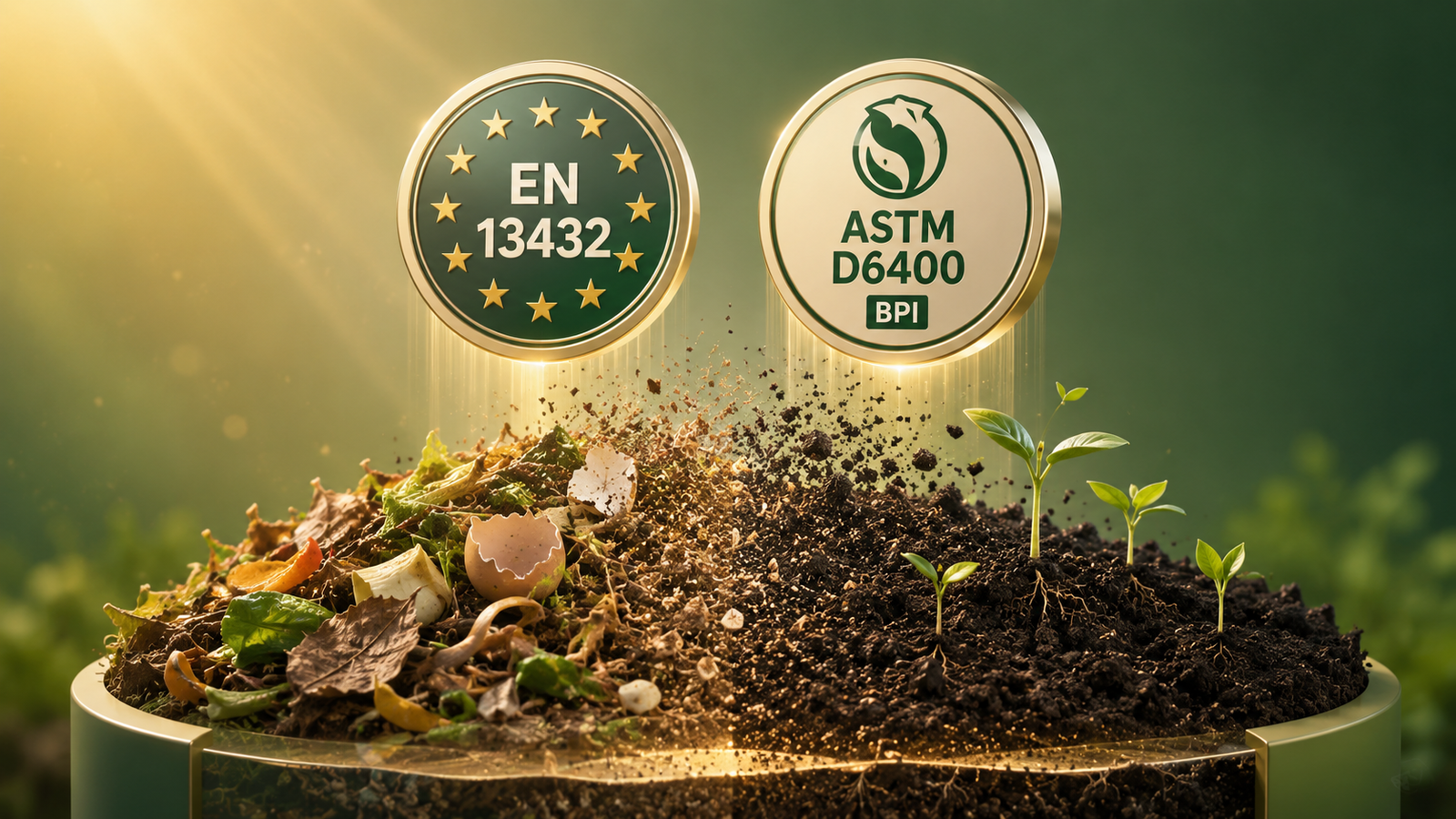
(1) EU EN 13432: requires industrial composting conditions, testing period of 6 months
(2) US ASTM D6400: testing period of 180 days, allowing for more lenient conditions
(3) China GB/T 38082: draws on EU standards, but implementation details are incomplete
2. Reality of Regulatory Loopholes
Common issues include:
(1) Inconsistent quality of certification bodies, some certifications can be bought with money
(2) Low frequency of market spot checks, cost of violations is far lower than cost of compliance
(3) Almost no regulation of cross-border e-commerce products
3. Cases of Policy Conflicts
(1) India: Complete ban on biodegradable plastics in 2022, later partially lifted due to industry pressure
(2) Canada: inconsistent federal and provincial standards, leaving enterprises confused
(3) Australia: simultaneous promotion of biodegradable bag and traditional bag recycling, resulting in a chaotic system.