
The Degradable Materials Revolution: A Brief History of PLA, PBAT and Corn Starch
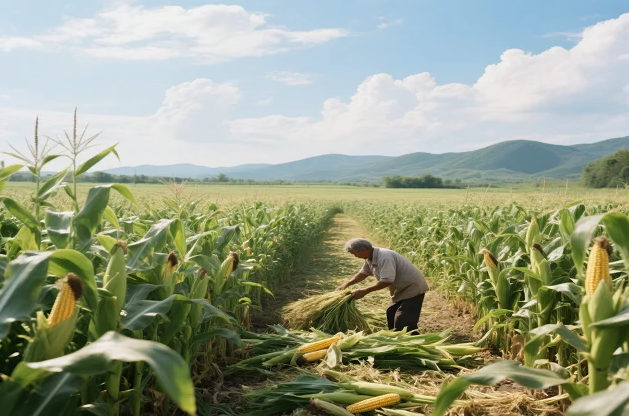
In the battle against global plastic pollution, PLA (polylactic acid), PBAT (polybutylene adipate/terephthalate), and corn starch, as the three pillars of biodegradable materials, have been game changers in packaging and agriculture. PLA: From Medical Wizard to Environmental Pioneer 1930-1960: An Unexpected Discovery in the Laboratory – 1954: DuPont obtained the first PLA synthesis patent (US2668162) […]
Why choose PLA, PBAT and corn starch for biodegradable mulch film?
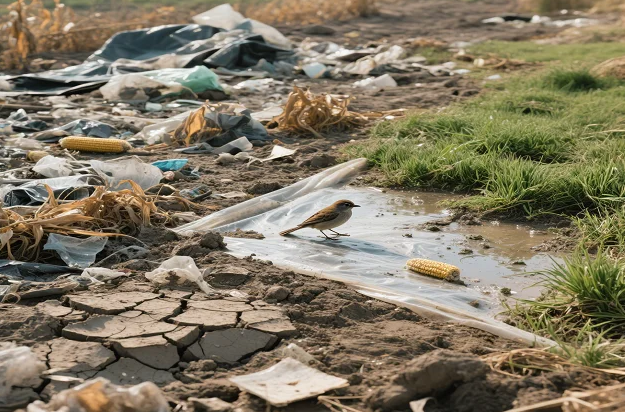
Biodegradable mulch film is rapidly replacing traditional plastic films in the field of sustainable agriculture. Our biodegradable bag film is made from scientifically formulated PLA (polylactic acid), PBAT (poly adipic acid/butylene terephthalate) and corn starch, which work synergistically to achieve true environmental friendliness while maintaining excellent usability. I. PLA as the main component of our […]
Analysis of the Development Prospects of Biodegradable Materials PLA and PBAT
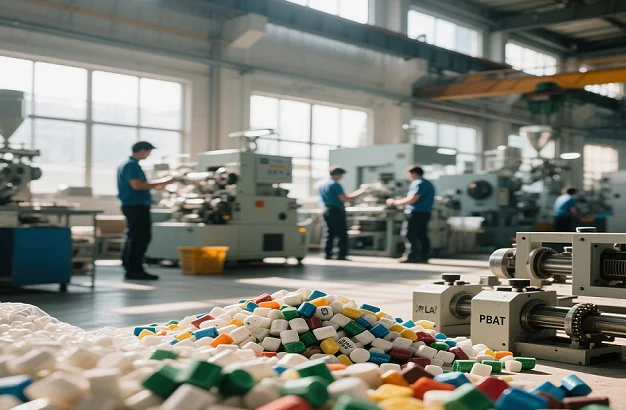
As the global environmental protection awareness increases, the problem of plastic pollutants is becoming more and more serious, and the non-degradability of traditional petroleum-based plastics has caused a huge burden on the environment. In this context, biodegradable materials such as poly(lactic acid) (PLA) and poly(adipic acid)/butylene terephthalate (PBAT) have received widespread attention due to their […]
Significant progress in PBAT/starch blending technology! Degradation cycle shortened to 80 days
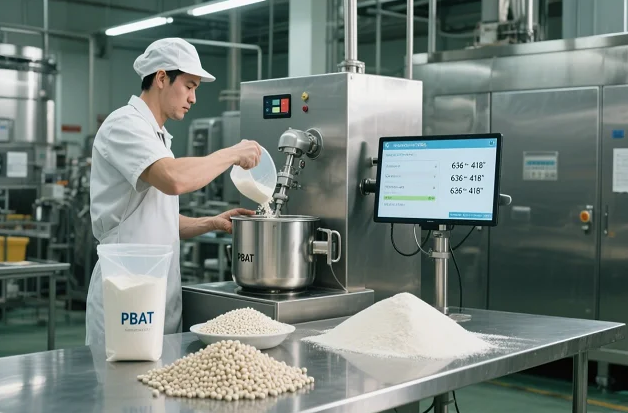
Industry Milestone: Degradation Efficiency Breaks the Technical Bottleneck 2024 In August, Changchun Institute of Applied Chemistry, Chinese Academy of Sciences (CAS), together with Jinfa Science & Technology (JST), published the latest research results in Nature Sustainability, announcing that through molecular interfacial engineering technology, it has shortened the degradation cycle of industrial composting of PBAT/starch composites […]
PLA/PBAT composite film degrades in 120 days on farmland.
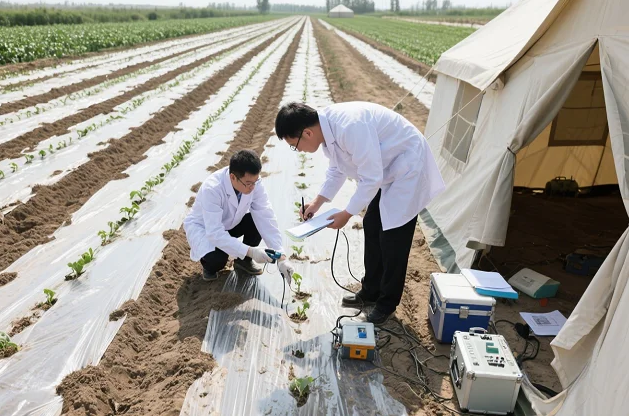
Field revolution: biodegradable mulch film ushers in a breakthrough 2024 A field trial of PLA/PBAT composite mulch film conducted by the Ministry of Agriculture and Rural Development (MARD) in six major agricultural production areas, including Shandong and Xinjiang, showed that the average degradation cycle of the new generation of mulch film has been shortened to […]
A New Choice for Takeaway Packaging: Evaluation of PBAT+ Calcium Carbonate Composite Material
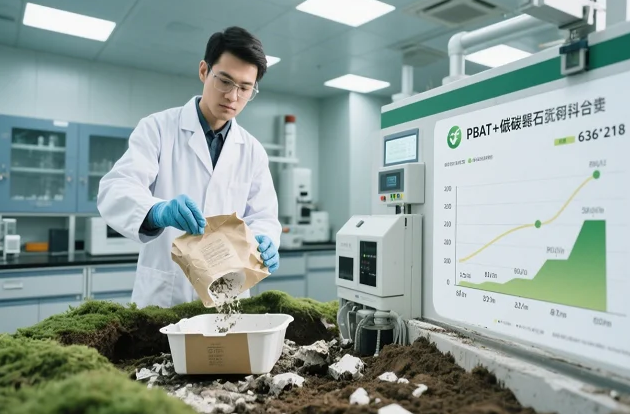
New Favorite in the Market: Calcium Carbonate Modified PBAT Comes Out of the Blue In the second quarter of 2024, the trial volume of a new type of PBAT+30% calcium carbonate composite takeaway packaging on Meituan and Hungry Mou platforms exceeded 20 million sets. We jointly with SGS testing organization on the market mainstream 5 […]
Significant progress in PBAT+starch blending technology! 40% shorter degradation cycle
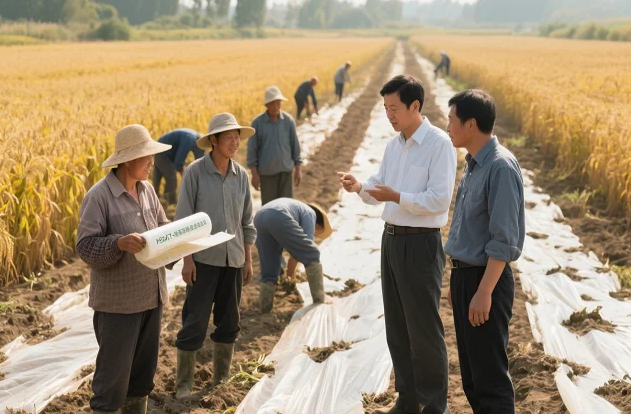
Technological Breakthrough: Rewriting the Biodegradable Materials Landscape 2024 In July, Ningbo Institute of Materials, Chinese Academy of Sciences (NIMS), together with Jinfa Science & Technology (JST), published their latest research results in Advanced Materials, announcing that they have developed a new PBAT/starch molecular self-assembly technology, which shortens the degradation cycle of composites from the conventional […]
PBAT packaging must be certified to EN13432 from 2025
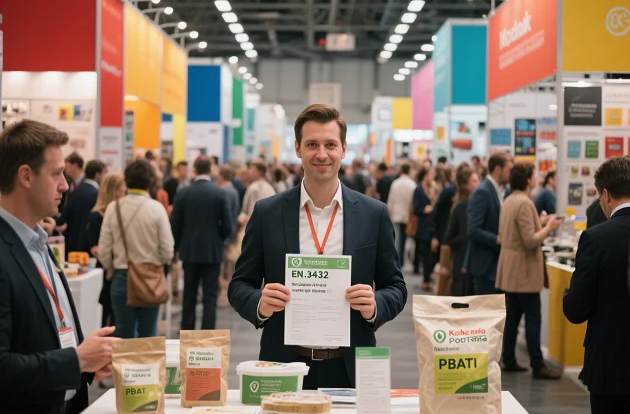
Policy storm is coming: EU SUP ban is upgraded again In July 2024, the European Commission officially issued Regulation (EU) 2024/1782, which clearly stipulates that since January 1, 2025, all disposable plastic packaging containing PBAT components must be certified for industrial composting by EN13432. This new regulation will have a direct impact on the $8.5 […]
The 3 major developments in compostable packaging in light of the EU’s SUP ban

EU SUP Ban Update: 2025 New Regulations Explained In June 2024, the European Union officially adopted the revision of the SUP (single-use plastics) ban, and the new regulations will be fully implemented on January 1, 2025. Compared to the 2019 version, there are three key changes in this update: Expanding the scope of the plastic […]
Breakthrough! Scientists discover new composting material that degrades in 3 months
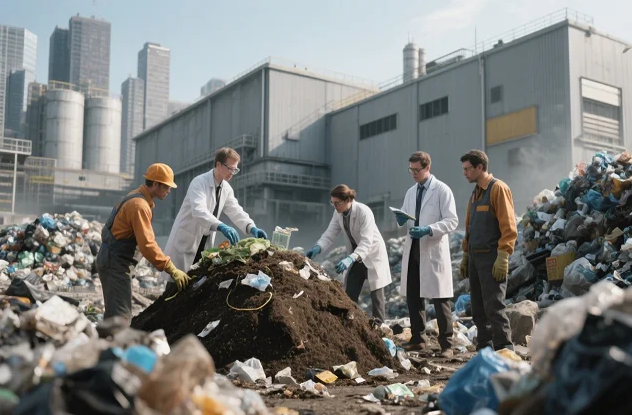
Revolutionary Discovery: The New Material That Will Rewrite the Composting Industry In June 2024, a joint research team from MIT and the National University of Singapore (NUS) published in Nature Materials the results of a groundbreaking study: a new bio-based composite material called “PhytoCell” that can be fully degraded under standard composting conditions in as […]