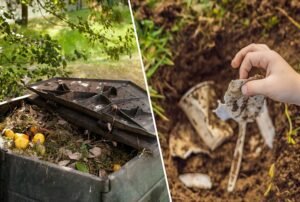
In today’s environmentally conscious world, how should pet owners choose pet waste bags? Naturally, pet owners will prioritize products labeled “biodegradable” or “compostable.” However, do you truly understand the real meaning of these two terms? Are they interchangeable? More importantly, how can you use this understanding to make truly environmentally responsible choices for your beloved pet?
I. Biodegradation: A Natural Decomposition Process
Biodegradation refers to the process by which materials gradually break down into water, carbon dioxide (or methane), and biomass in the natural environment through the action of microorganisms (such as bacteria and fungi). This process may occur in soil, water bodies, or specific treatment facilities, and its core lies in “decomposition through biological activity.”
“Biodegradable” may have some unclear aspects:
1. Uncertain Decomposition Time: A product labeled “biodegradable” does not necessarily mean it decomposes quickly. For example, a plastic bag may take hundreds of years to completely decompose.
2. Unclear Decomposition Conditions: Some materials can only degrade under specific temperature, humidity, or microbial conditions and may not decompose effectively in the natural environment.
3. Decomposition Residue Issues: Some “biodegradable” products still leave behind microplastics or toxic substances after decomposition, posing a potential pollution risk to soil and water sources.
Therefore, the “biodegradable” label alone cannot fully guarantee that a product is harmless to the environment.
II. Composting: A Controllable Resource Recycling System
Composting is a special form of biodegradation, specifically referring to the conversion of organic waste into nutrient-rich compost products under controlled conditions.
1. The composting process needs to meet the following conditions:
(1) Suitable Environment: This includes specific temperature (usually 58-60℃), humidity, and ventilation conditions.
(2) Microbial Involvement: The metabolic activities of bacteria, fungi, and other microorganisms help accelerate the decomposition of organic matter.
(3) No Toxic Residue: Compost products must meet safety standards and can be used for soil improvement.
2. Composting is divided into two categories:
(1) Home Composting: This is carried out in backyards or community compost bins. The decomposition rate is slower, suitable for easily decomposable materials such as fruit peels and leaves.
(2) Industrial composting: Conducted in specialized facilities, this method optimizes conditions for efficient decomposition and is a highly efficient way to process products such as pet waste bags.
Compostable products must pass authoritative certifications (such as ASTM D6400, OK compost INDUSTRIAL) to ensure complete decomposition in an industrial composting environment without producing harmful substances.
III. What is the difference between “biodegradable” and “composting”?
Characteristics | Biodegradable | Composting
Decomposition Conditions | Occurs naturally | Requires human-controlled environment
Decomposition Products | May contain microplastics | Transforms into safe compost
Time Range | Uncertain | Completes decomposition within 180 days
Certification Requirements | No mandatory standards | Requires international certification
From the table above:
1. Biodegradable bags: May break down into microplastics in the natural environment, still posing a threat to the ecosystem.
2. Compostable bags: Transform into fertilizer in industrial composting facilities, achieving resource recycling.
IV. How to choose truly environmentally friendly products for your pet?
When purchasing pet bags, pet owners should pay attention to the following aspects:
1. Look for authoritative certifications
Choose products certified by ASTM D6400 or OK Compost. These certifications are important indicators of environmental performance, ensuring complete decomposition in industrial composting environments.
2. Consider different scenarios
If your area lacks industrial composting facilities, choose products suitable for home composting, or prioritize bags made from renewable materials (such as plant starch).
3. Reject “pseudo-environmental” claims
Be wary of products that only label themselves as “biodegradable” without providing certification information. Genuine environmentally friendly products will clearly state the certification standards and usage conditions.
Conclusion: Using knowledge to safeguard environmental choices
Truly understanding the difference between “biodegradable” and “compostable” is the beginning of a sustainable lifestyle for every pet owner. Choosing a truly compostable pet bag is not only responsible for your pet but also a long-term commitment to the planet.
All Esinle pet bags are certified by ASTM D6400 and OK compost INDUSTRIAL, ensuring that every bag can be safely decomposed in industrial compost, reducing plastic pollution at the source.