When a Climate Advocate Sounds the Alarm
Al Gore knows what genuine climate action looks like. That’s precisely why his warning about greenwashing carries such weight.
In a 2021 interview with Fortune magazine, the former US Vice President and longtime climate advocate delivered a blunt assessment of corporate environmental claims. He warned that greenwashing has become a serious threat to climate progress, specifically calling out companies that announce fuzzy “net-zero” targets while making minimal real-world investment in low-carbon solutions.
So how do we actually build a world without greenwashing? Not through wishful thinking. Through transparency, verification, and structural change. Source: Fortune
The Problem With “Net‑Zero” – When Ambition Becomes a Shell Game
Gore’s critique hit a specific nerve: corporate net-zero pledges that look impressive on paper but lack substance. Here’s the uncomfortable truth he highlighted — many of these pledges are made by executives who won’t even be in their positions when the 2050 deadline arrives. They’re making promises that future generations will have to keep.
This isn’t just cynicism. It’s a structural flaw in how corporate climate commitments are designed. A net-zero pledge without interim milestones, without accountability mechanisms, and without transparent progress reporting is little more than a press release.
The Science Based Targets initiative (BTi) has been working to address this by raising the bar for credible corporate climate targets. But as critics have noted, even well-intentioned frameworks can fall short if they don’t require immediate, verifiable action alongside long-term goals.
What this means for you as a consumer: When you see a company announce a “net-zero by 2050” goal, ask for their 2025, 2030, and 2035 milestones. If they can’t show you the stepping stones, the destination probably doesn’t exist.
Carbon Offsetting – The “Get Out of Jail Free” Card That Doesn’t Work
Gore was equally direct about carbon offsets — and he wasn’t alone in his skepticism. A growing body of academic research has exposed deep integrity problems in voluntary carbon markets.
According to a 2025 review published in Global Transitions, carbon market scandals and greenwashing stem from inflated baselines, poor monitoring and verification systems, and weak governance structures. In plain English: companies buy carbon credits that claim to represent real emissions reductions, but those reductions often never actually happen.
The EU has now taken decisive action. Under the Empowering Consumers for the Green Transition (ECGT) Directive, which comes into full effect on 27 September 2026, companies can no longer make “carbon neutral” or “net-zero” claims based solely on carbon offsetting outside their own value chain.
Comparison: Genuine Climate Action vs. Carbon-Offset Greenwashing
| Aspect | Genuine Climate Action | Carbon-Offset Greenwashing |
|---|---|---|
| Primary focus | Deep, absolute emissions reductions within own value chain | Cheap offsets to “cancel out” ongoing emissions |
| Transparency | Full disclosure of Scope 1,2,3 emissions & reduction roadmap | Vague claims, no underlying data |
| Offset quality | Only high-quality, verifiable carbon removal as last resort | Any cheap, often non-additional credit |
| Regulatory status | Compliant with SBTi, ECGT, etc. | Banned in the EU for product-level claims |
What this means for you: When a company claims “carbon neutrality,” ask whether that claim is based on actual lifecycle emissions reductions or purchased offsets. The ECGT standard is a good benchmark to use, even if you’re not in Europe.
Regulations Are Finally Catching Up – A Global Patchwork
The EU’s ECGT isn’t acting in isolation. Around the world, regulators are tightening the screws on misleading environmental claims.
Key Anti-Greenwashing Regulations (2025–2026)
| Region | Regulation / Guideline | Key Requirement | Effective Date |
|---|---|---|---|
| EU | ECGT Directive | Bans carbon-offset-based “carbon neutral” claims; prohibits generic terms like “eco-friendly” without proof | 27 Sep 2026 |
| US (California) | SB 54 | All single-use packaging must be recyclable or compostable by 2032; 25% reduction in plastic packaging | Phased, data due 30 May 2026 |
| US (Federal) | FTC Green Guides (revision pending) | No current guidance on carbon neutrality; states filling the gap | Unknown |
| UK | CMA Green Claims Code | Fines up to 10% of global turnover for misleading environmental claims | In force |
What this means for you: The regulatory landscape is becoming a compliance minefield for companies. As a consumer, you can use these emerging standards as a checklist. Does the brand’s environmental claim meet the ECGT’s evidentiary standard? Does their packaging comply with California’s SB 54 requirements? If not, why not?
 Source: pexels
The Transparency Test – How to Spot a Company That’s Actually Trying
So how do we separate the genuine climate actors from the greenwashers? Here’s a practical framework.
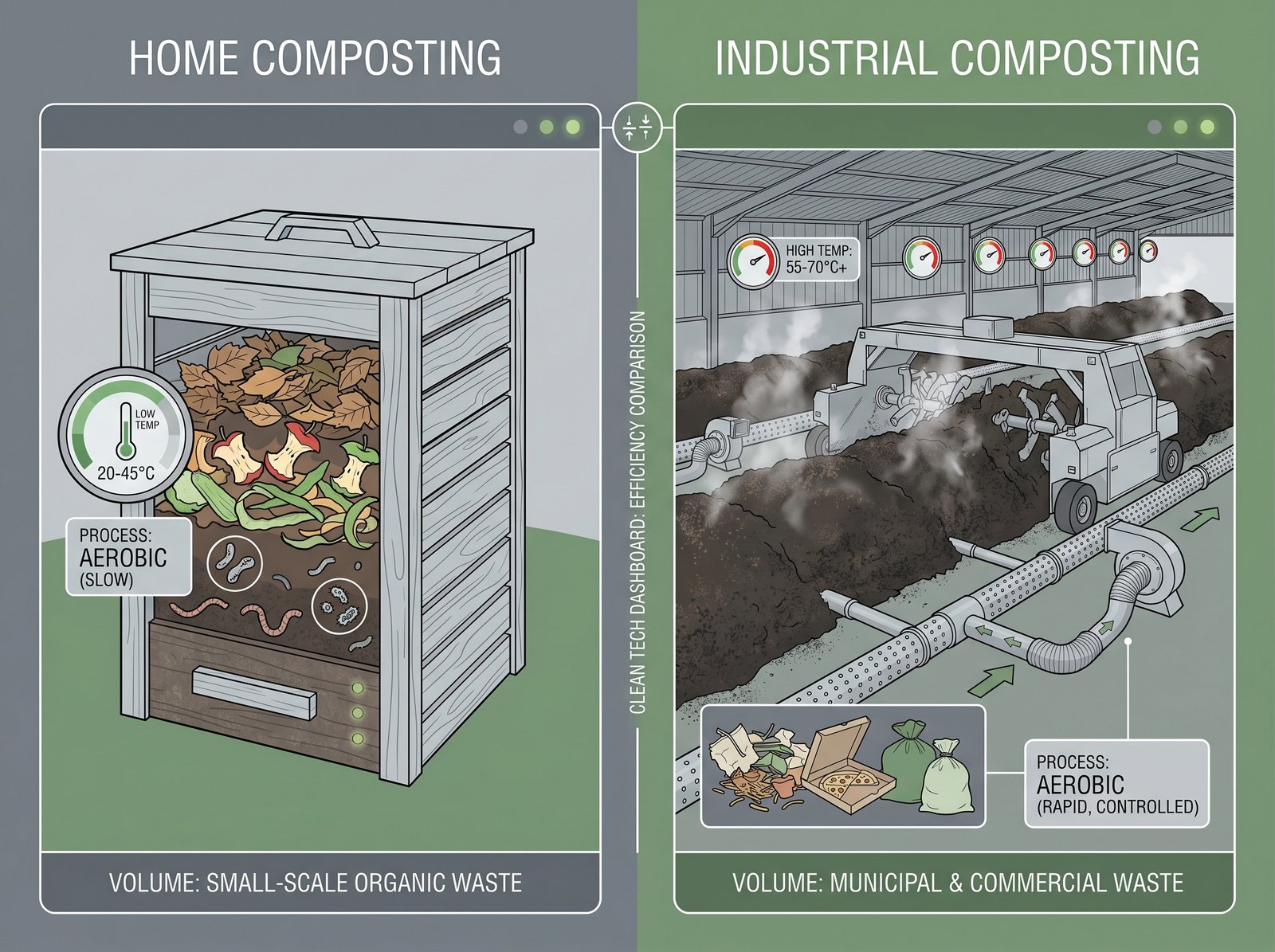
First, look for third-party certification — but not just any certification. The ECGT now requires that sustainability labels be based on certification schemes established by public authorities or independently verified third parties. Self-created labels are prohibited. This means labels like BPI (Biodegradable Products Institute), OK compost HOME (TÜV Austria), and EU Ecolabel carry real weight, while a company’s homemade “green leaf” logo does not.
What Real Anti‑Greenwashing Looks Like – Esinle
To understand how a company can demonstrate genuine commitment across every stage of a product’s life, let’s examine Esinle, a biodegradable plastic manufacturer. The table below compares Esinle’s practices against common industry greenwashing traps.
| Lifecycle Stage | What Consumers Should Check | Esinle’s Practice (Score & Details) | Common Greenwashing Trap |
|---|---|---|---|
| Raw Material | Source transparency, sustainable farming | ★★★★☆ • Uses non‑food crop starch (cassava, corn) • Non‑GMO, no chemical pesticides • Full traceability system; tracks carbon/water footprint of farming | Claims “bio‑based” but hides deforestation or land‑use conflict |
| Manufacturing | Clean production, energy & emissions, labour rights | ★★★★★• Closed‑loop process, near‑zero emissions • 30% less energy per unit, >40% renewable electricity • 95% waste recycling rate • BSCI certified | Promotes “green product” while ignoring dirty factory floors |
| Product Design | Real materials, reliable performance, full lifecycle optimisation | ★★★★★ • 20 patents; 100% biodegradable (PLA, PBAT, starch) • 18% material reduction via lightweighting • 50% higher puncture strength, 2kg load capacity• Lifecycle assessment for each design | Uses misleading term “biodegradable”; product tears or leaks easily |
| End‑of‑Life | Clear disposal guidance, genuine certifications, infrastructure support | ★★★★★ • DIN CERTCO (EN13432), BPI, ASTM D6400, TÜV Austria home/industrial compost• 93.2% degradation in 180 days (vs 90% required)• Compost improves plant biomass by 5.8% • Each batch traceable via QR code | Claims “compostable” but only works in rare industrial facilities; no consumer guidance |
Your Role in Building a Greenwashing‑Free World
You don’t need to be a regulator or an activist to push back against deceptive greenwashing practices—those misleading sustainability claims that sound good but mean little. Just be an informed consumer. Learn to recognize contextual terms like “biodegradable,” “compostable,” and “recyclable,” along with suggested terms such as “certified,” “lifecycle assessment,” and “third‑party verified.” These terms help you separate genuine sustainability from empty marketing rhetoric.
- Ask hard questions. When a brand makes an environmental claim, ask for the evidence. If they can’t provide it, that’s an answer in itself.
- Learn the certification landscape. Know the difference between BPI, OK compost HOME, ASTM D6400, and self-created labels. Recognize which certifications actually mean something.
- Support brands that practice radical transparency. Companies that publish their test reports, disclose their supply chains, and admit their limitations are the ones doing the real work.
- Share what you learn. The more consumers understand greenwashing tactics, the less effective those tactics become.
Join the Mission – Not as a Customer, but as a Fellow Warrior
But being informed is only the first step. Real change happens when we stop being passive buyers and start acting as fellow warriors – the very idea at the heart of our About page. At Esinle, we don’t see you as a transaction. You are a partner in our 10‑million‑bottle mission: every box of our certified compostable bags recovers 4 plastic bottles from the environment, and together we push the progress bar forward.
Greenwashing has no place here. Hiding behind vague labels? Not our style. Instead, we stand for radical transparency, certified science, and shared responsibility. We invite you to join us – not as a customer, but as someone who turns daily walks into climate action.
The world without greenwashing won’t be built by a single company or a single law. It will be built by millions of everyday decisions, made together.