✉ info@esinle.com | ✆ WhatsApp: +8618356140119 | Stock samples available · 1-business-day response target
Home and industrial compostable packaging disposal routes
Composting · Route selection

Home vs Industrial Compostable: Choose the Right Disposal Route

Start with where the finished package will actually be collected and treated. Then match the product, claim, certification scope and disposal instructions to that route.

HOMEAMBIENT COMPOSTING INDUSTRIALMANAGED FACILITY EVIDENCEFINISHED SKU
Download certification catalogue Talk to an engineer

Start with disposal reality, not the material name

The practical question behind “home vs industrial compostable” is not which label sounds greener. It is whether the finished package has a credible route from use to the composting environment named in the claim.

Use these four checks before selecting a formulation or approving artwork:

Collection: confirm whether customers have an accepted home-compost route, a municipal or commercial organics program, or no verified composting outlet.
Application: document where the item is used, what it contains, how it is collected and whether food-contact, bag-law or venue requirements apply.
Evidence: match the exact finished construction—including thickness, printing, additives and conversion—to the current certificate or test scope.
Claim: print only the route, mark and disposal instruction supported for that SKU and destination market.
Packaging specialist comparing home and industrial composting routes
A disposal-route decision should combine the application, local collection system, finished-product evidence and approved artwork claim.

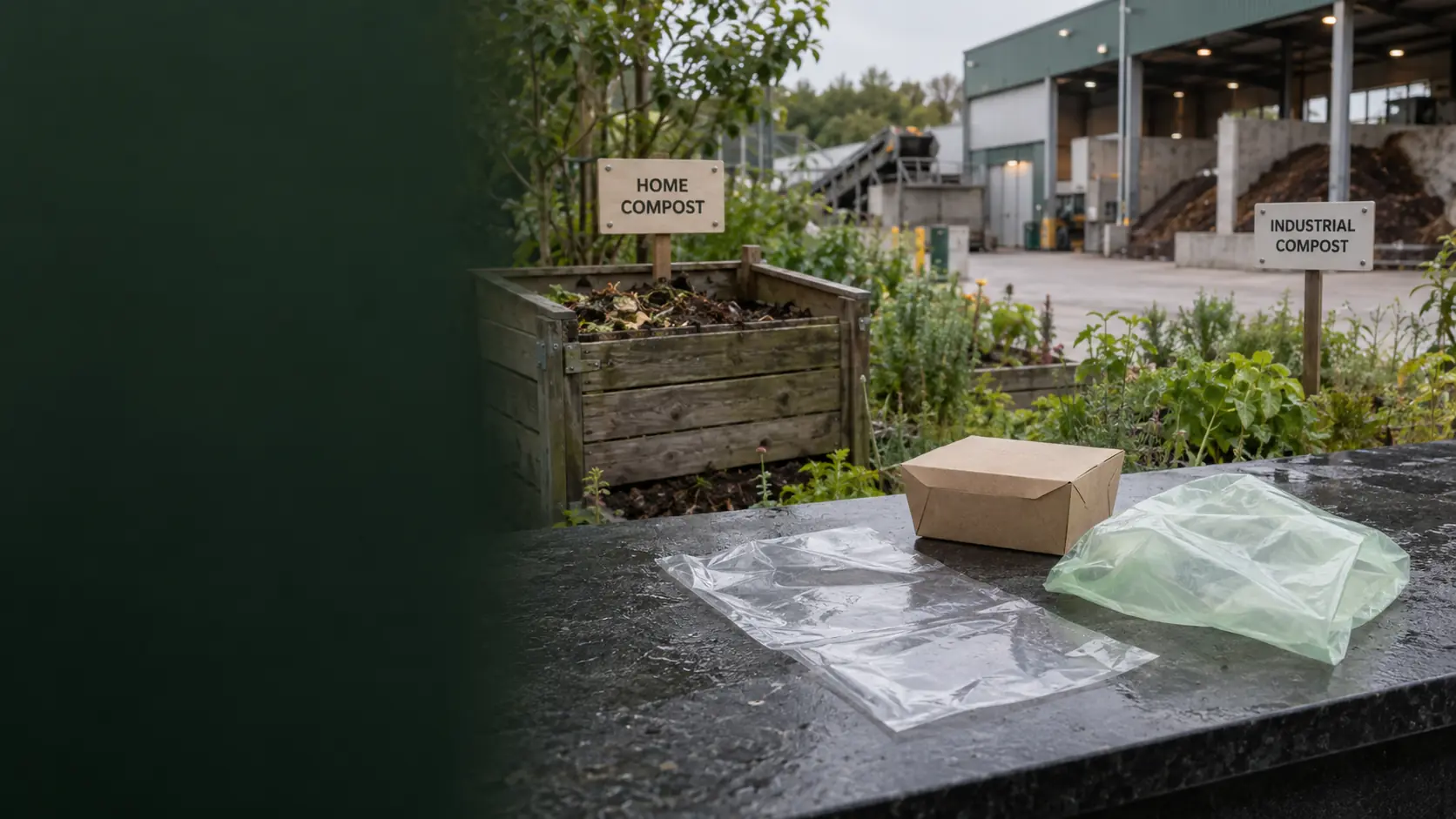
How the two composting routes differ

RouteTypical settingBuyer must verifyBest-fit decision
Home compostableManaged home or garden composting at ambient outdoor conditionsFinished-SKU home-compostability evidence, permitted mark and realistic consumer instructionsUse only where the exact product supports the claim and customers have a credible home-compost route
Industrial compostableMunicipal or commercial aerobic composting under controlled facility conditionsApplicable standard or certification plus acceptance by the receiving organics program or facilityUse where collection and treatment infrastructure are confirmed for the intended application
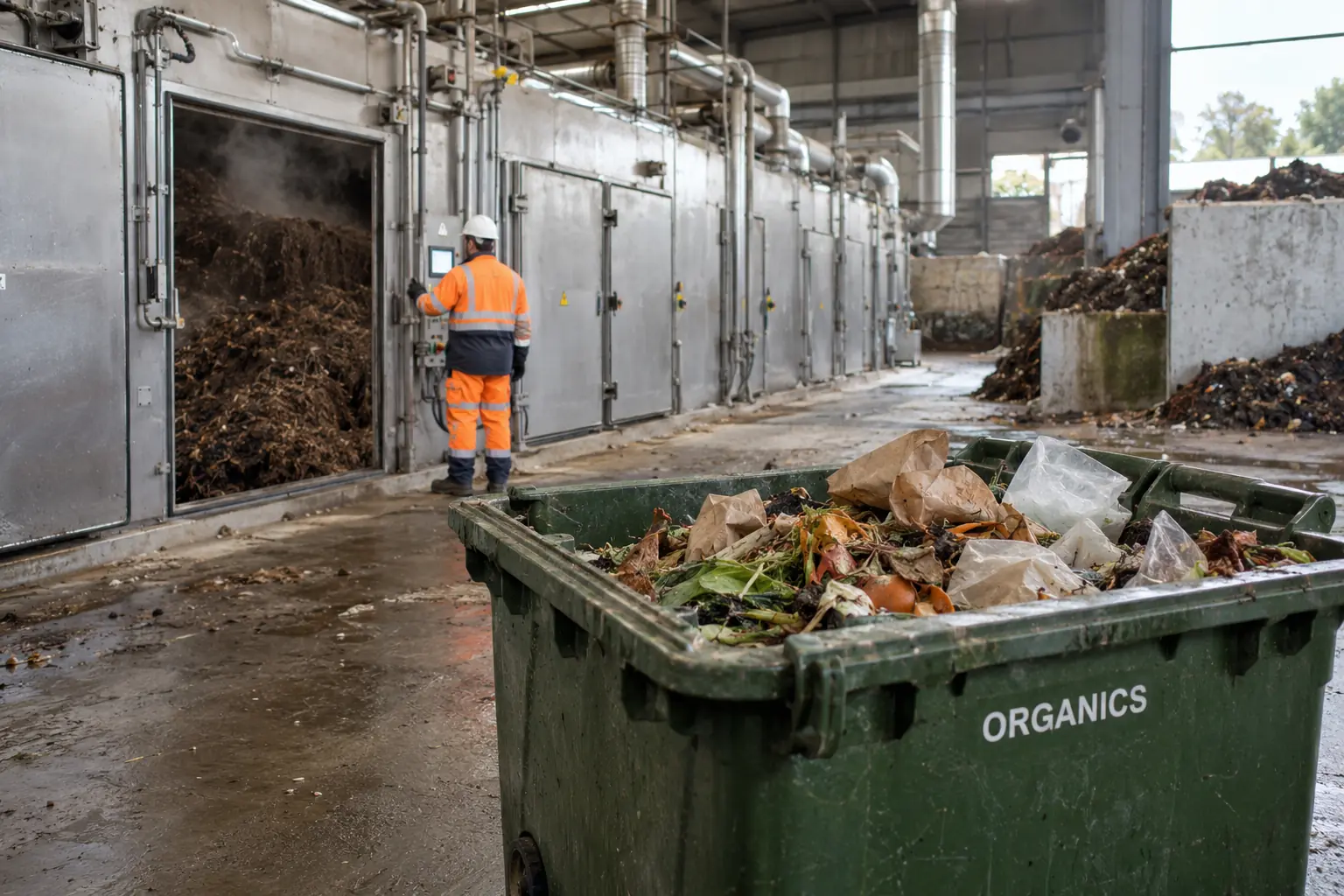
Industrial composting facility processing compostable packaging
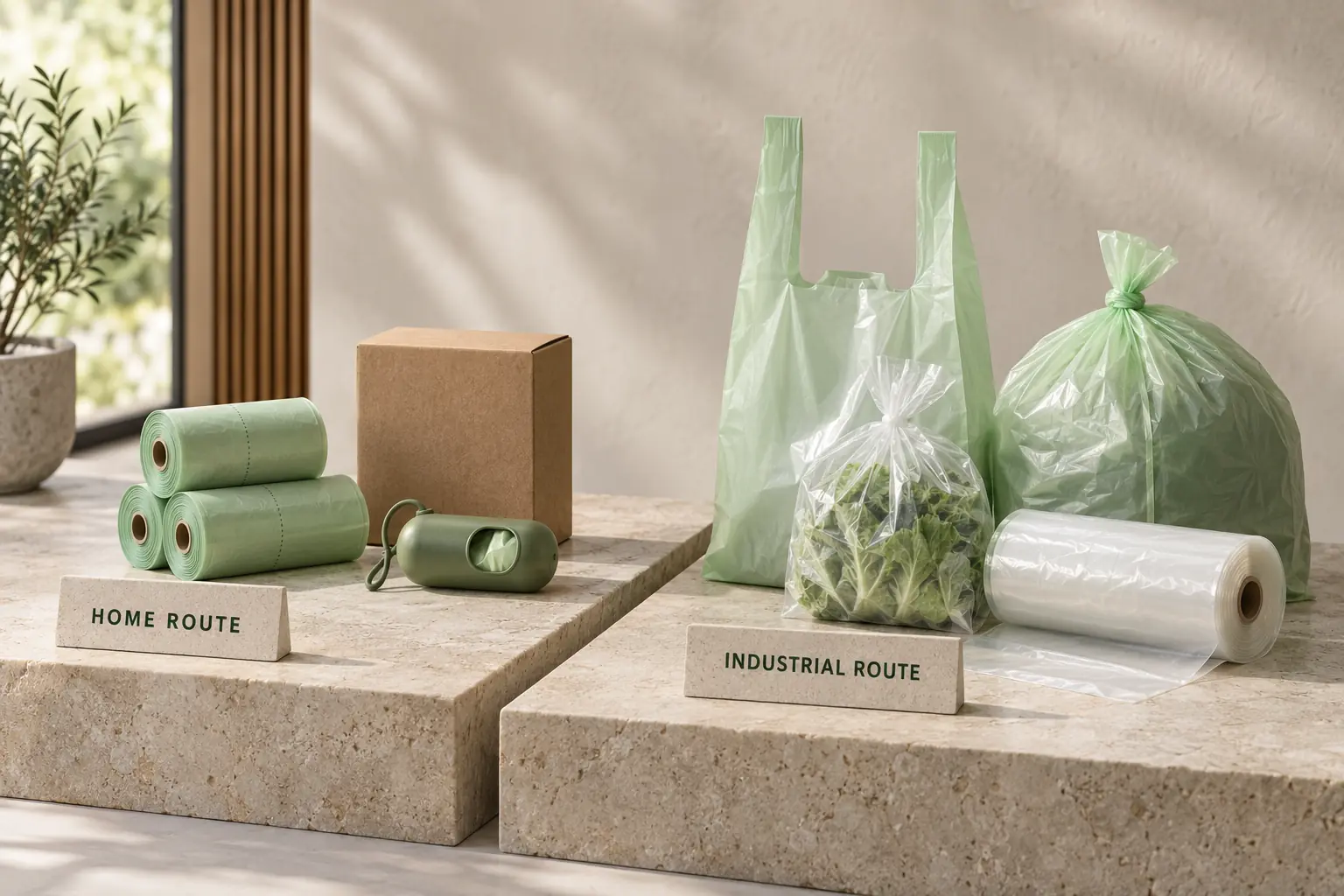
INDUSTRIAL ROUTE

Designed for managed composting systems

Industrial claims relate to controlled municipal or commercial treatment. ASTM D6400 addresses plastics intended for municipal or industrial aerobic composting; local facility acceptance still needs to be checked.
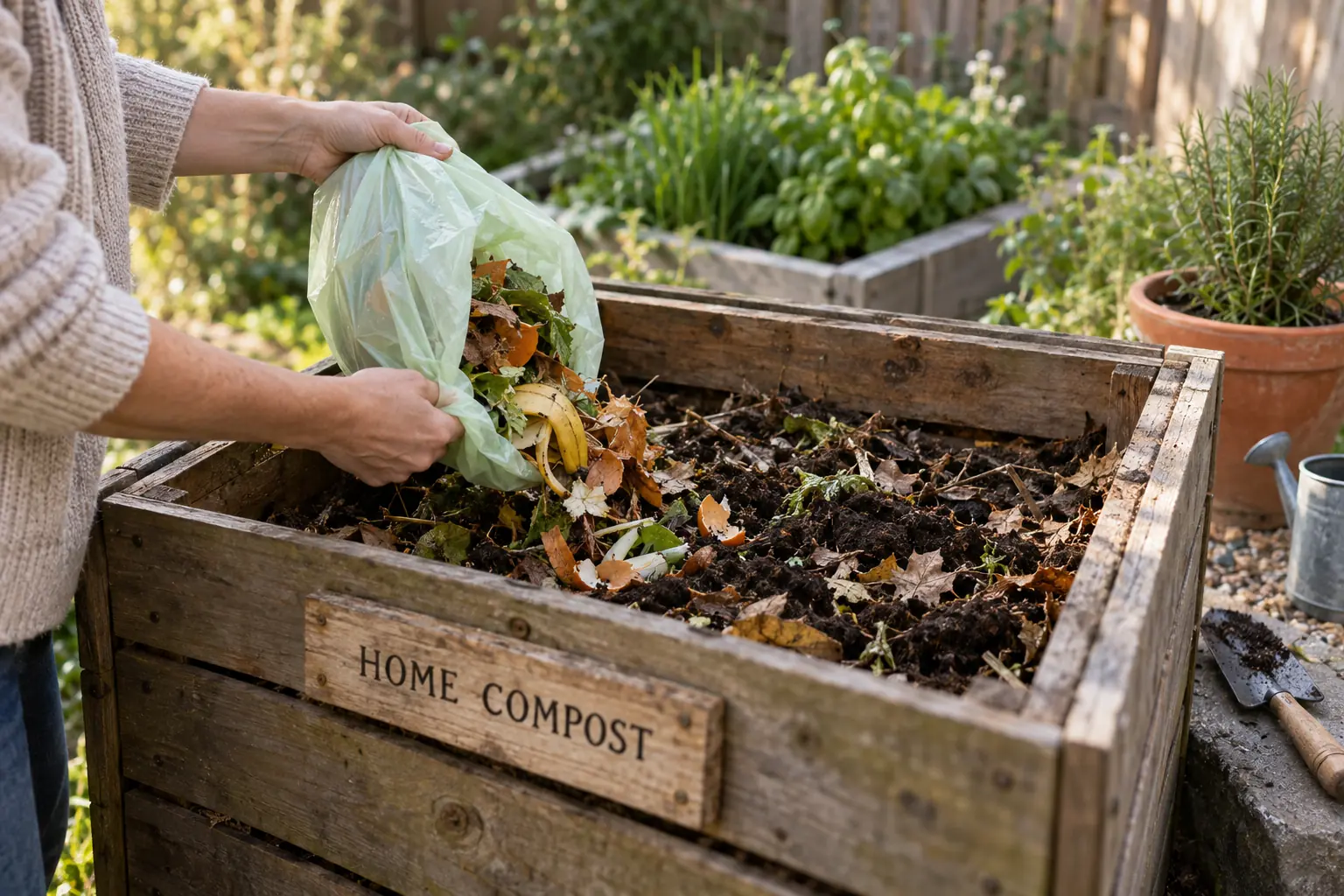
Home compostable packaging added to a backyard compost bin
HOME ROUTE

Designed for lower-temperature home conditions

A home-compostable claim requires evidence for the finished product under the selected home-composting scheme. Industrial certification alone does not support a home-compost claim.

California buyers: separate bag function from the compostability claim

For covered California stores, the bag’s function and the point at which it is provided matter. The 2026 carryout-bag rules restrict plastic film carryout bags at the point of sale while identifying separate exclusions and categories such as qualifying precheckout and nonhandled bags.

Compostability evidence supports a material claim; it does not by itself determine whether a particular checkout use is permitted. Confirm current state requirements, local ordinances and the exact use before ordering or approving artwork.

Classify the use: point-of-sale carryout, precheckout produce or food, pharmacy, garment, waste or e-commerce.
Record the construction: handles, dimensions, thickness, contents, printing and how the bag reaches the customer.
Verify separately: legal eligibility, compostability evidence and claim/labelling requirements are different checks.
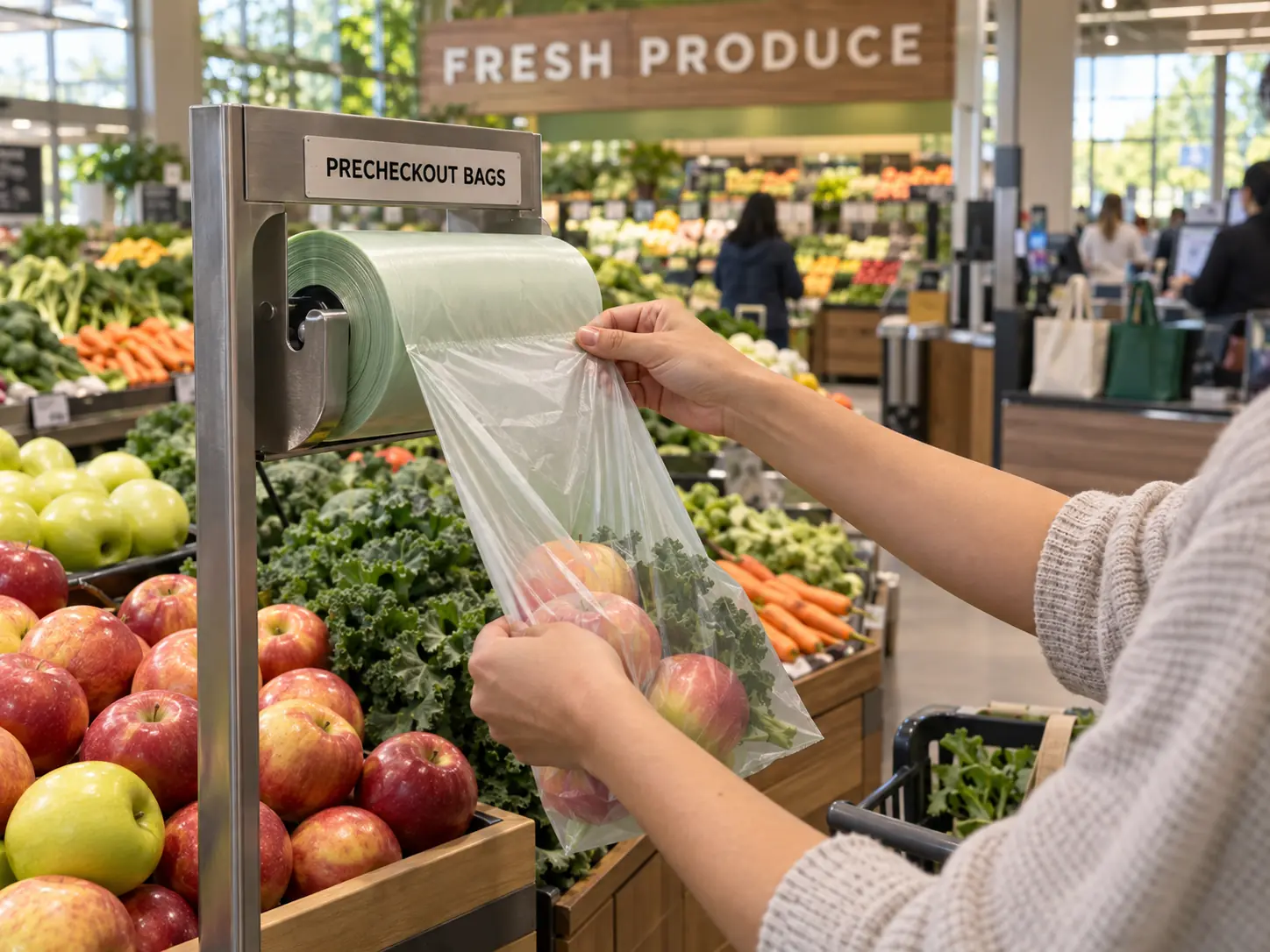
Handleless precheckout produce bag used in a supermarket
A precheckout produce bag and a point-of-sale carryout bag can fall into different statutory categories even when the materials look similar.

Select a product format after the route check

Certification availability varies by finished SKU, construction and destination market. Use the product family to define the format, then request the current certificate scope for the selected item.

Dog Bags Shopping Bags Food Bags General Bags
Product lines for home and industrial composting routes
PRODUCT ROUTE

Map the claim to the exact product format

A product family name does not establish compostability. Film gauge, bag shape, printing, additives and converting can change the evidence scope, so shortlist the format first and verify the finished SKU second.

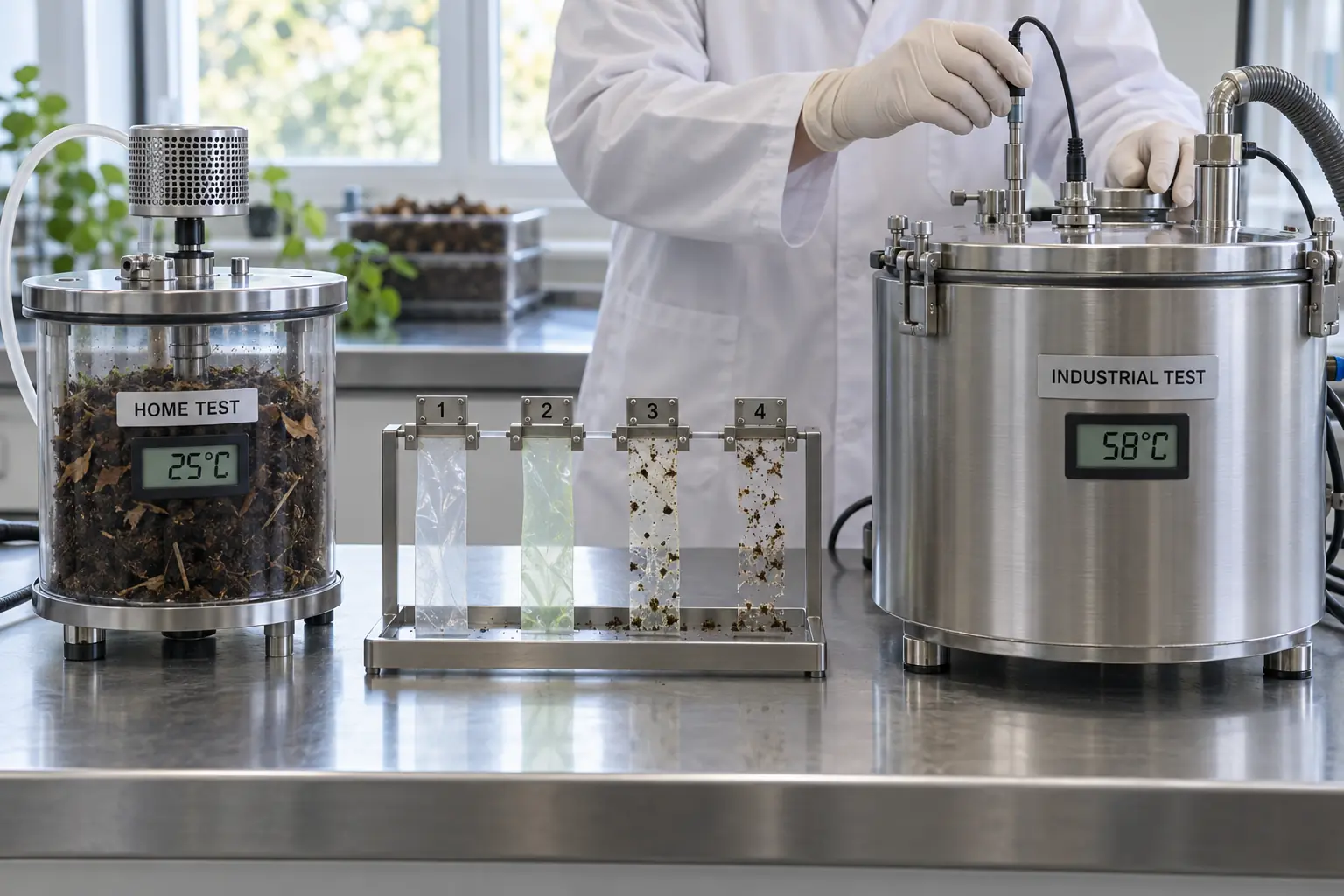
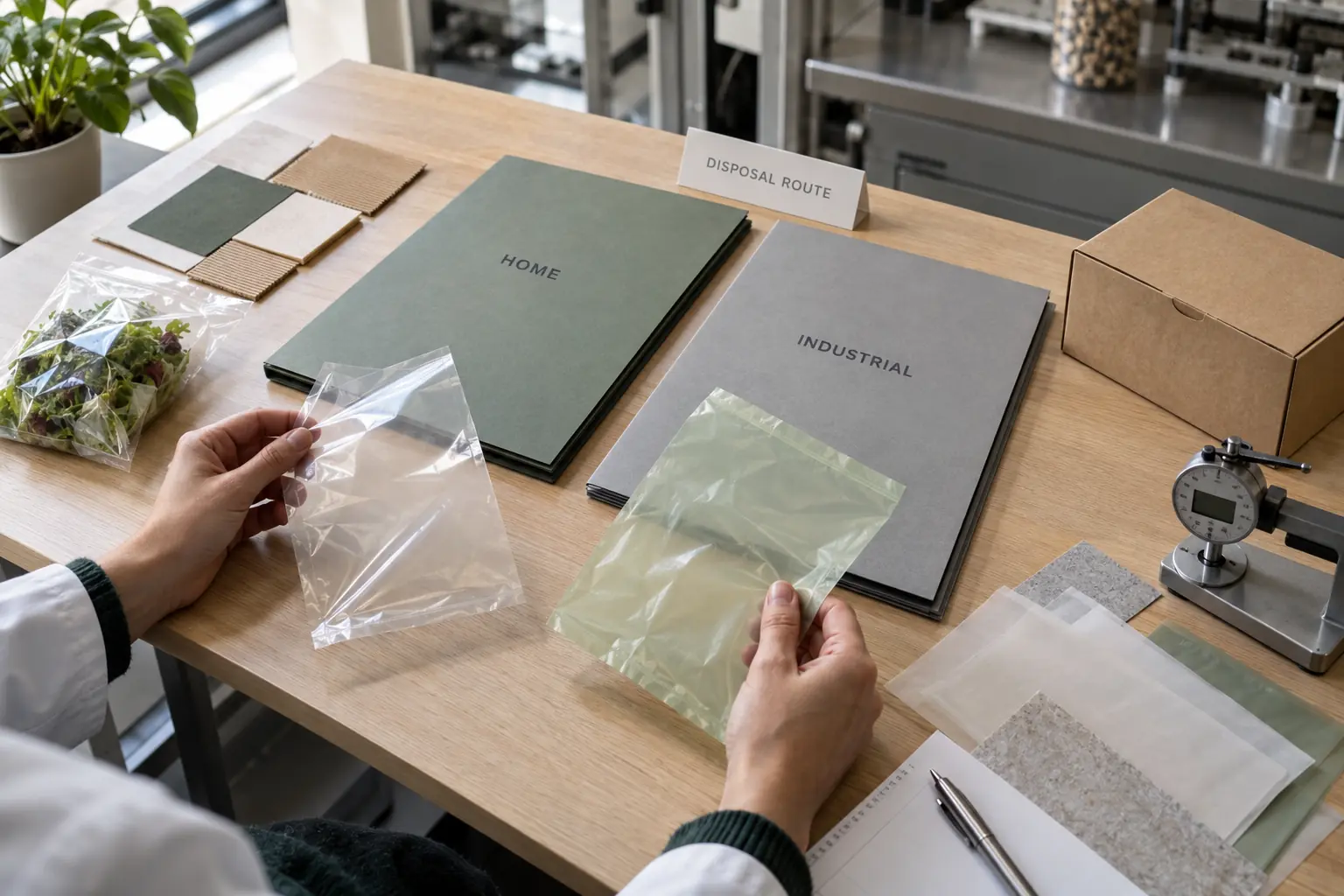
Laboratory comparison of home and industrial compostability testing
TEST CONDITIONS

Home and industrial claims use different test conditions

The routes are not interchangeable. Certification schemes assess the product against conditions and pass criteria relevant to the named environment, while the current certificate defines which finished constructions are covered.

  • Check the named standard, scheme, certificate holder and validity.
  • Confirm thickness, colour, printing and converted format are within scope.
  • Verify that disposal instructions match local collection and treatment reality.
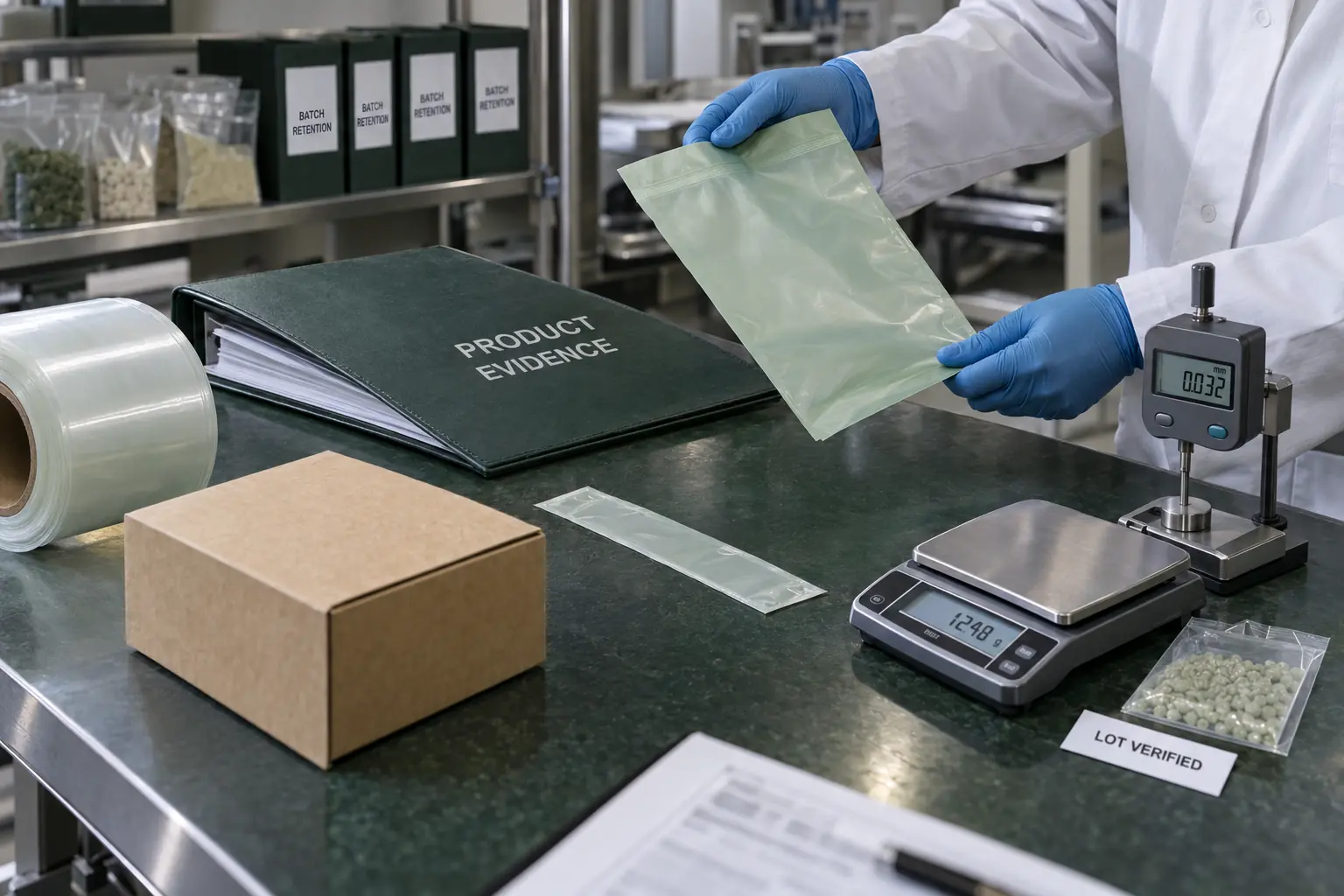
Finished compostable packaging matched to product evidence and batch records
PRODUCT-SPECIFIC EVIDENCE

Approve the claim only after the finished SKU is matched

A resin statement or sample certificate is not enough for artwork approval. Esinle can review the selected construction, available certificate scope, testing route and document pack before sampling or production.

  • Match the exact film or bag construction to the supporting file.
  • Separate compostability, food-contact and market-specific legal checks.
  • Keep approved artwork, certificate version and production reference together.

Frequently asked questions

01 What is the difference between home and industrial compostable? +

They refer to different disposal environments and test schemes. Industrial compostability is assessed for controlled municipal or commercial aerobic composting, while home-compostability schemes assess lower-temperature home or garden conditions. Check the exact finished-product scope rather than relying on the material name.

02 Does industrial-compostable certification also prove home compostability? +

No. Evidence for an industrial route does not automatically support a home-compostable claim. The finished product must be covered by evidence for the route named on the artwork.

03 Can one product carry both certifications? +

Potentially, but only when the exact finished construction is covered by valid evidence for both routes and use of each mark is authorised. Verify thickness, colour, printing and converted format before applying either claim.

04 What should I specify for mixed or unknown end markets? +

Do not assume one claim fits every destination. Map the likely collection routes, facility acceptance and local labelling rules, then consider separate SKUs or artwork versions when the evidence or disposal instructions differ.

05 What information should I send for a route recommendation? +

Send the product format, dimensions, thickness, printing, contents, country or state, customer disposal route, intended certification mark and forecast quantity. This allows the construction and evidence scope to be reviewed together.

Choose the correct disposal route

Compare available formats, then send the target market and collection route for a finished-SKU evidence check.

HOME · AMBIENT COMPOSTING
Download certification catalogue