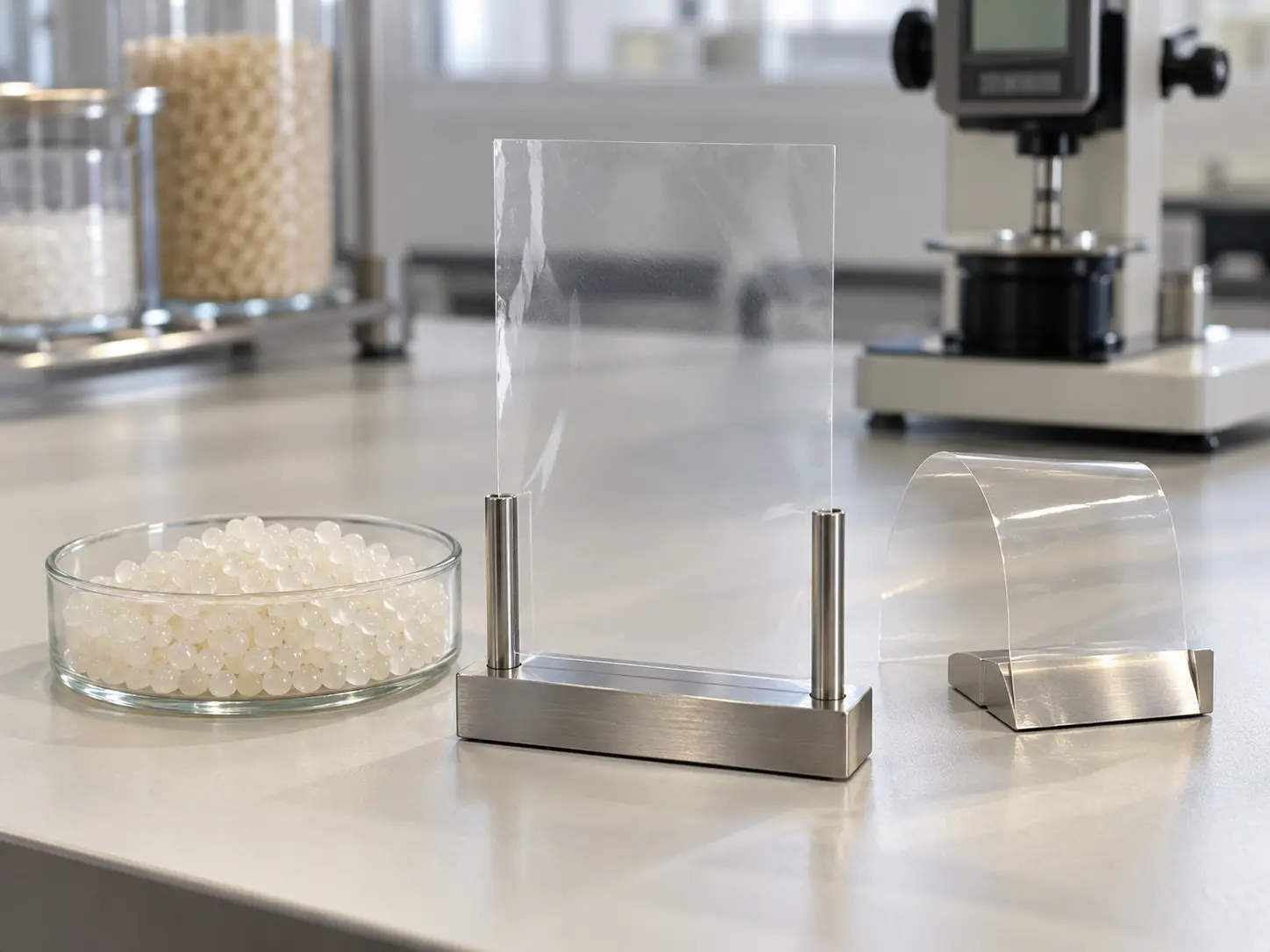
PLA
Structure and optical clarity
PLA-forward constructions can improve stiffness and transparency. Used alone, however, PLA can be too brittle for demanding flexible-film applications.
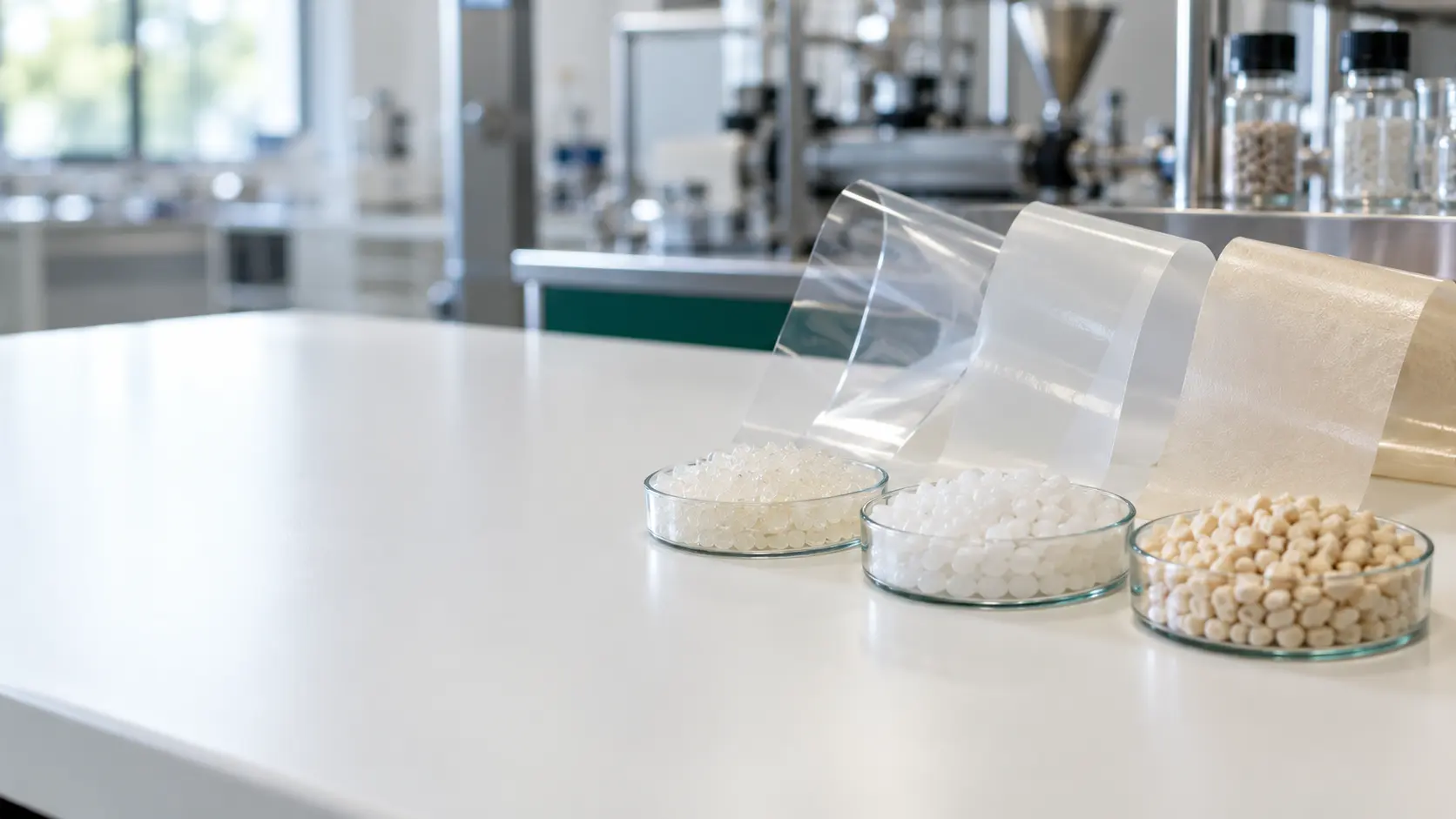
Compare the functional role of PLA, PBAT and thermoplastic starch before locking a compostable film specification. The finished blend—not one ingredient—determines clarity, toughness, sealing and evidence scope.
| Material | Role in the blend | Strengths | Limitation |
|---|---|---|---|
| PLA (Polylactic Acid) | Structural backbone for stiffness and optical clarity | Rigidity, transparency and renewable feedstock potential | Brittle when used alone; heat and tear performance depend on formulation |
| PBAT | Flexible phase that improves toughness and handling | High elongation, softer feel and tear resistance | Usually lower renewable content; exact source depends on the selected grade |
| Thermoplastic starch (TPS) | Raises the renewable-feedstock share of the compound | Plant-derived input and adjustable stiffness or opacity | Moisture sensitivity and a narrower processing window |
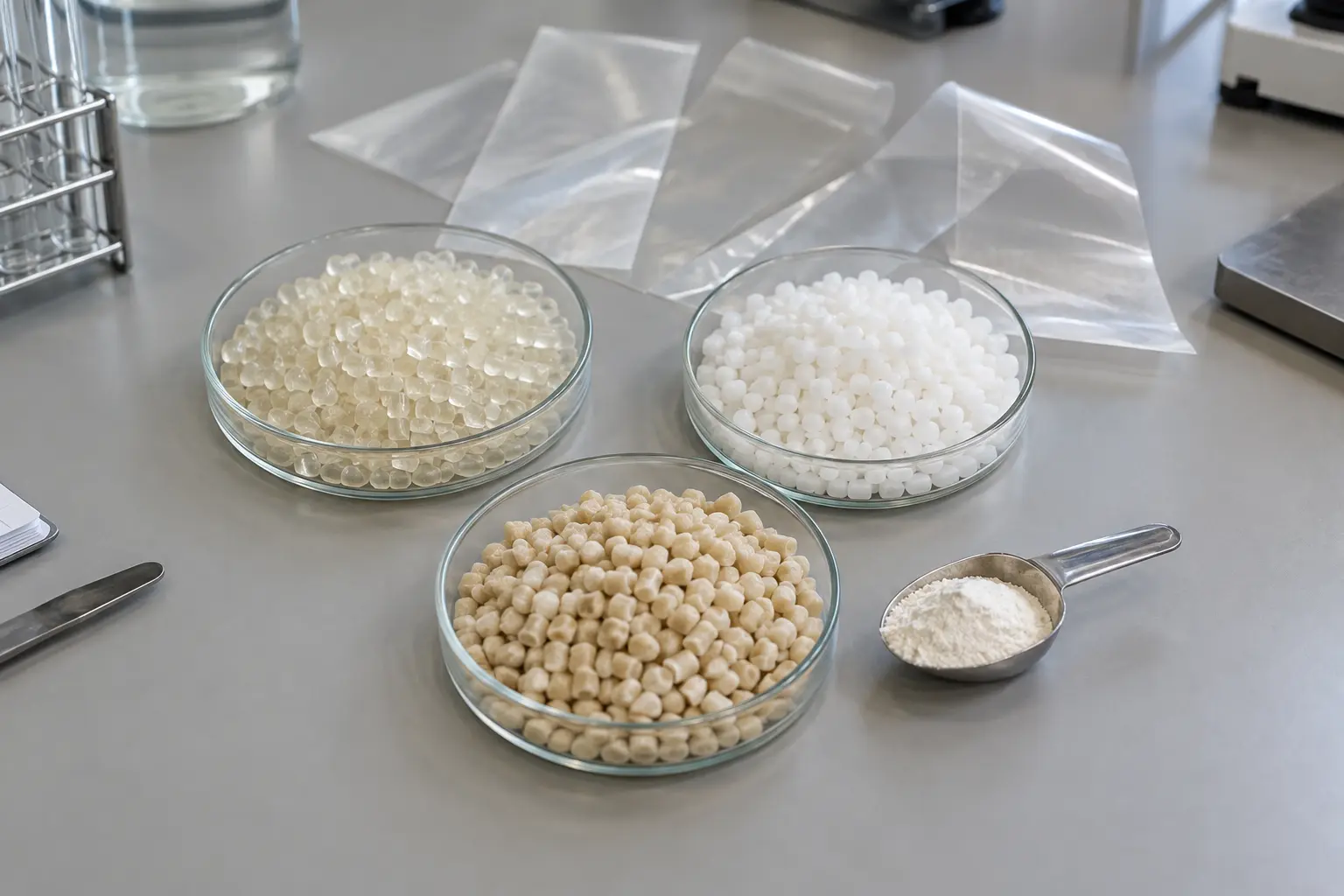
PLA-forward constructions can improve stiffness and transparency. Used alone, however, PLA can be too brittle for demanding flexible-film applications.

PBAT contributes elongation, softness and toughness, helping a thin film survive converting, packing and real handling without becoming rigid.
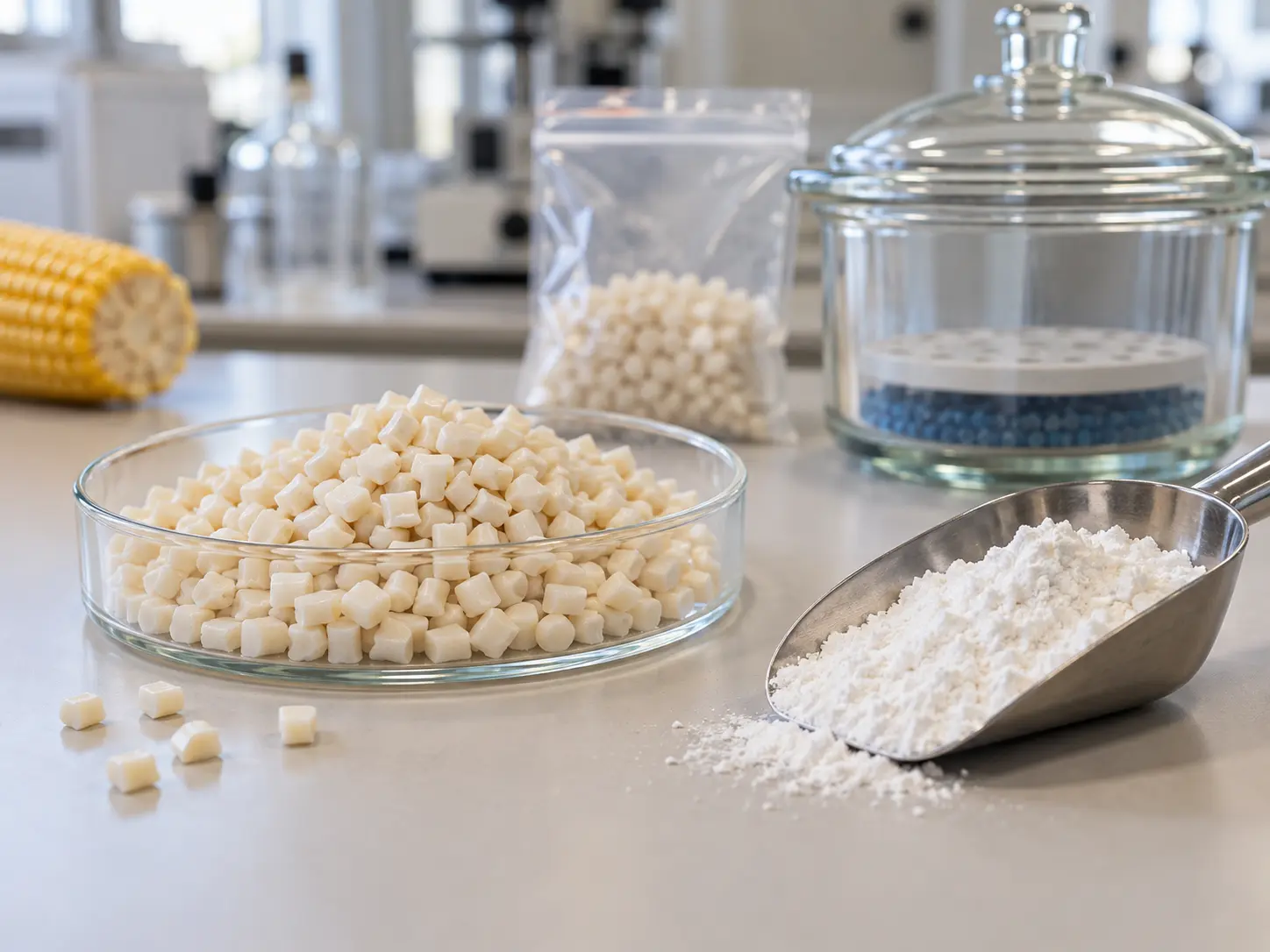
Thermoplastic starch can raise renewable content, but moisture sensitivity, storage and extrusion stability must be considered in the finished construction.
Many compostable flexible-film constructions use PLA and PBAT, with thermoplastic starch added when the renewable-feedstock target and application allow it. More PBAT generally moves the film toward softness and toughness; more PLA can increase structure and clarity; more TPS changes renewable content as well as moisture and processing behaviour.
A useful specification therefore starts with the operating requirement—not a preferred resin name. Film gauge, sealing method, storage conditions, packed load, temperature and destination-market evidence all need to be reviewed together.
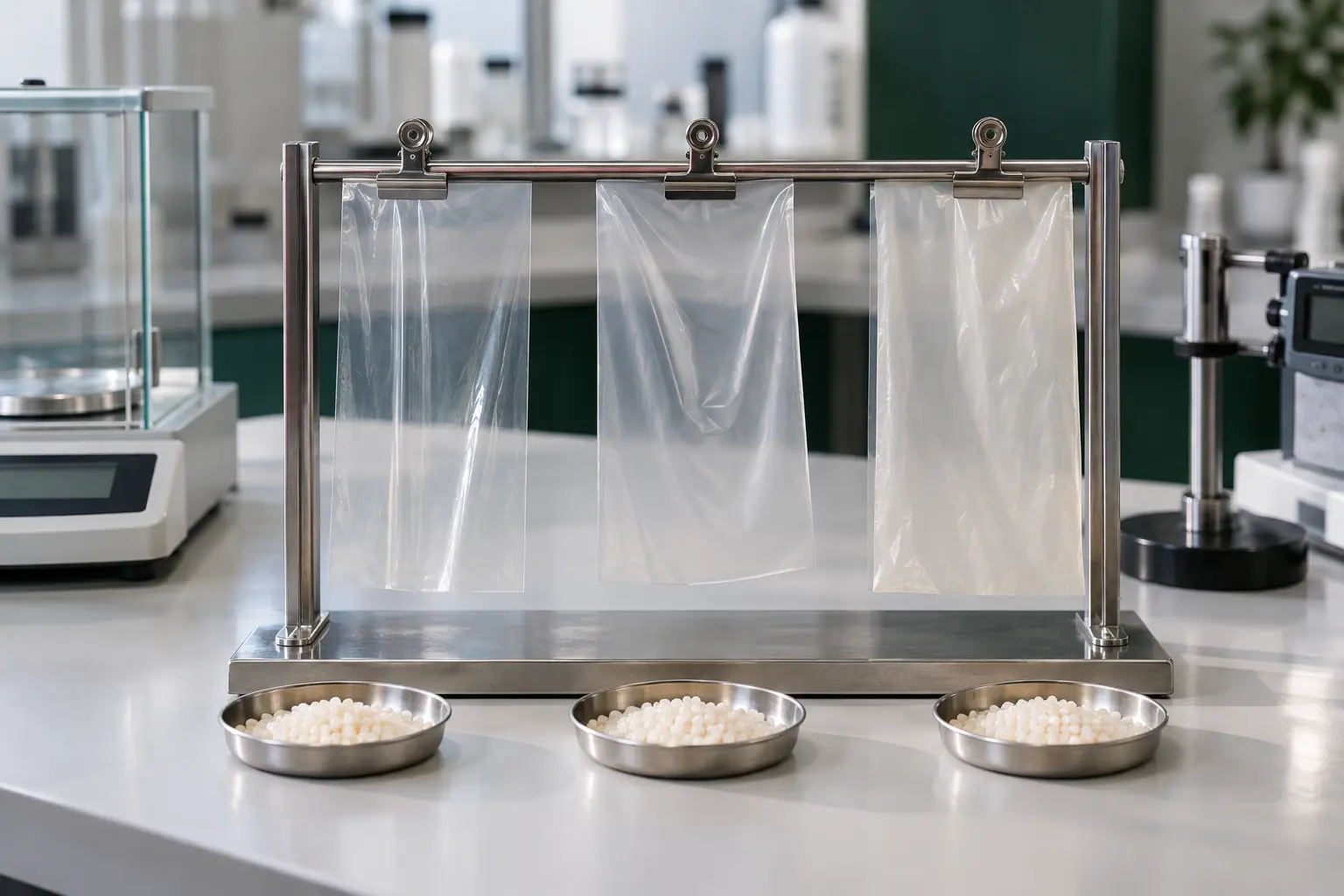
Cling film and food bags lean on clarity and sealing, dog bags on toughness, and protective wear on drape. Select the application first, then tune the blend and gauge.
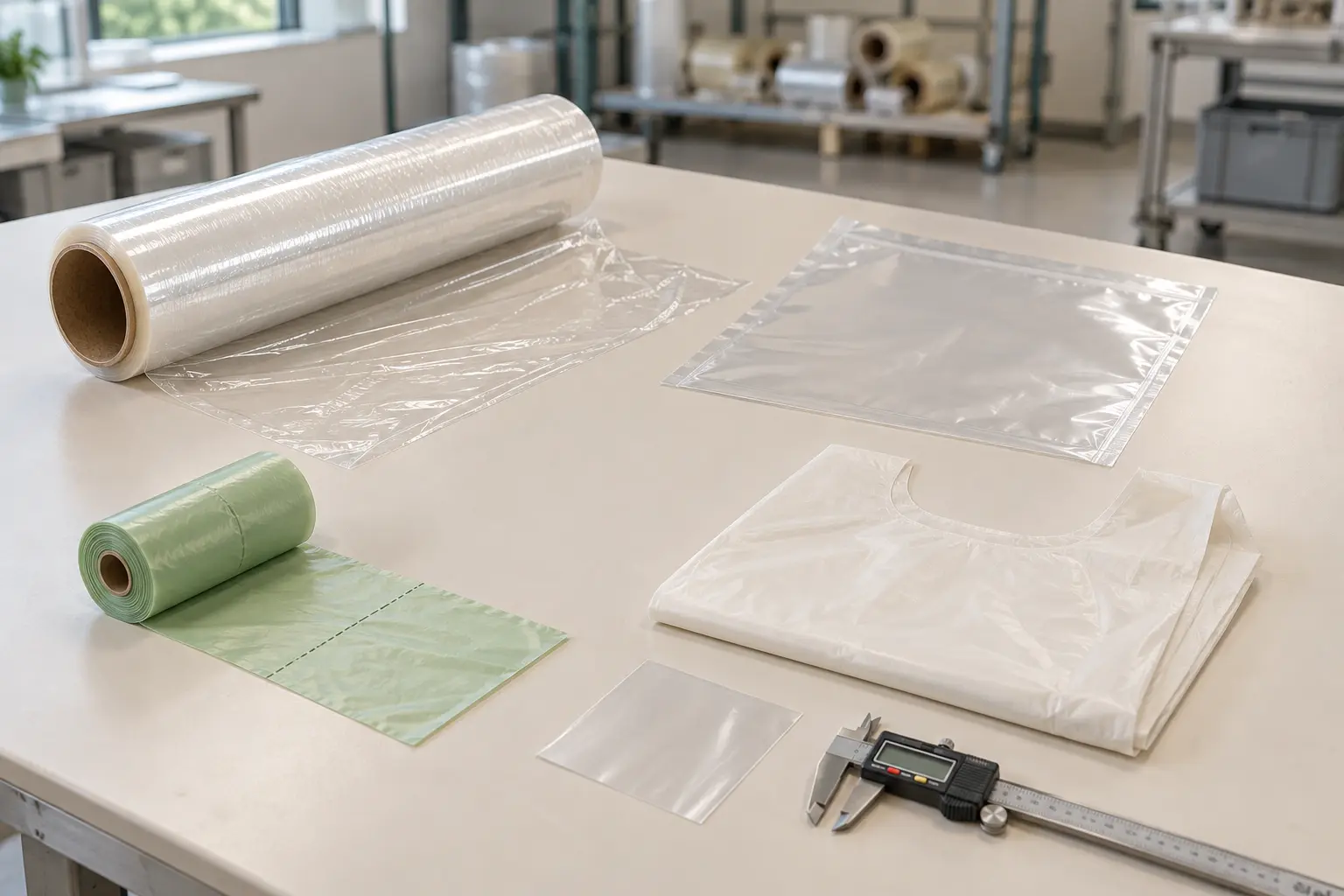
A clear food wrap, a sealed pouch, a puncture-resistant waste bag and a soft protective film should not share one default formulation. Each format is specified around its real use, converting process and evidence route.
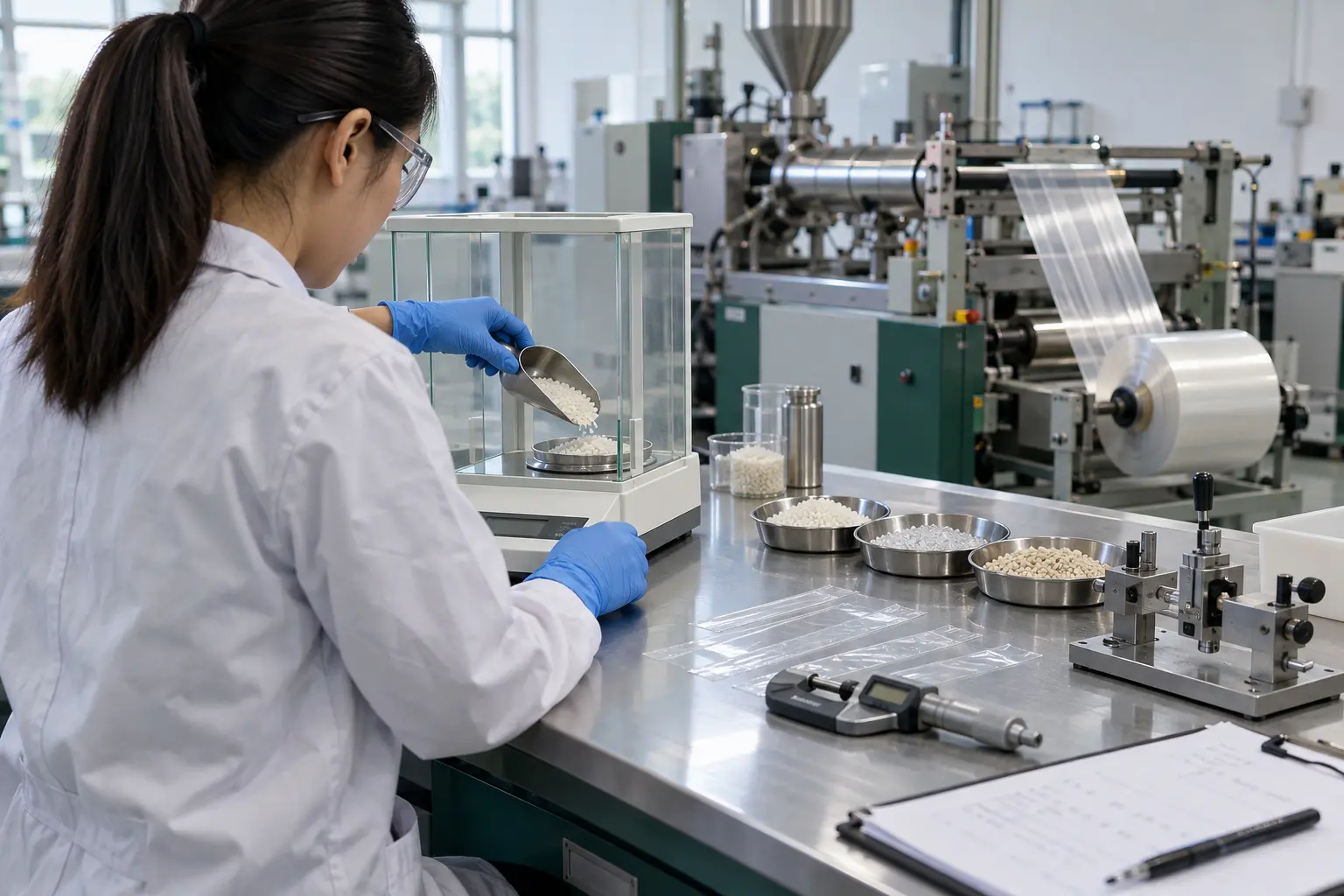
Send the intended use, dimensions, gauge, equipment, destination market and commercial forecast. Esinle can then review a suitable construction, sample route and product-specific document scope before artwork or production approval.
Compare available product formats, then send the operating requirements for a construction-specific recommendation and document check.