01
Select film gauge by the actual contents
Review the listed 18–40 μm range and 20 μm starting option against food scraps, bin dwell time and lift routine. A photographed sample cannot demonstrate a specific film thickness or carrying rating.
General Bags / ES-GB-03
15 gallon compostable trash bags for buyers developing a larger organics-collection liner. Use the nominal capacity as a fit reference, then specify the bin dimensions, film gauge, bottom seal, emptying cycle and shipping pack.
B2B supply · OEM / ODM options
Response target: one business day
The product at a glance
Compare the construction, size and order requirements. We confirm your selected configuration in the quotation.
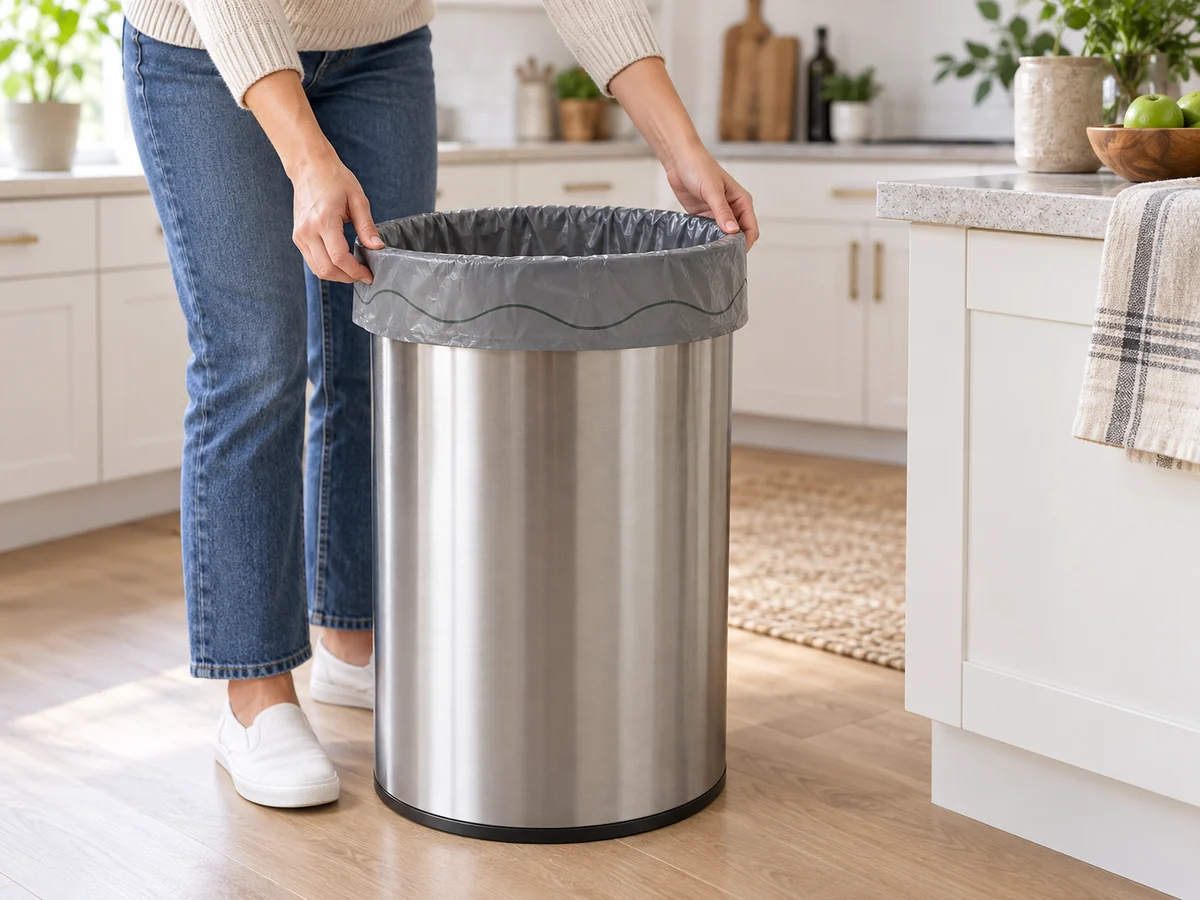
Product overview
The container size, moisture, fill level and handling routine all influence liner selection. Review the proposed film and seal with representative contents rather than choosing by gallon size alone. Agree the finished dimensions, count, carton and applicable composting documents before scaling the collection program.
Compostable liners and garbage bags for household, hospitality and commercial collection programs. Match the bin, waste stream and change cycle to the bag construction and pack-out.
Plan your sample reviewKey features
Six points connect the selected format to its everyday use, finished pack and repeat supply.
Review the listed 18–40 μm range and 20 μm starting option against food scraps, bin dwell time and lift routine. A photographed sample cannot demonstrate a specific film thickness or carrying rating.
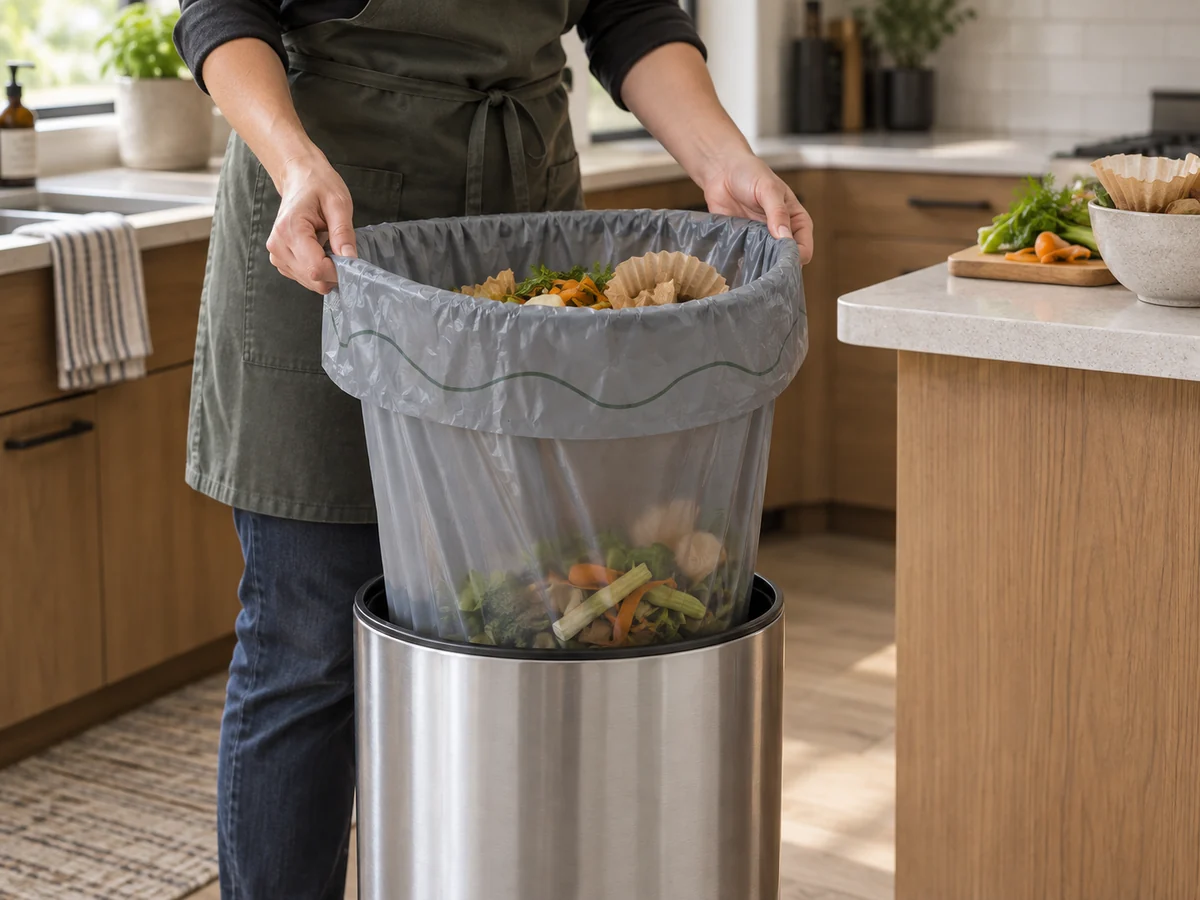
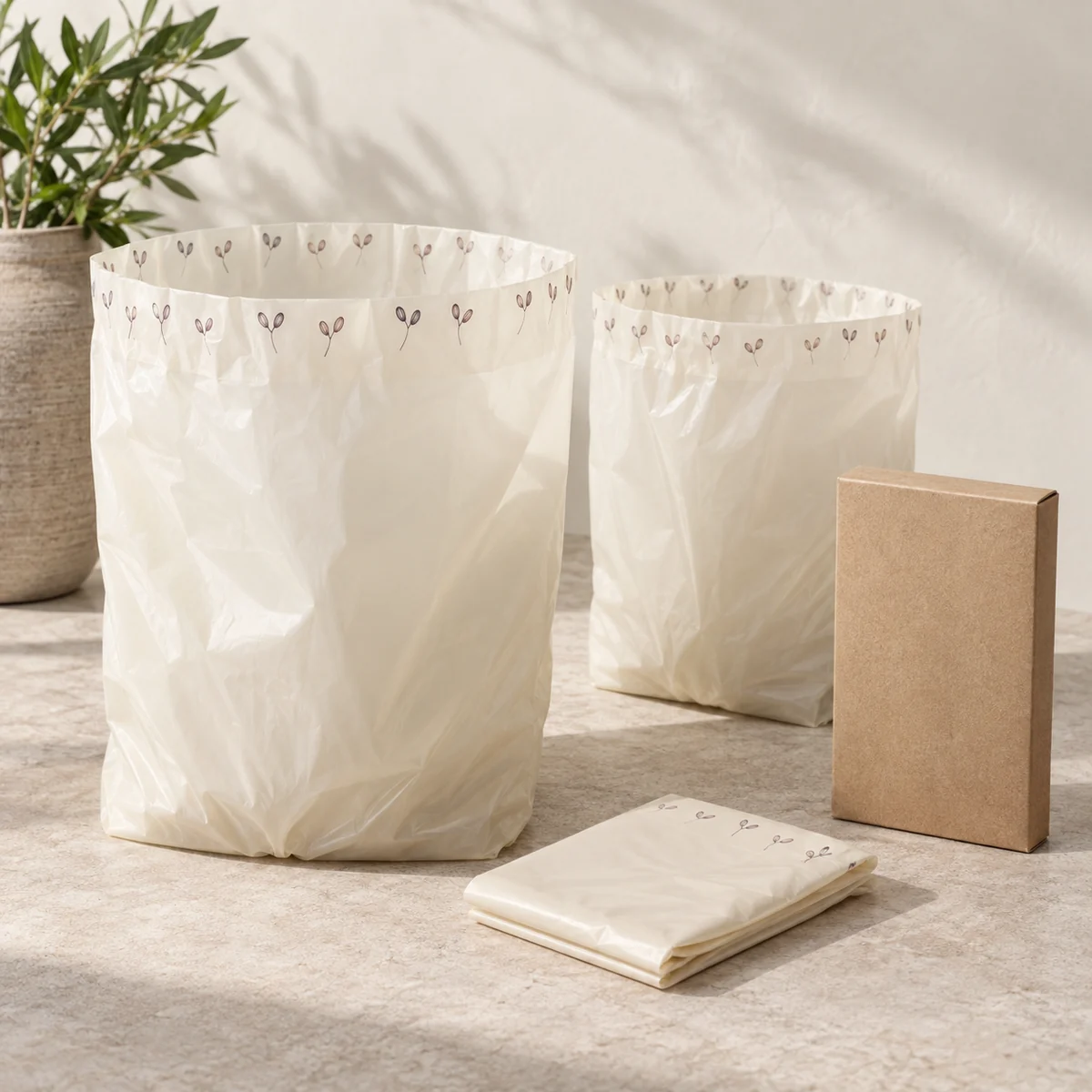
Check the radial bottom folds and heat seal on production-representative bags. Test handling with actual loads before making puncture, tear or liquid-resistance claims.

Two listed lengths share a 24 in width reference. Check rim width, depth and cuff allowance on the target bins; a nominal 15-gallon label alone cannot establish universal compatibility.
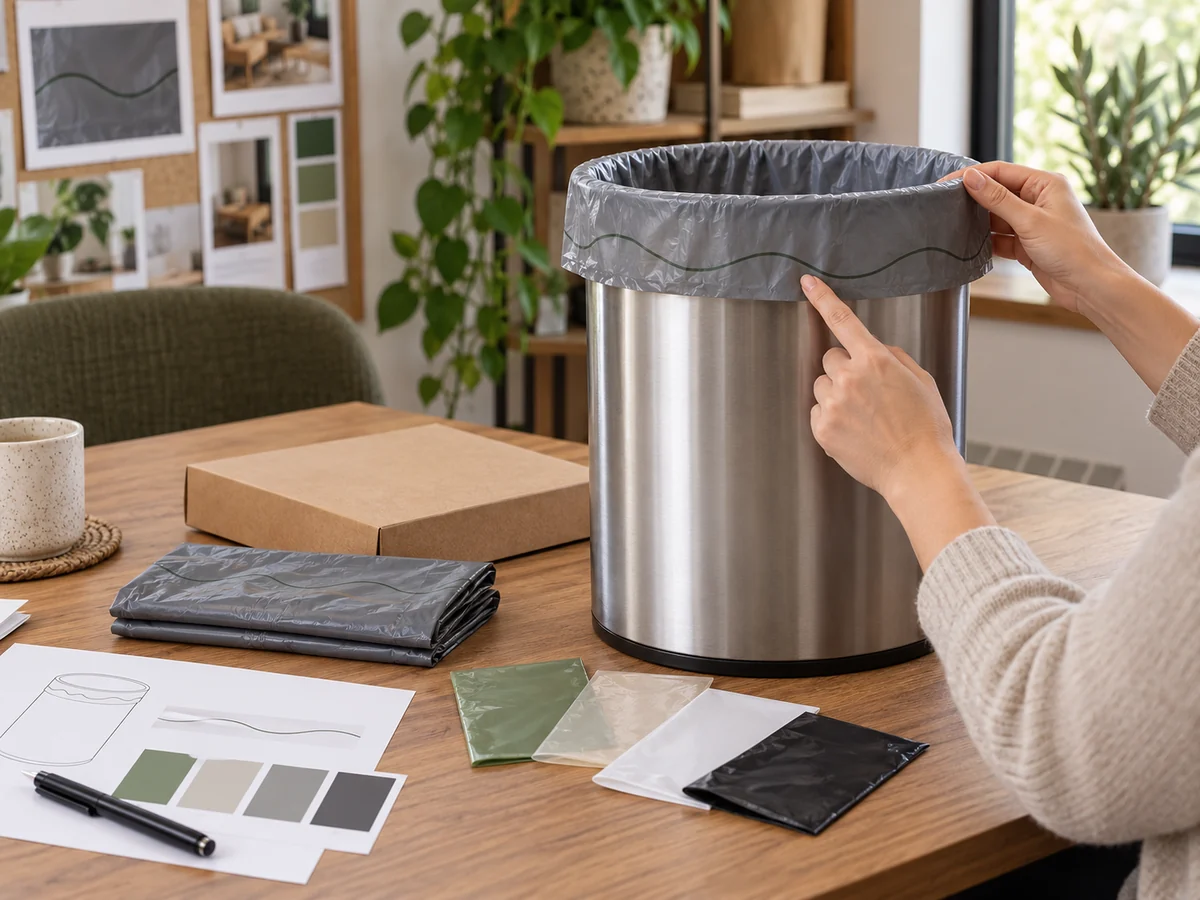
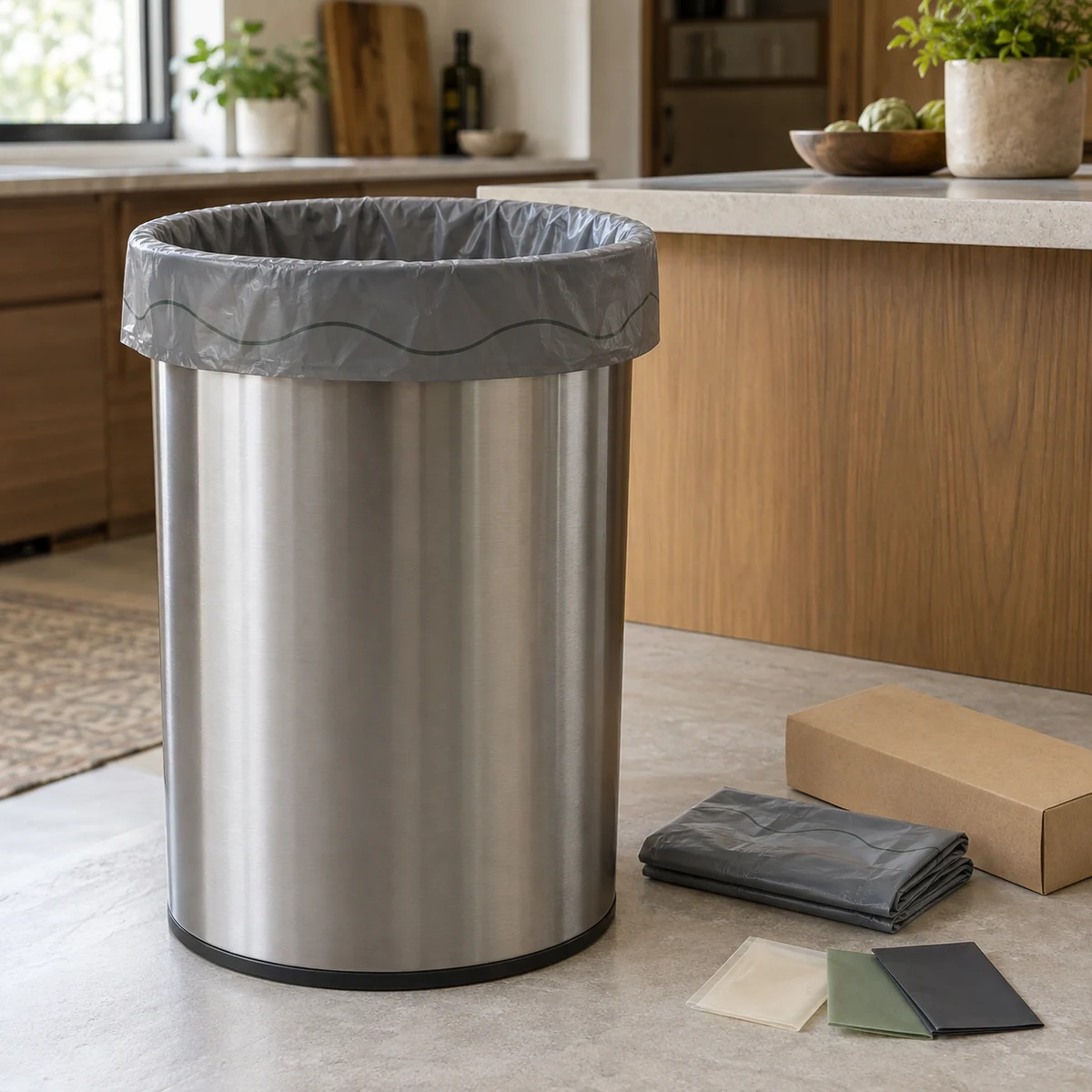
The fine sage wave and graphite film differentiate an illustrative OEM option. Approve pigment, ink, print location and any certification wording against the exact final bag and artwork.
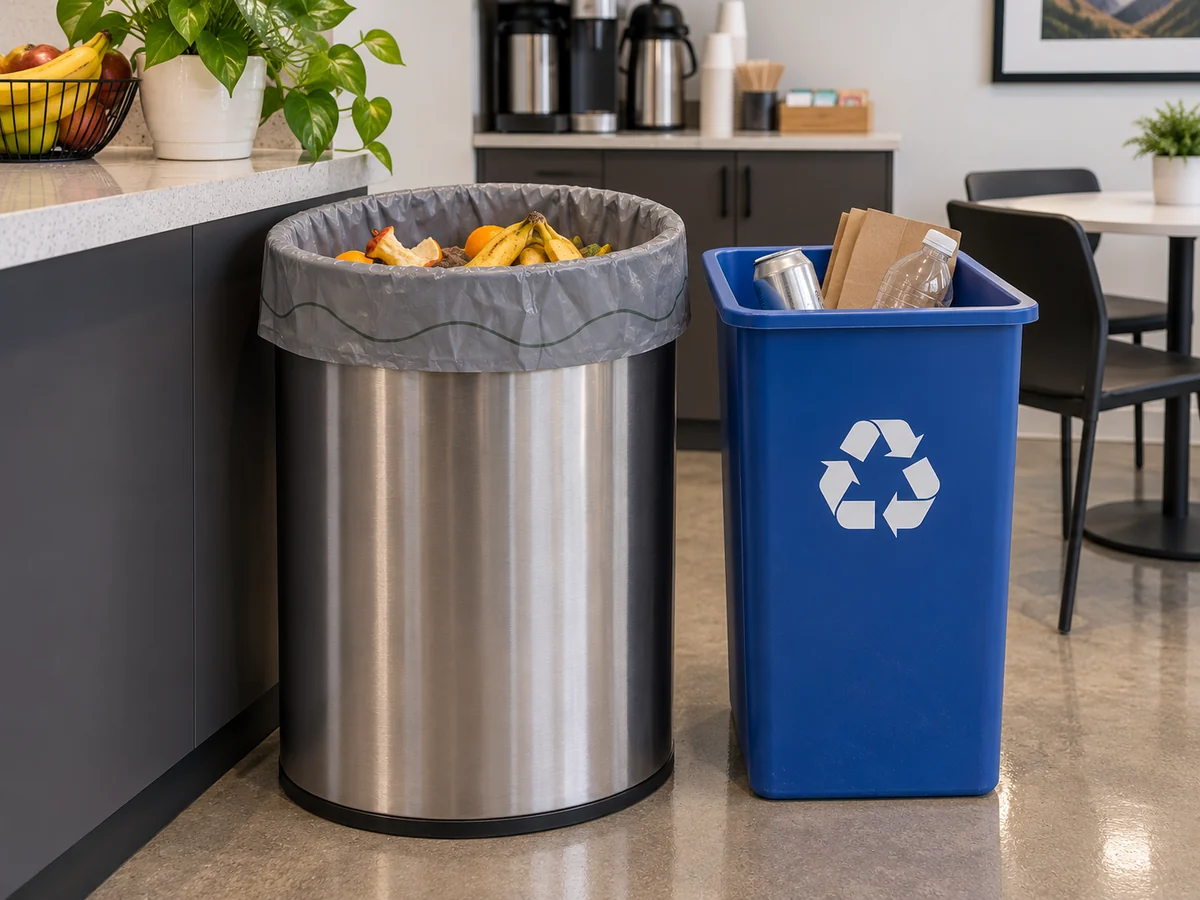
Use the selected 15-gallon liner only in an organics collection stream that accepts it, with approved contents and clear staff instructions. Keep recyclable cans and conventional films in their separate streams.
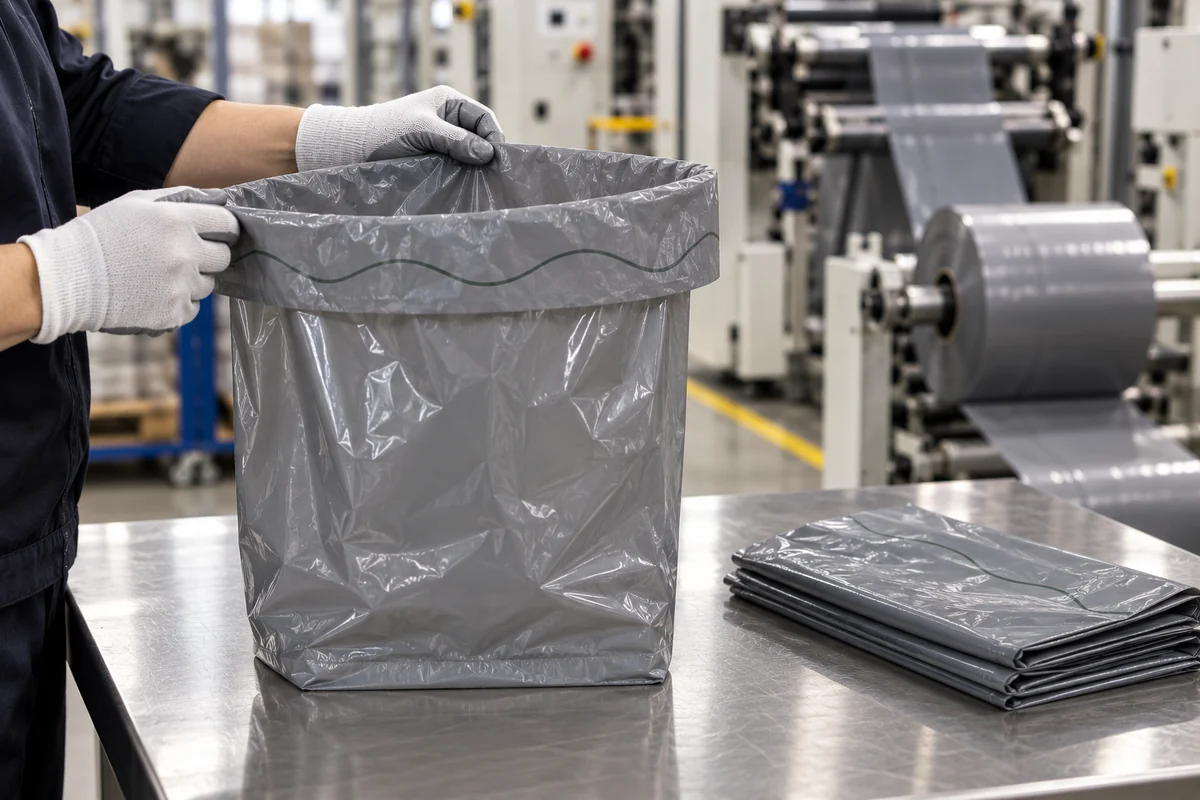
Record acceptable gauge range, dimensions, opening, base-seal quality, print placement and pack count. The pictured workshop is an illustration of a review step, not a verified production record.
Applications
Choose the relevant operation and share its practical requirements with your inquiry.

Fit a correctly sized kitchen organics bin for vegetable offcuts and coffee filters. Check local food-scrap program acceptance for compostable liners and limit prolonged storage or pooling liquid until the chosen gauge is tested.

Line a shared 15-gallon bin for permitted food scraps while keeping containers and cans in a separate recycling receptacle. Set a changeover schedule and clear on-site instructions for staff.
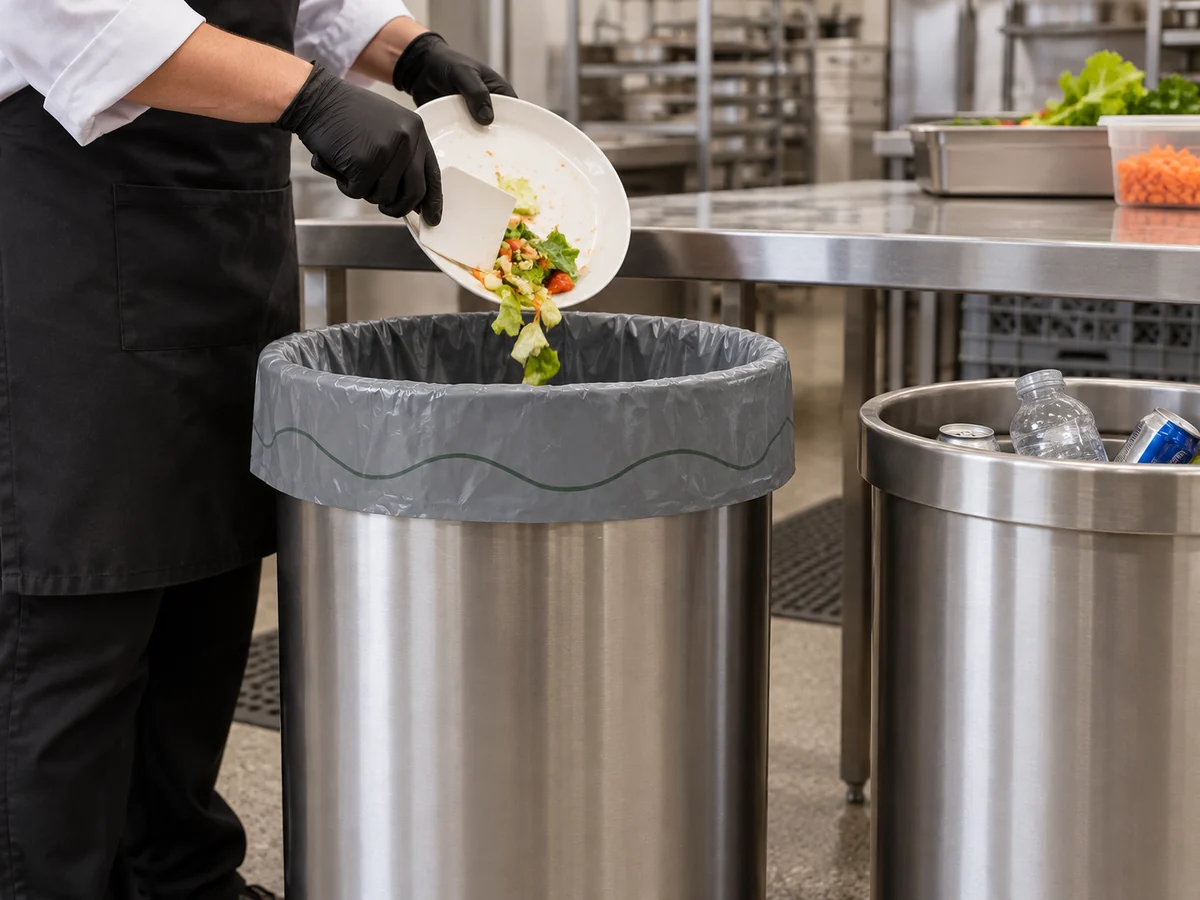
Place a fitted liner at a managed food-prep collection station for permitted produce trimmings. Confirm the processor accepts the finished bag and define staff handling, fill level and replacement frequency.
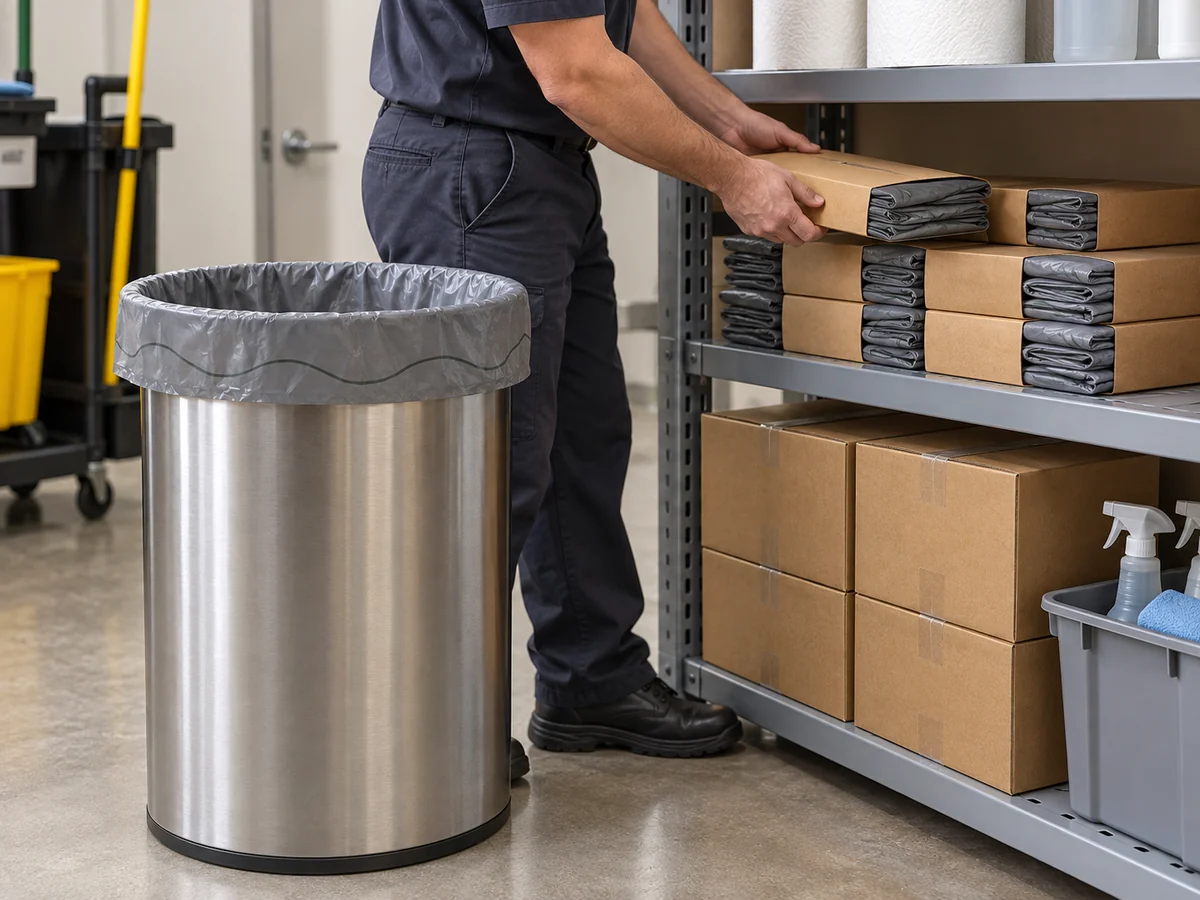
Standardize an approved 15-gallon bin type, sample size and pack count across multiple sites. Give the facility team a physical sample, packing list and the exact item-specific disposal wording.
Certifications & product documents
Keep the specification, applicable certification and intended-use information connected to the product you order.
Request a current report or certificate covering the actual finished 15-gallon bag, film blend, gauge, pigment and print. ASTM D6400 concerns managed municipal or industrial aerobic composting; it does not establish home-compost suitability or acceptance by a local collector.
If BPI certification or a mark is proposed, first check eligibility for a food-scrap collection liner. Match the seller, exact item, approved artwork and licence or private-label permission in the BPI certified-product catalog before printing a mark.
For an EU industrial-compostability claim, ask for current evidence that explicitly includes the finished bag, bottom seam, color, print and selected thickness. Review certificate validity and the permitted mark separately; an ASTM D6400 reference alone is insufficient.
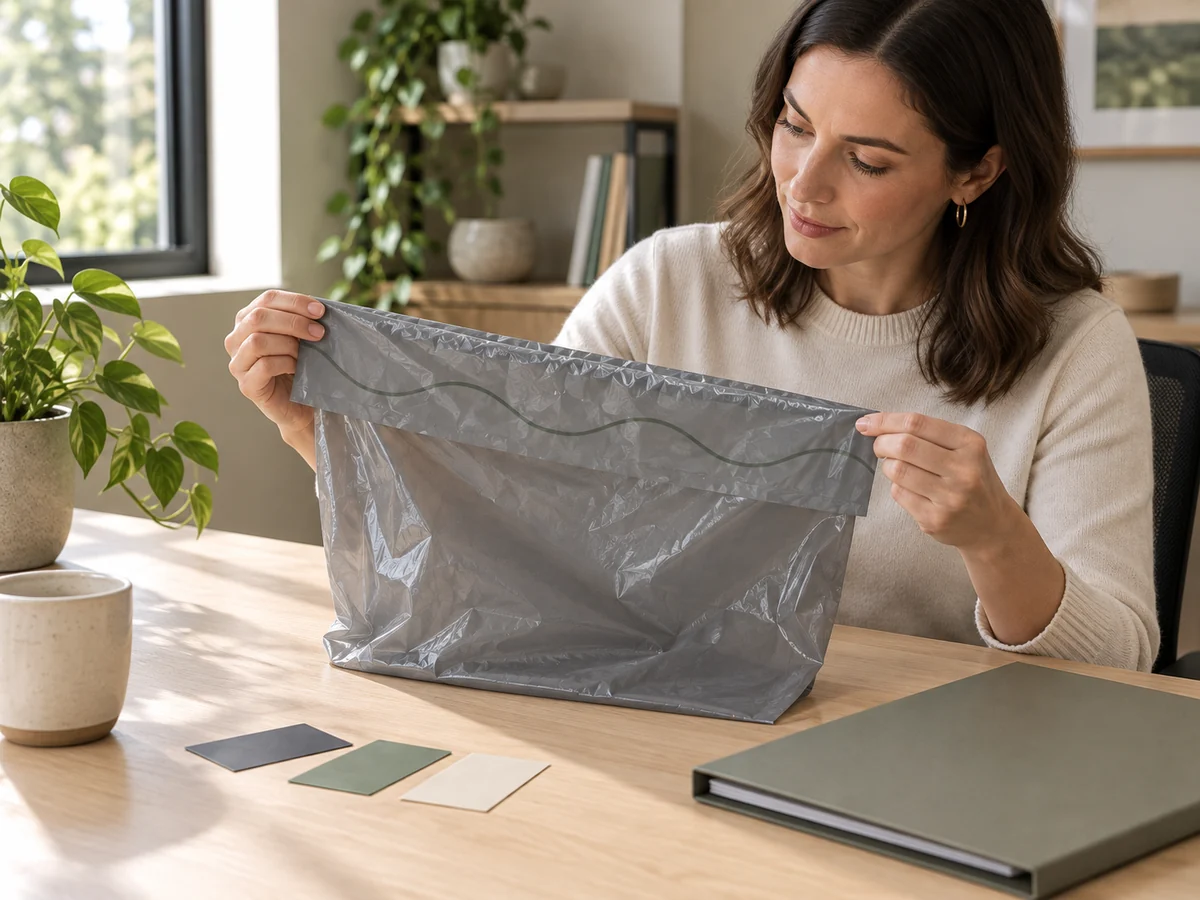
Make a home-compost claim only if a separate current licence covers this exact printed and colored finished bag and its maximum thickness. The graphite concept shown here has not been verified as a certified home-compostable item.
Sample review
A useful sample represents the construction and use you plan to order. Share the benchmark and the observations that matter.
Fit the liner on the intended bin with the required cuff.
Use representative contents and a defined fill, holding and removal method.
Approve gauge, closure, bag count and the collection instructions.
Nominal gallon capacity and rendered product photos do not prove bag fit, a carrying-weight rating, puncture resistance, leakproofness or suitability for mixed waste. Test the selected gauge and bottom seam against real scraps, moisture, storage duration and handling. The previous carton number is unverified. Graphite color and sage-grey print are an OEM visual proposal, not a confirmed stocked or certified SKU. Food-soiled compostable liners must follow the receiving collection program rules and should not be mixed with conventional film recycling.
From comparison to quotation
Build a short sourcing brief. Add the details you know, then send it with your request for pricing, samples or product documents.
Specifications, a suitable sample and the commercial details for your selected configuration.
Product questions
The current sourcing references are 24 × 27 in standard and 24 × 31 in tall, both nominal 15-gallon formats. Measure each target bin opening and depth, then allow enough film to fold over the rim; ask for samples before ordering.
It is an illustrative OEM concept with a restrained printed wave. Existing information lists several colors, but no current certificate, available stock or exact pigment and ink approval has been supplied for this pictured construction.
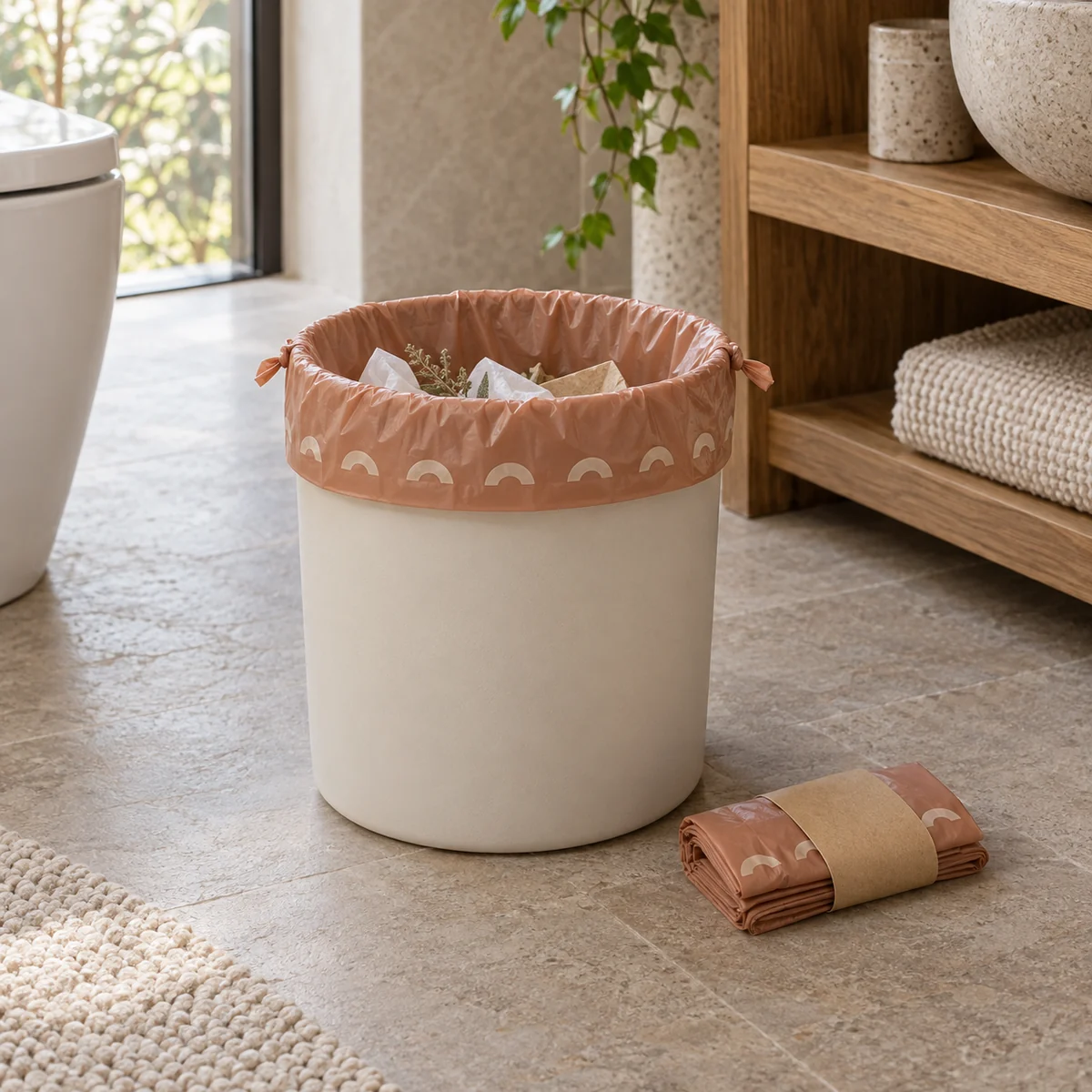
No. The pictured ES-GB-03 configuration is a flat open-top liner with no drawstring or handles. If a drawstring is required, request a separate bag construction, quote, physical sample and matching evidence.
No. Acceptance depends on the actual finished bag, certificate or mark scope, local program rules and what is inside the bag. Contact the receiving collector or processor before writing disposal directions.