01
Inspect the flat-film drawstring channel
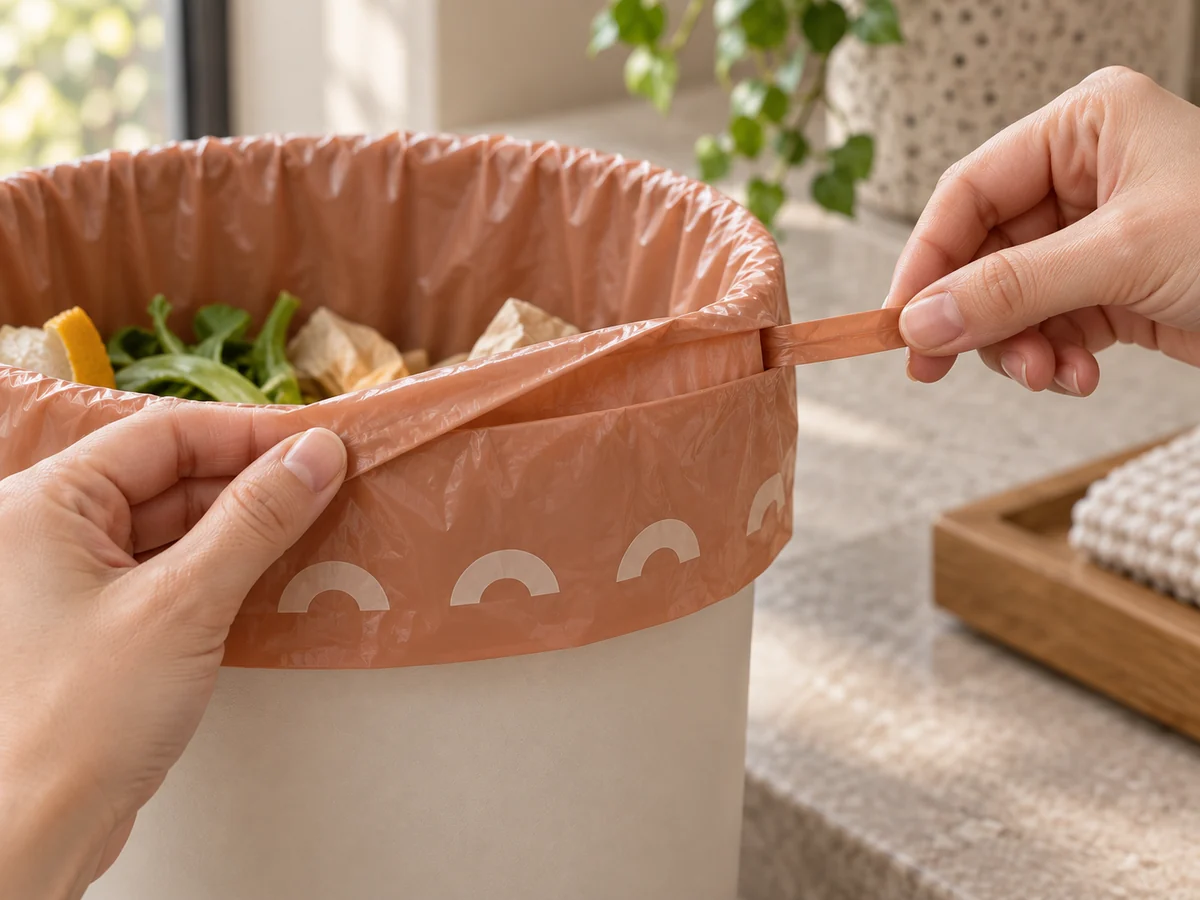
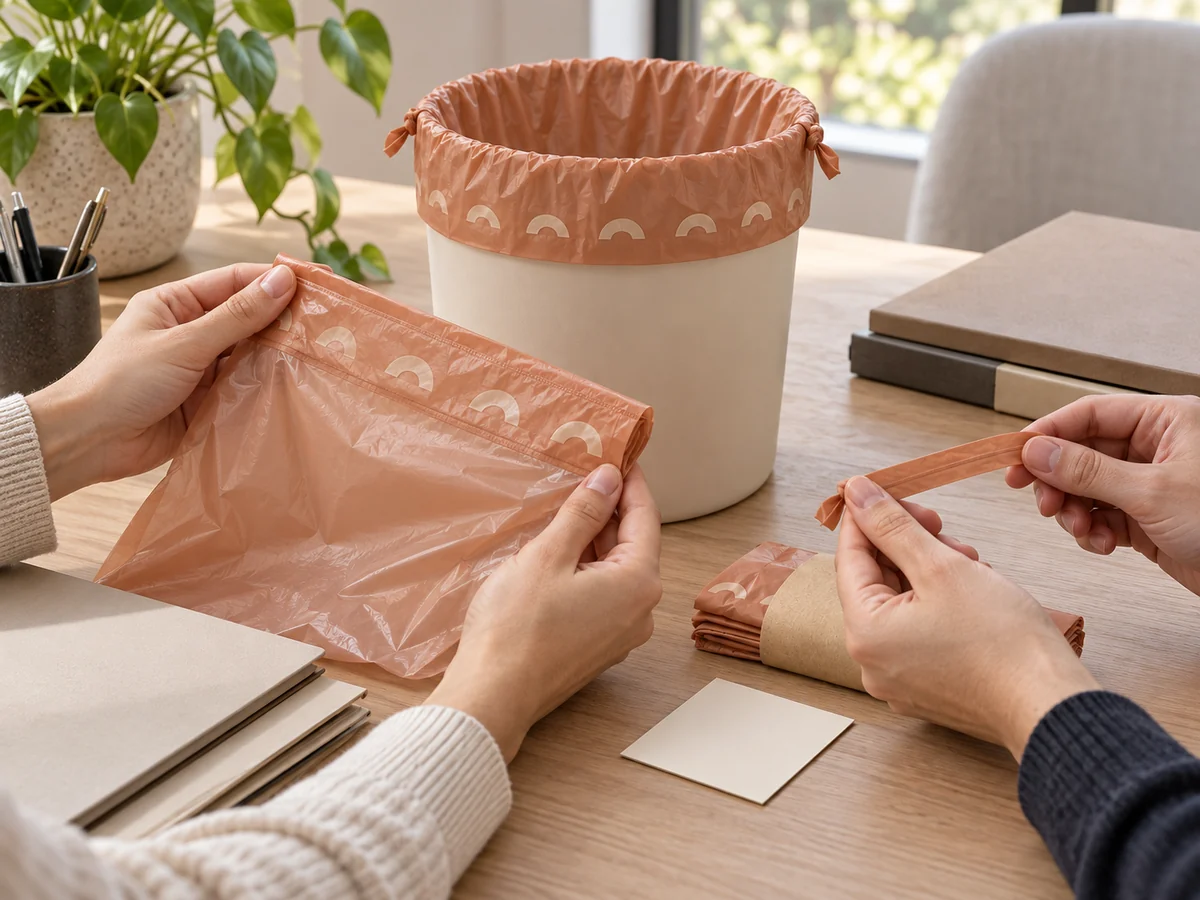
Confirm that the matching film strip moves cleanly inside the folded upper channel without tearing the rim. Review strip width, pull length, channel seal and both exit points on production samples.
General Bags / ES-GB-04
Small drawstring compostable trash bags in a nominal 2.6 gallon format for compact bins. Review rim fit, bag-body gauge, drawstring channel and bottom seal, then define the pack count and carton around the intended distribution program.
B2B supply · OEM / ODM options
Response target: one business day
The product at a glance
Compare the construction, size and order requirements. We confirm your selected configuration in the quotation.
Product overview
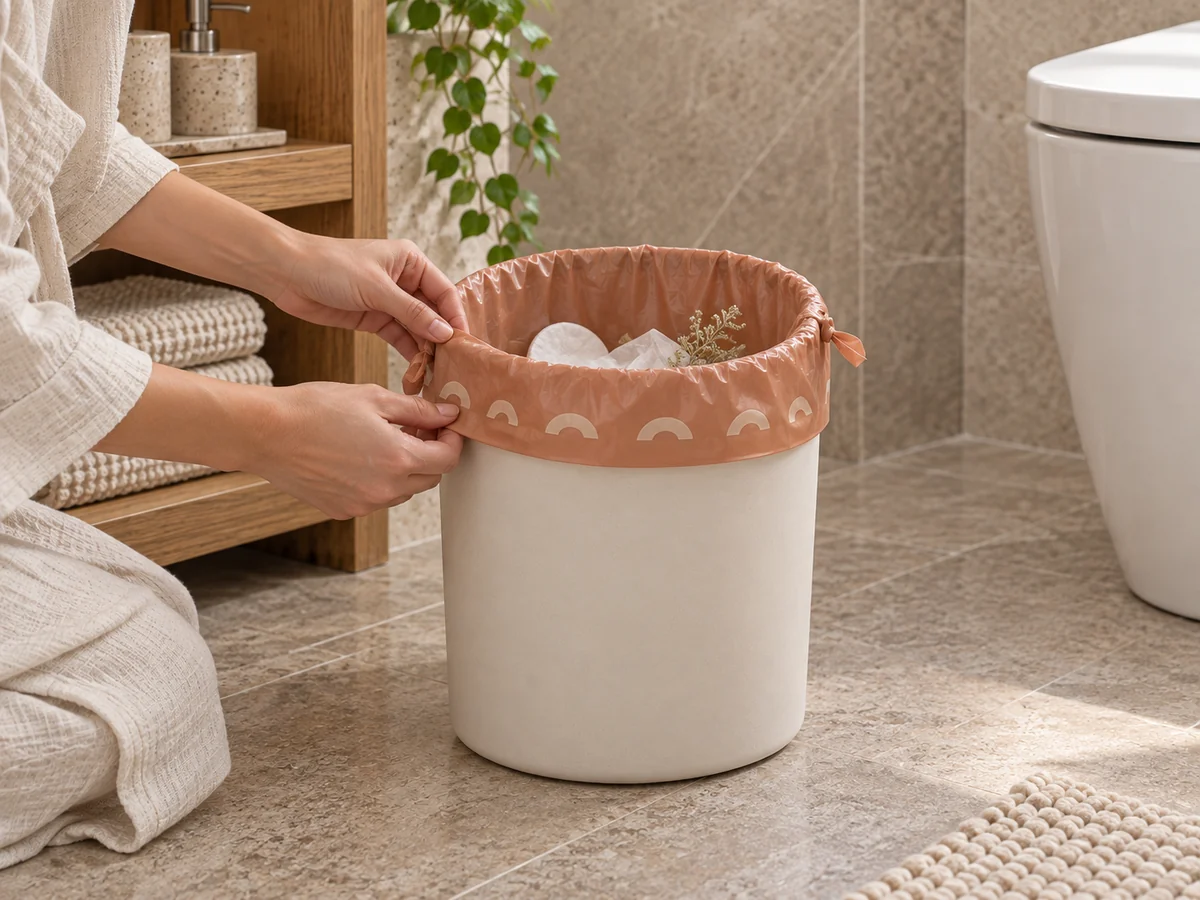
The drawstring should suit the way the liner is fitted, closed and lifted. Test those steps on the actual bin with representative contents and the planned change interval. Keep the bag body, string construction and finished product documentation connected on the approved specification.
Compostable liners and garbage bags for household, hospitality and commercial collection programs. Match the bin, waste stream and change cycle to the bag construction and pack-out.
Plan your sample reviewKey features
Six points connect the selected format to its everyday use, finished pack and repeat supply.
Confirm that the matching film strip moves cleanly inside the folded upper channel without tearing the rim. Review strip width, pull length, channel seal and both exit points on production samples.
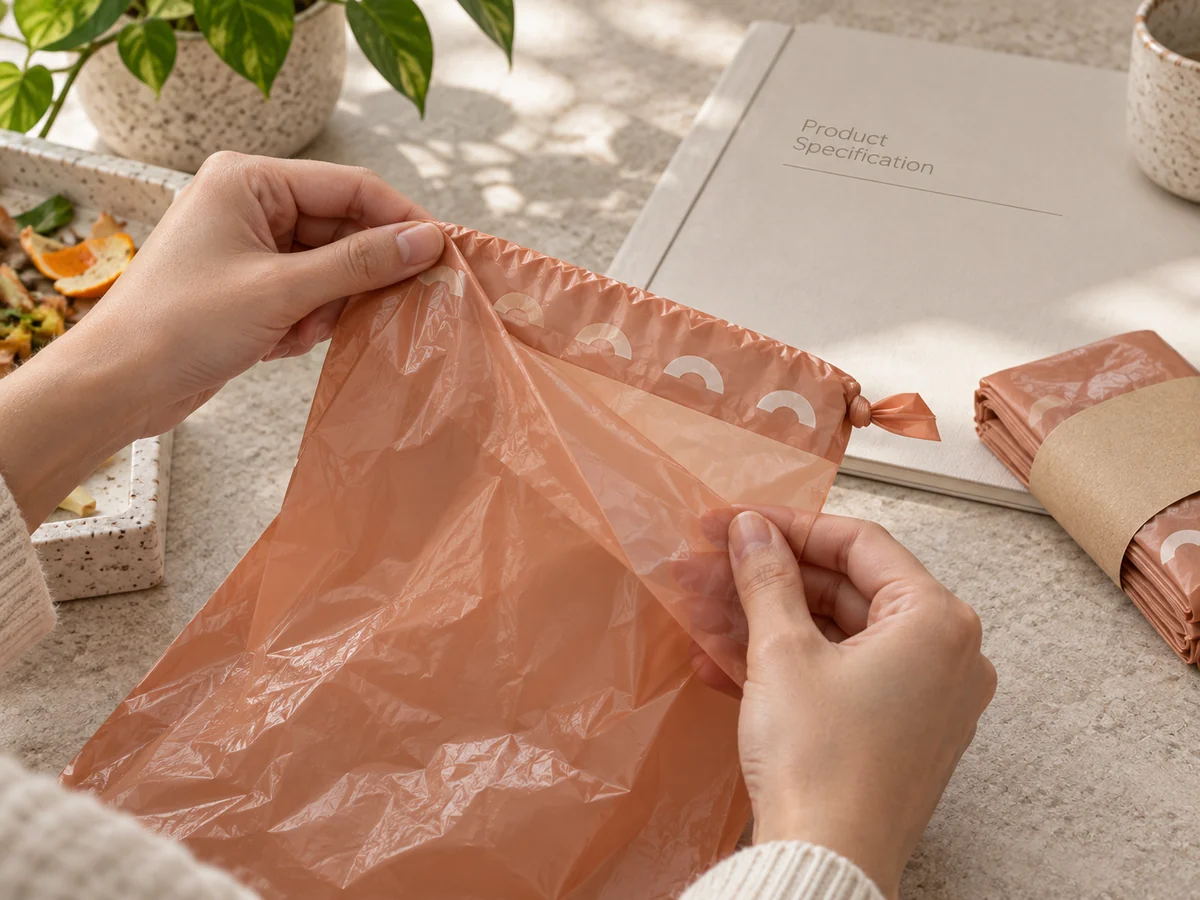
Use the listed 16–30 μm range and 18 μm starting option to select samples. Test tissues, light packaging or the intended accepted scraps; photographs cannot prove puncture resistance or a load rating.
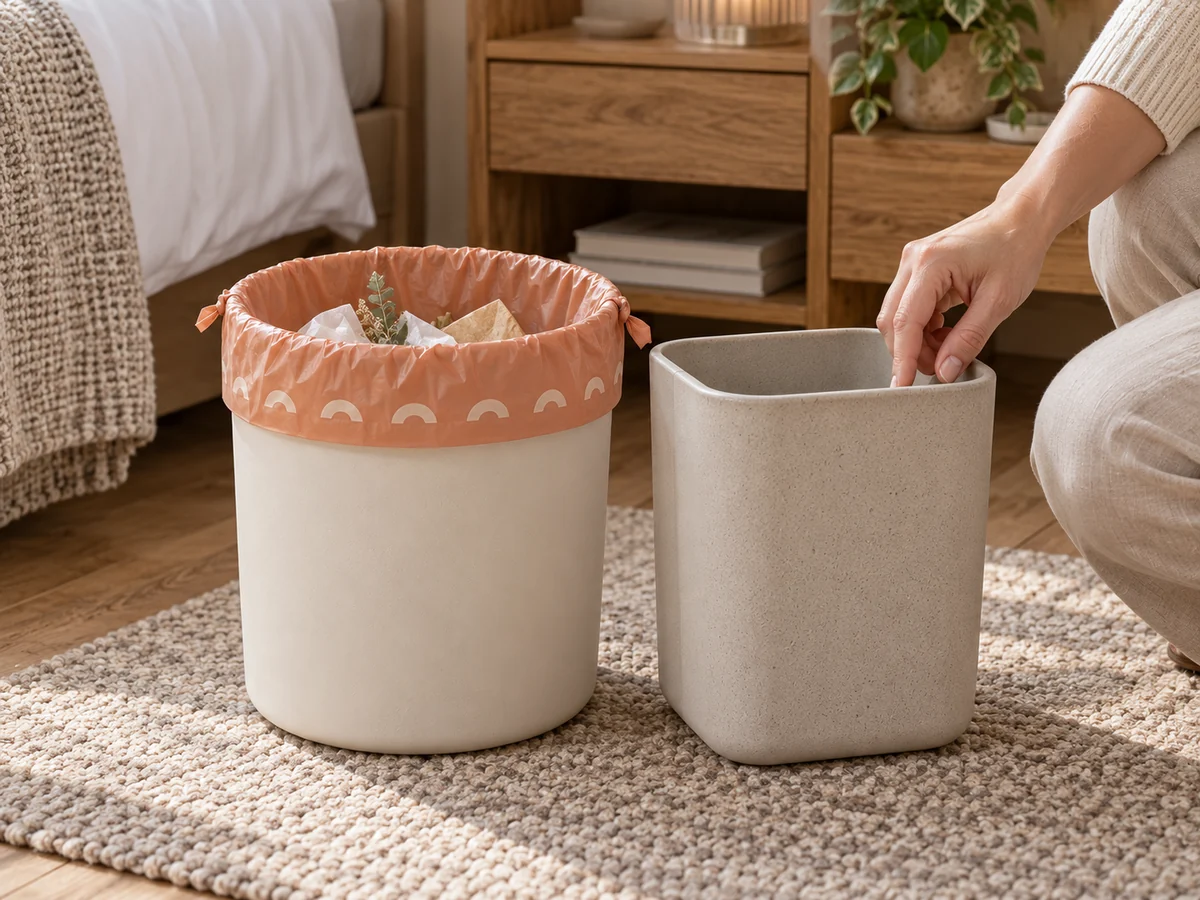
A nominal 2.6-gallon label does not guarantee fit. Compare the 17 × 18 inch reference with round and rectangular bin rims, bin depth and the cuff needed to keep the closure accessible.
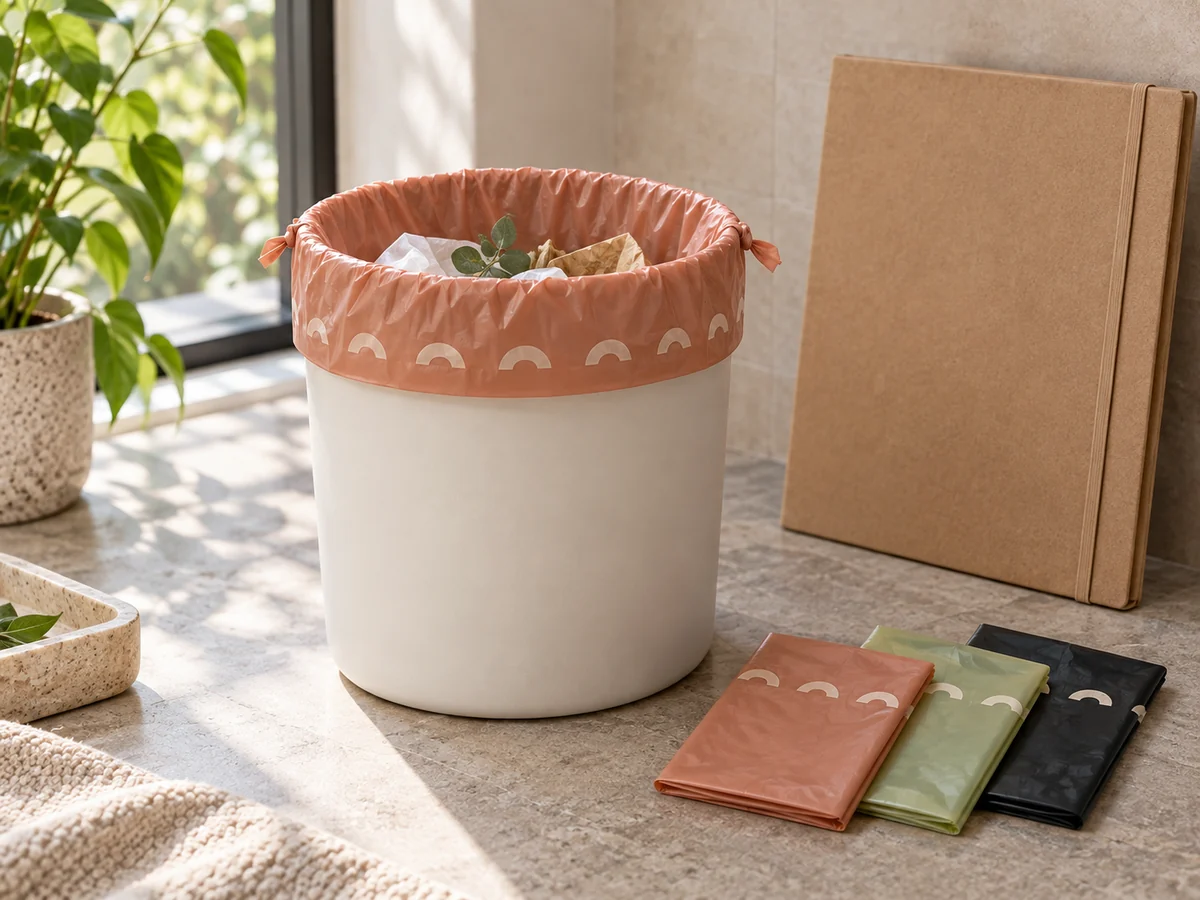
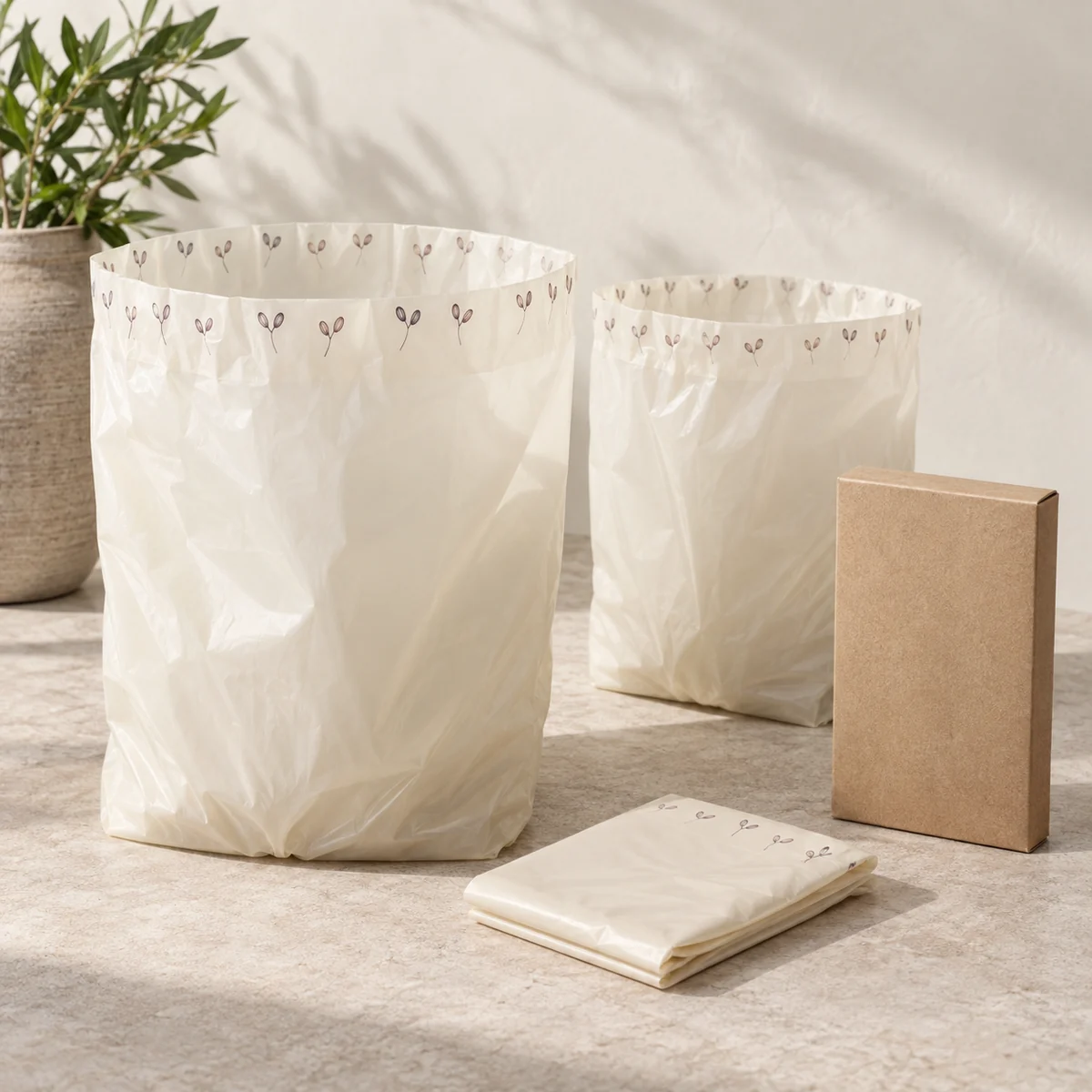
The terracotta tone and ivory arches distinguish this OEM concept. Match pigment, ink, coverage and permitted claims to the same finished item that appears on the quote and purchase order.
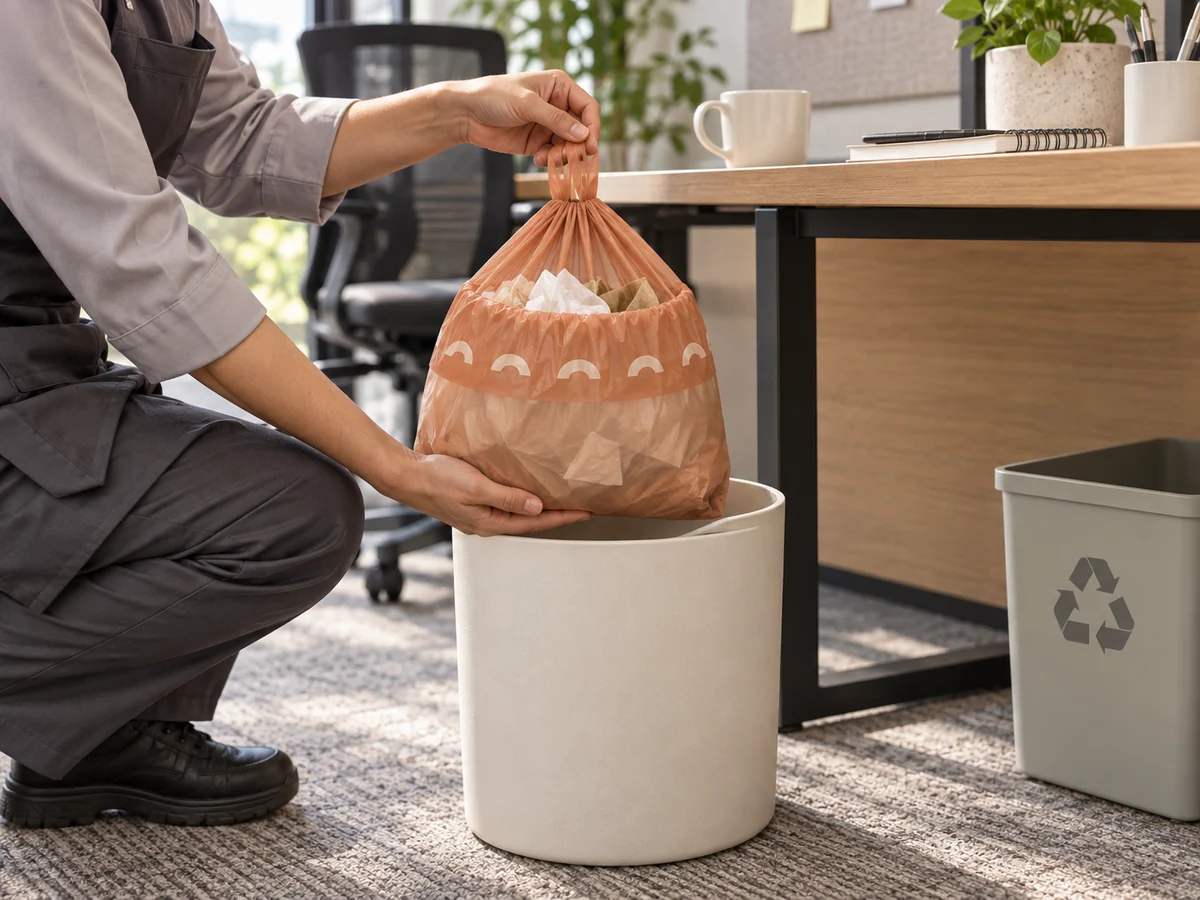
Gather the rim with the drawstring and support the bag body during removal. Do not advertise the strip as a carrying handle; set fill level and replacement frequency from site trials.
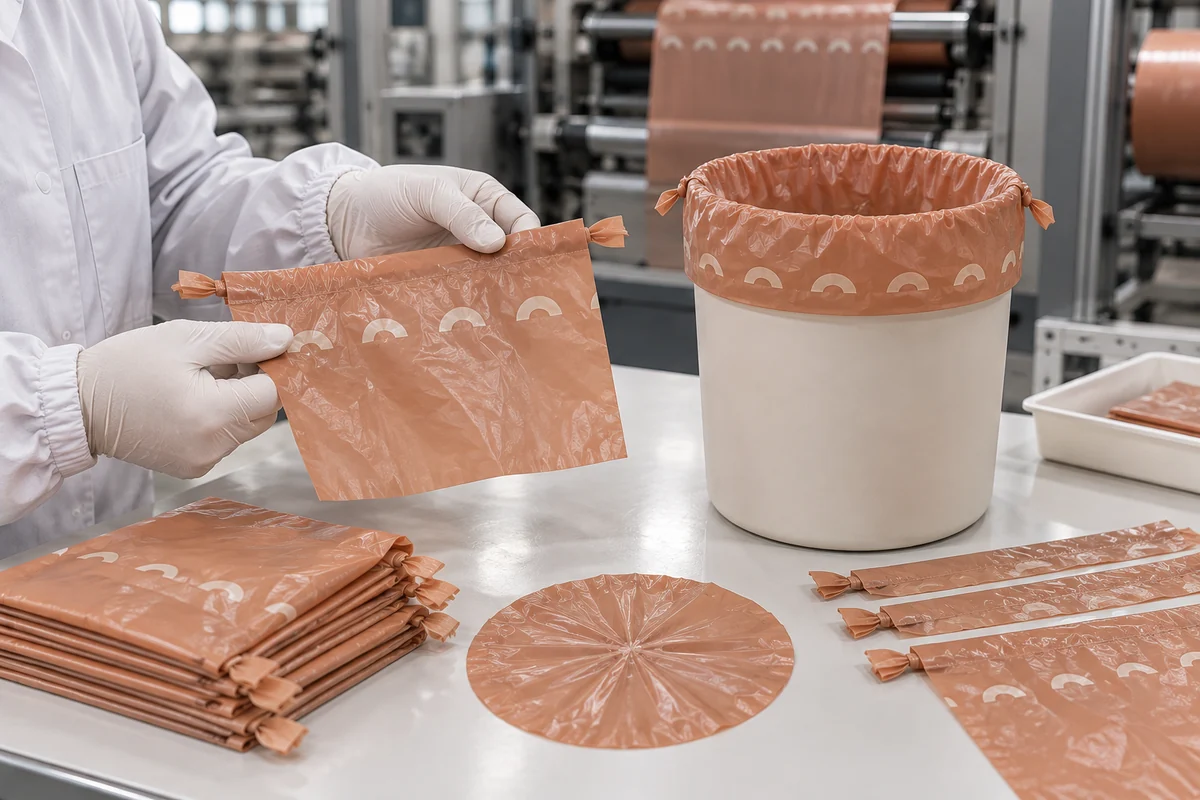
Set tolerances for dimensions, film gauge, channel alignment, drawstring travel, bottom seal, print position and pack count. The pictured inspection scene is illustrative, not a production test record.
Applications
Choose the relevant operation and share its practical requirements with your inquiry.
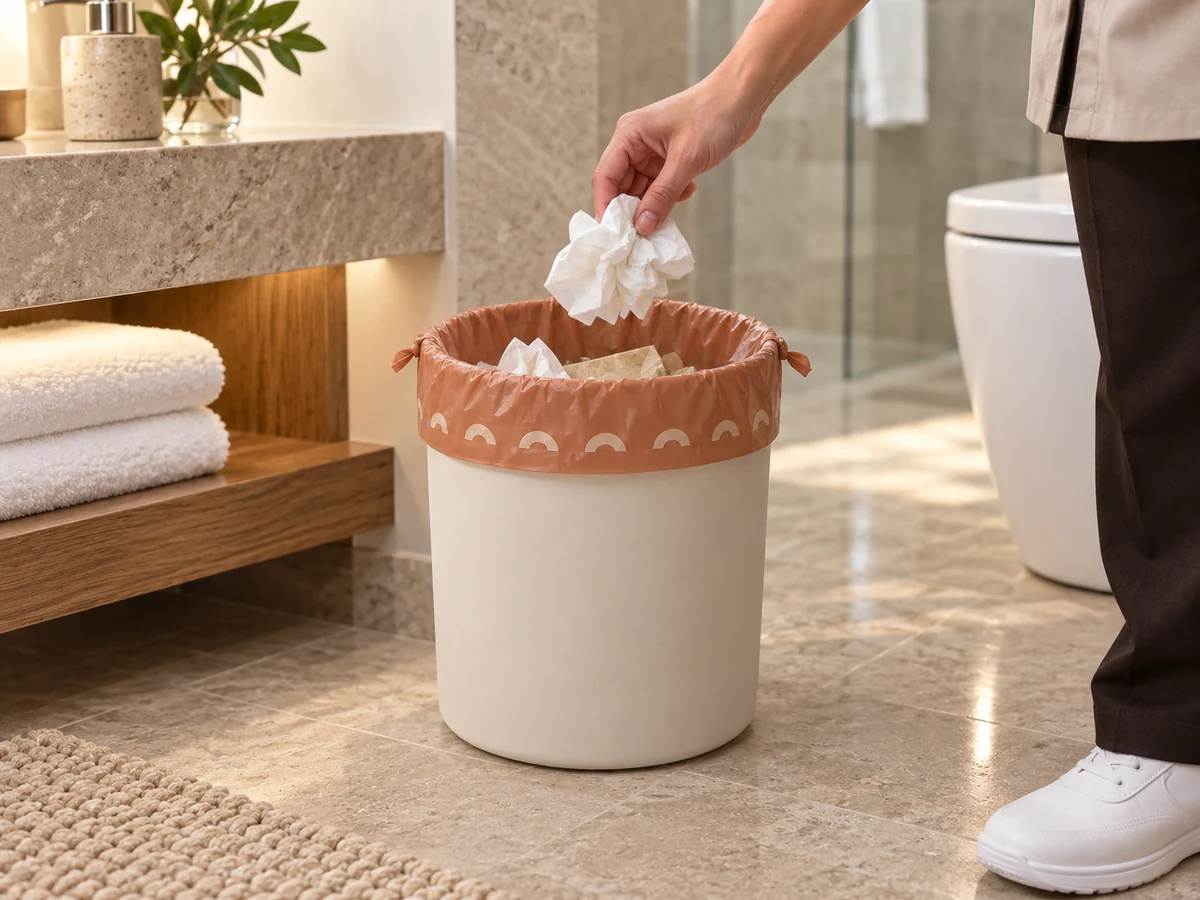
Use in a correctly sized bathroom wastebasket for tissues and light guestroom waste. Housekeeping should support the bag body, avoid overfilling and follow the property’s approved disposal stream.
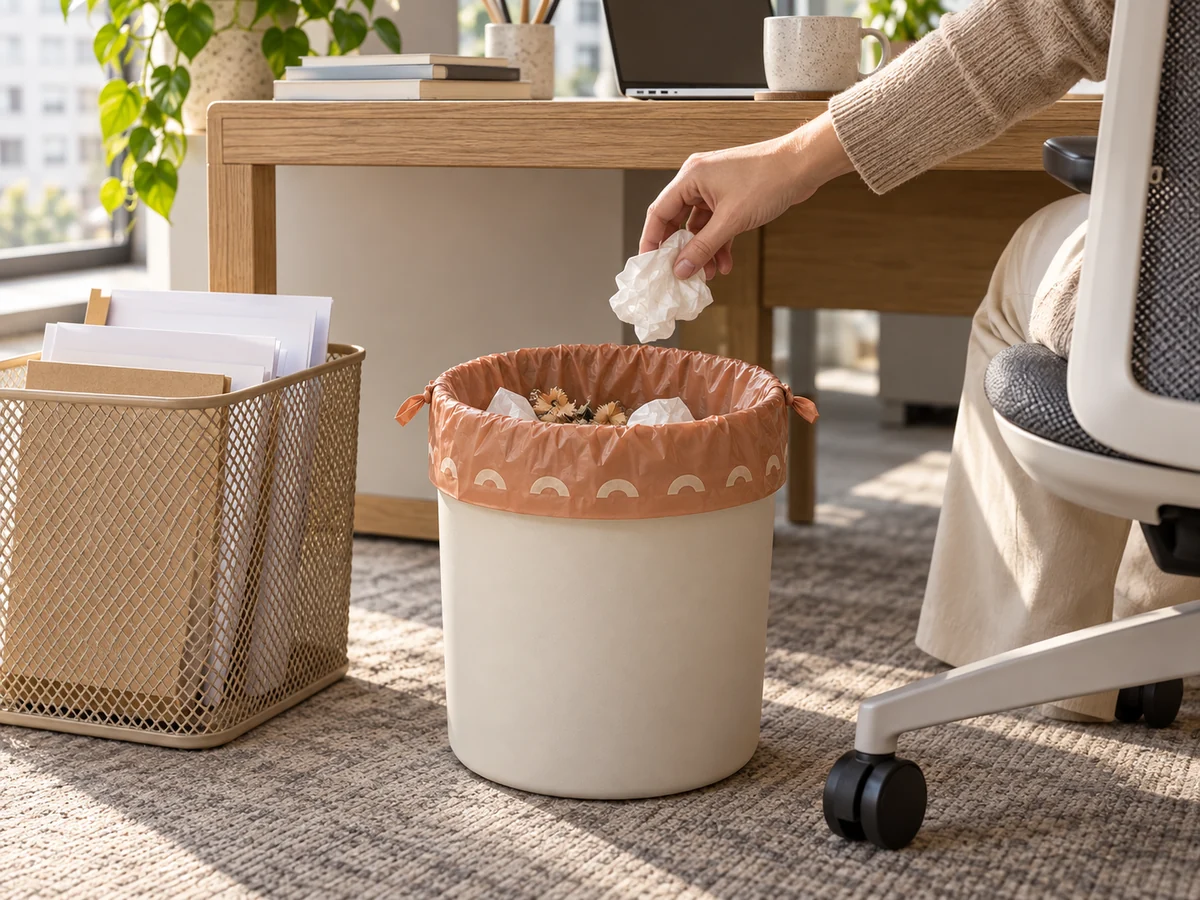
Fit compact desk-side bins collecting light residual waste while paper and containers remain in separate recycling receptacles. Standardize bin dimensions and a practical changeover schedule.
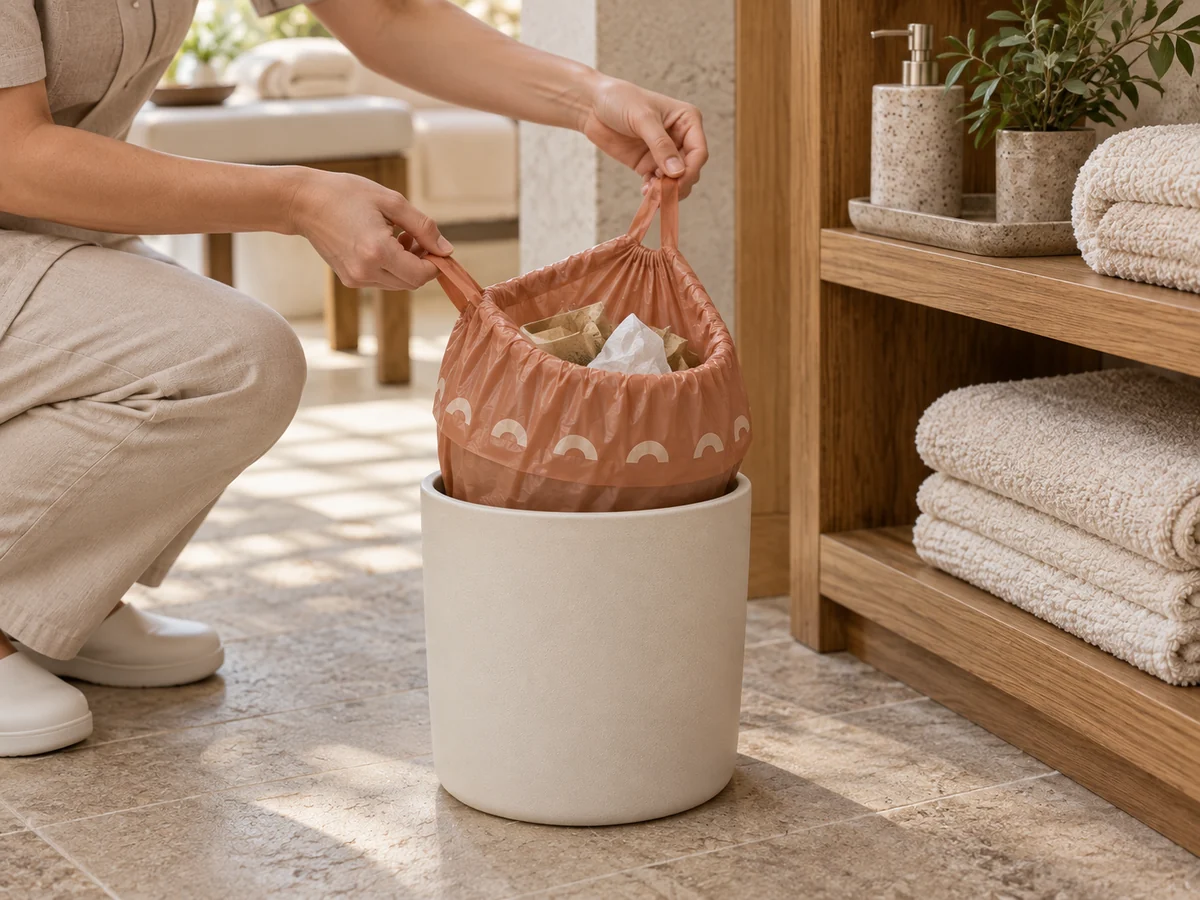
Use for light, non-sharp room waste only after checking local hygiene and disposal requirements. Do not assume suitability for regulated, clinical, wet or contaminated waste.
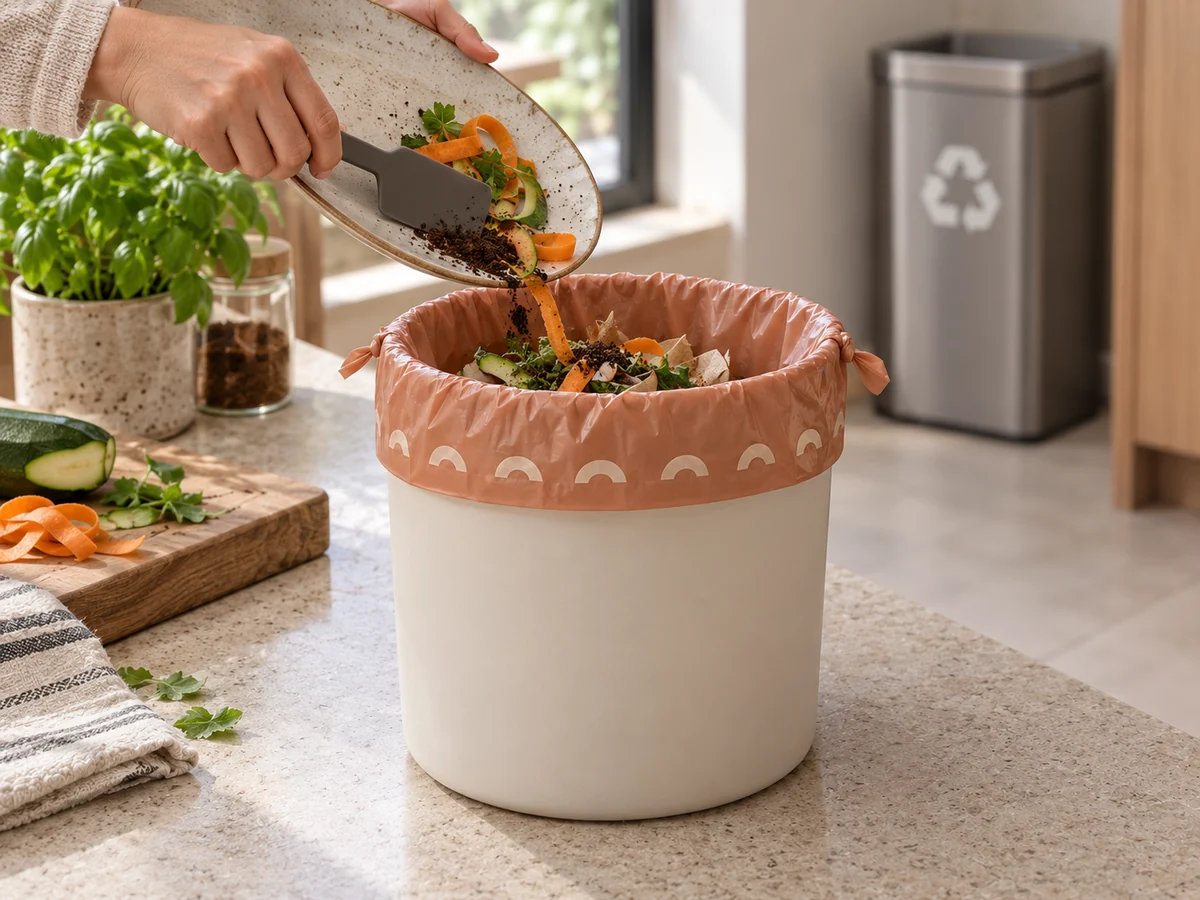
Consider only where the receiving food-scrap program accepts the exact compostable liner. Test the selected gauge with real scraps, moisture and replacement frequency; avoid hot liquids and sharp items.
Certifications & product documents
Keep the specification, applicable certification and intended-use information connected to the product you order.
If a home-compost claim is requested, obtain the current TÜV AUSTRIA licence and verify the certificate holder, exact bag or covered family, maximum gauge, pigment, ink, flat-film drawstring, validity and permitted mark. A resin or unprinted film document does not establish the pictured finished bag.
For EU industrial-compostability wording, request current evidence covering the converted bag, drawstring, seams, color and printed design. Confirm certificate scope and the receiving facility separately; EN 13432 is not a home-compost claim.
Request a current report or certificate that covers the exact finished 2.6-gallon construction and its components. ASTM D6400 relates to managed municipal or industrial aerobic composting and does not prove home-compostability or local collection acceptance.
Where a BPI claim or logo is proposed, verify that the intended small-bin-liner use is eligible, then match the seller, exact product or private-label authorization, artwork and licence in the BPI certified-product catalog before printing the mark.
Sample review
A useful sample represents the construction and use you plan to order. Share the benchmark and the observations that matter.
Fit the liner on the intended bin with the required cuff.
Use representative contents and a defined fill, holding and removal method.
Approve gauge, closure, bag count and the collection instructions.
Rendered product images, nominal 2.6-gallon capacity and a listed film gauge do not prove universal bin fit, a carrying-weight rating, puncture resistance, leakproofness, drawstring strength or suitability for wet, sharp, hot, clinical or mixed waste. Test a production-representative sample under the actual fill level, moisture, storage time and changeover routine. Terracotta color, ivory artwork and kraft packs are illustrative OEM concepts. The previous master-carton quantity remains unverified.
From comparison to quotation
Build a short sourcing brief. Add the details you know, then send it with your request for pricing, samples or product documents.
Specifications, a suitable sample and the commercial details for your selected configuration.
Product questions
The sourcing reference is 17 × 18 inches for a nominal 2.6-gallon / about 10-liter bin. Measure the actual rim and depth, allow for the cuff, then test a sample because nominal capacity does not standardize bin shape.
Earlier product information lists the closure within the same PLA, PBAT and plant-starch material family, but this must be verified. Request current finished-item evidence that explicitly covers the body, flat-film drawstring, seams, pigment and printing.
Use it to gather and close the rim, not as proof of a lifting or carrying rating. Support the bag body during removal and validate fill level, seam performance and handling with representative waste.
No. The existing reference lists 16–30 μm, with 18 μm as a standard starting point. Availability, tolerance, MOQ and performance must be confirmed for the selected construction and destination.