01
Custom width and roll architecture
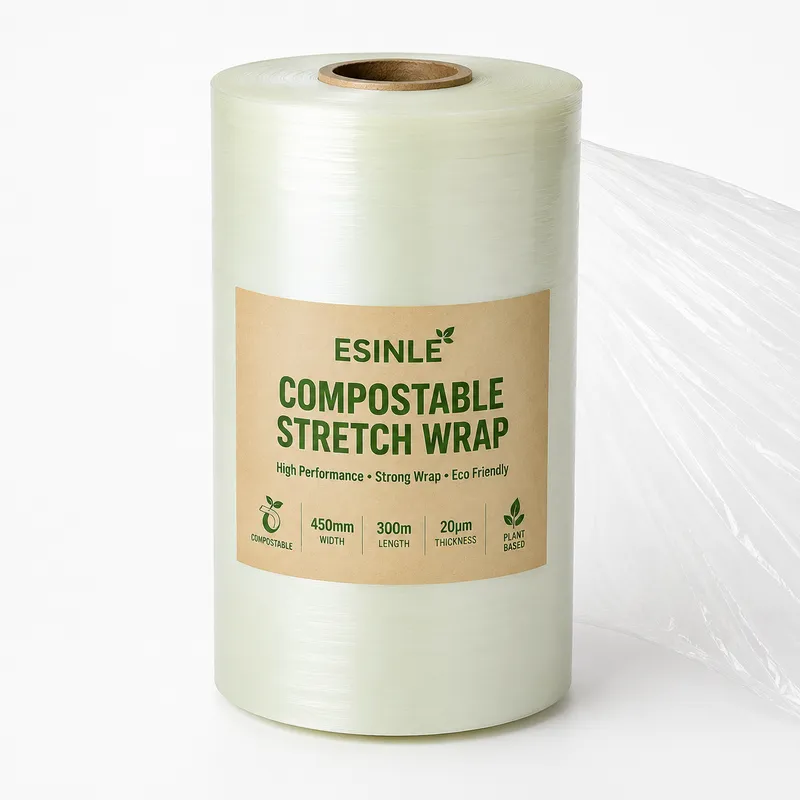
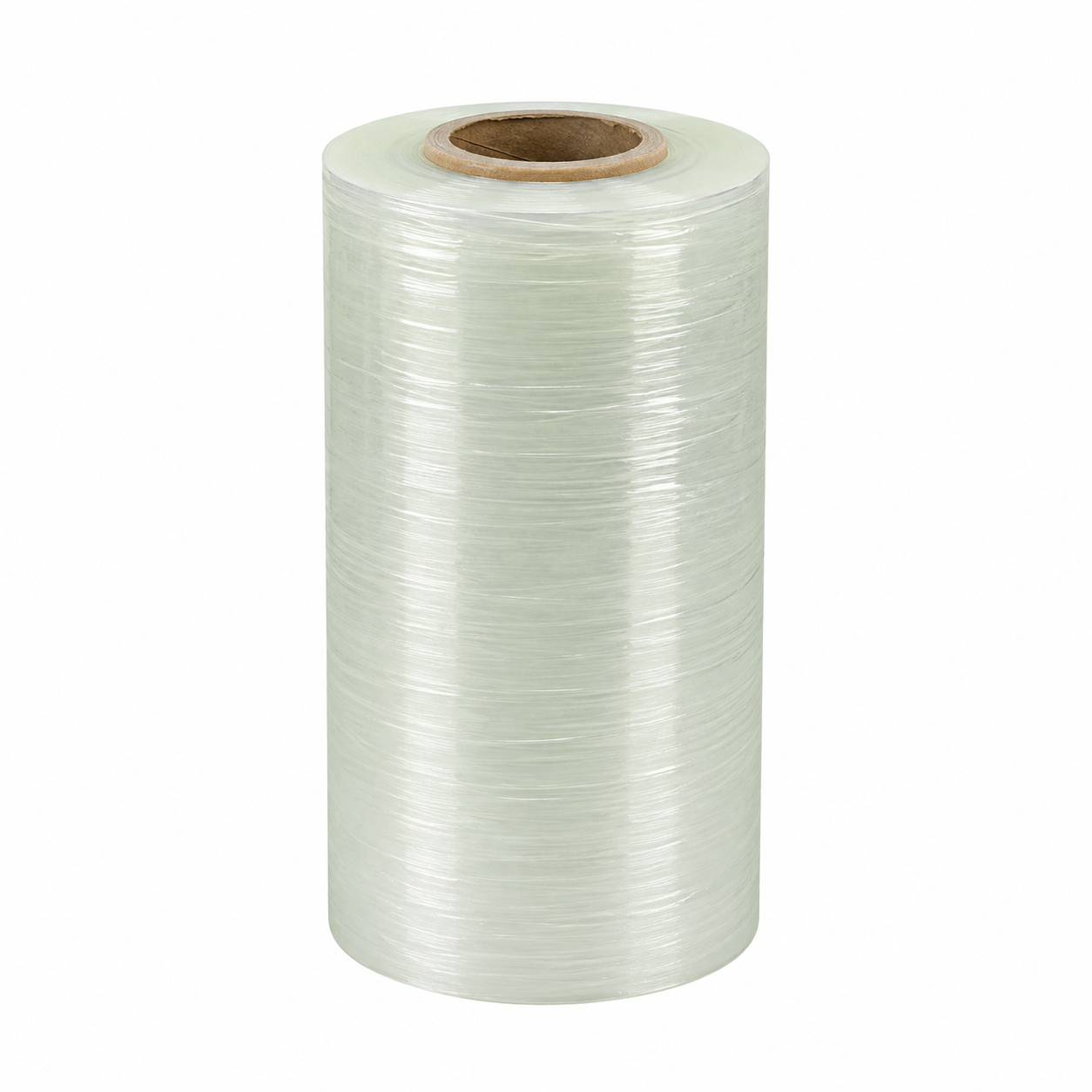
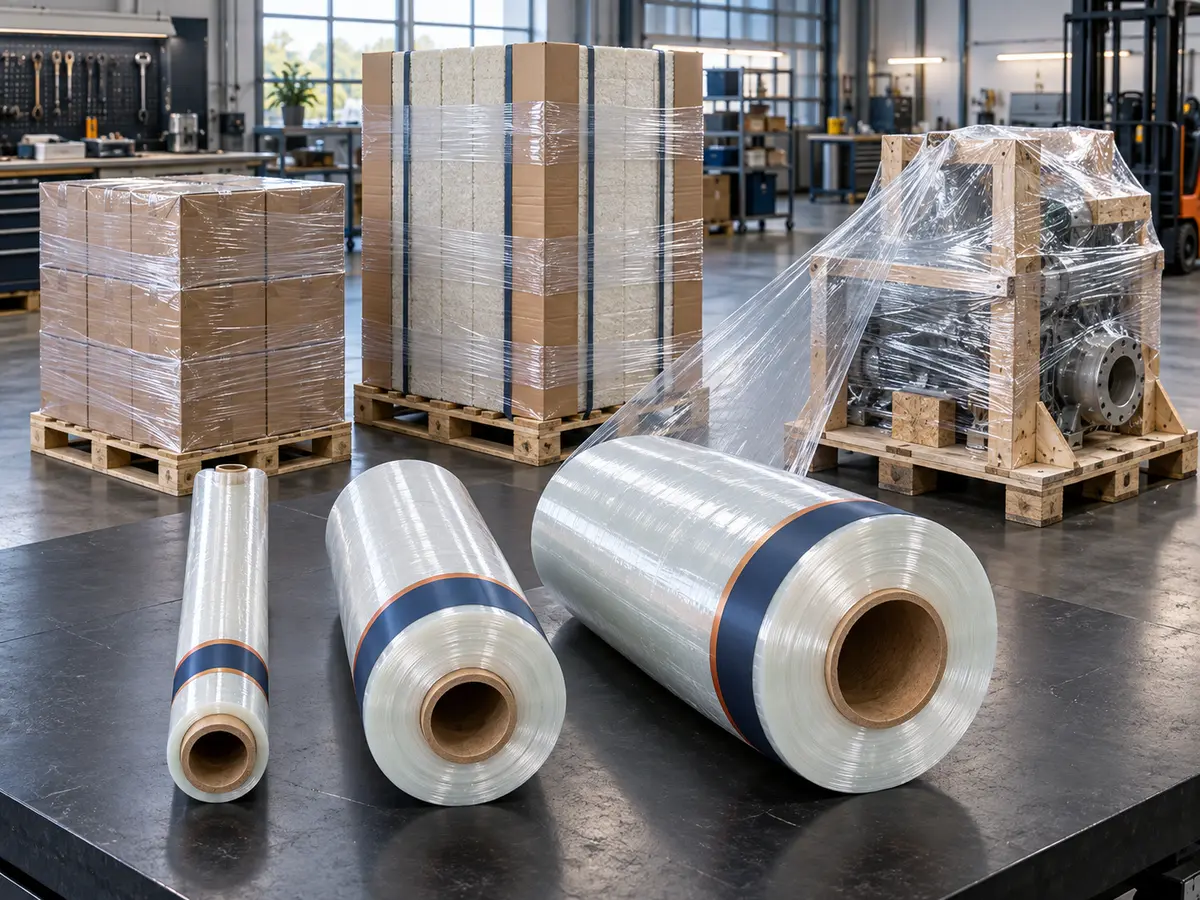
Configure 250–1,000 mm widths and 100–2,000 m lengths when a standard 450–500 mm pallet film does not fit the load, equipment or wrap pattern.
Stretch Wrap / ES-SW-03
Biodegradable industrial stretch wrap for buyers needing a customised width, gauge, roll length or core. Build the specification around the wrapper, load edges, operating cycle and journey, then review the candidate construction and case pack against that brief.
B2B supply · OEM / ODM options
Response target: one business day
The product at a glance
Compare the construction, size and order requirements. We confirm your selected configuration in the quotation.
EN 13432 · ASTM D6400 · BPI · OK compost INDUSTRIAL
Product overview
Industrial wrapping begins with the load and equipment, rather than a polymer ratio alone. Share the machine, film path, tension settings and containment requirements with your sample request. Trial the proposed construction on representative loads before confirming the roll, artwork, handling guidance and repeat-order specification.
Biodegradable and compostable stretch-wrap formats for controlled logistics trials. Define the load, wrapping equipment and transport cycle before comparing a production-format roll.
Plan your sample reviewKey features
Six points connect the selected format to its everyday use, finished pack and repeat supply.
Configure 250–1,000 mm widths and 100–2,000 m lengths when a standard 450–500 mm pallet film does not fit the load, equipment or wrap pattern.

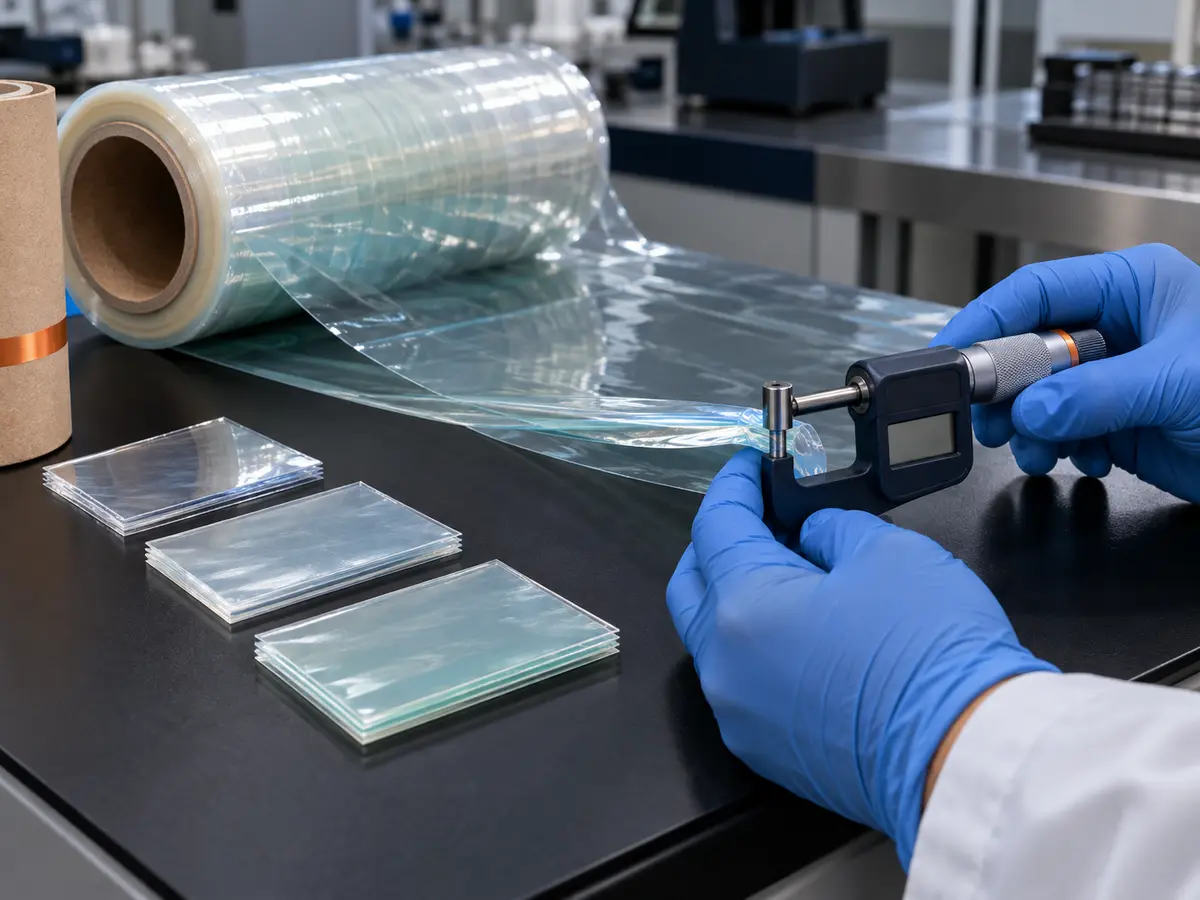
Select film build against load geometry, edge condition, temperature, wrap cycle and containment target; approve the chosen gauge on a production-representative roll.
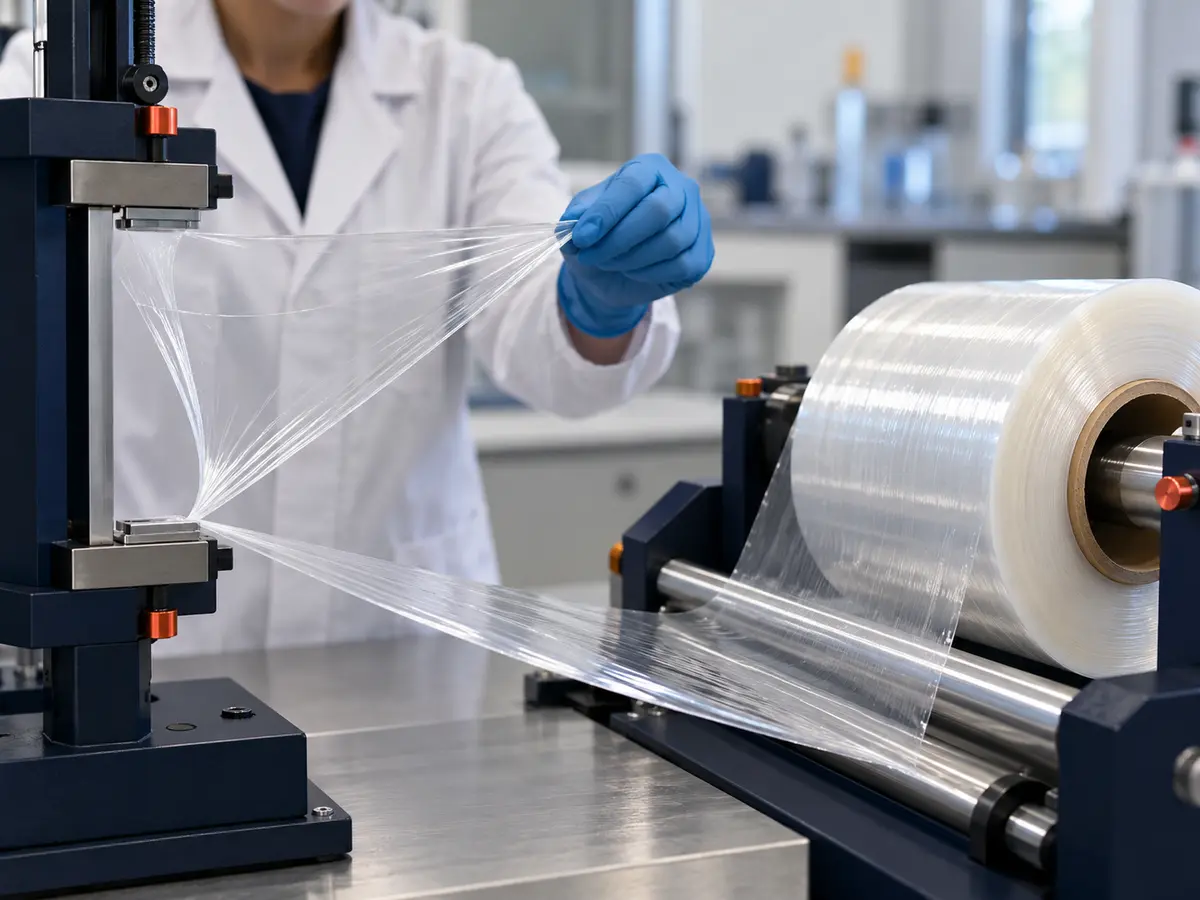
Choose 38, 50, 76 or 100 mm cores, unwind direction and standard or one-sided enhanced cling after confirming dispenser or wrapper-carriage compatibility.
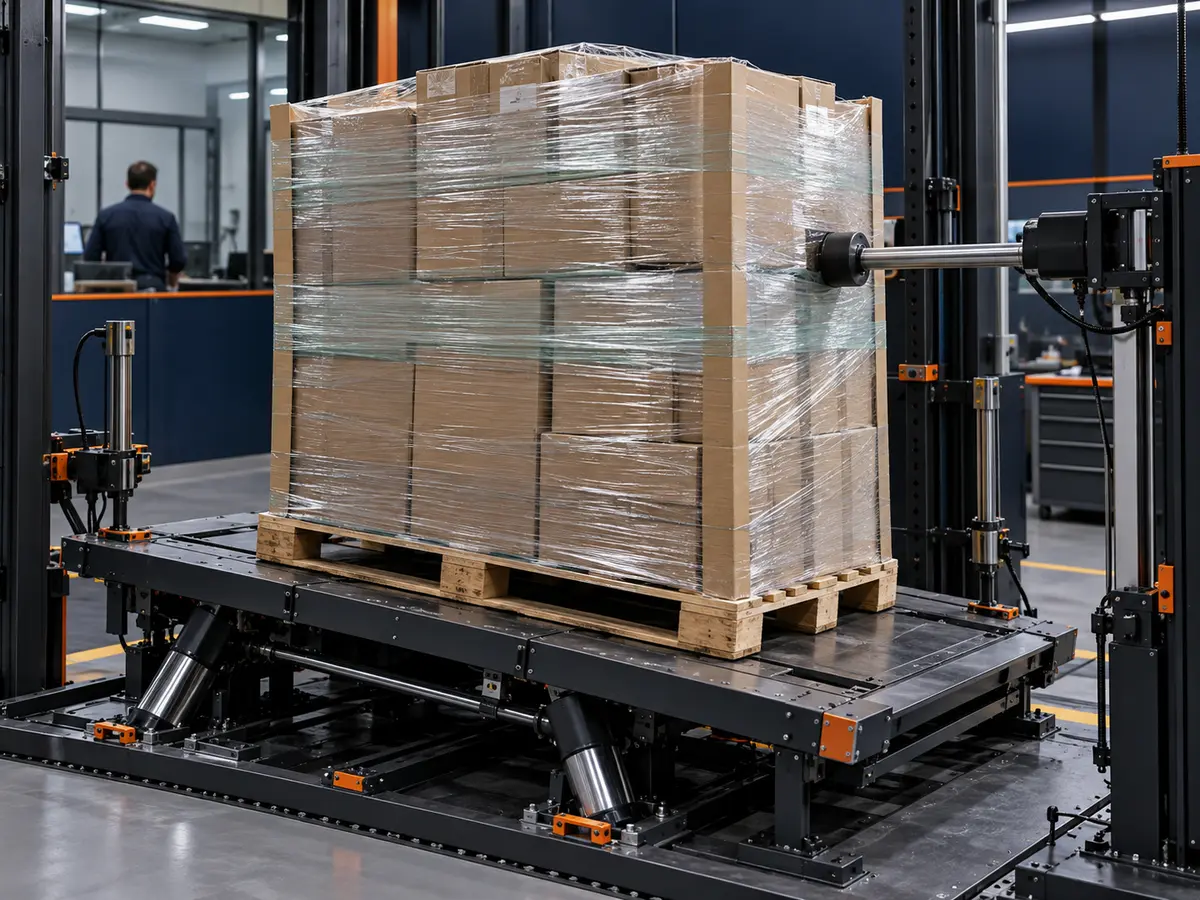
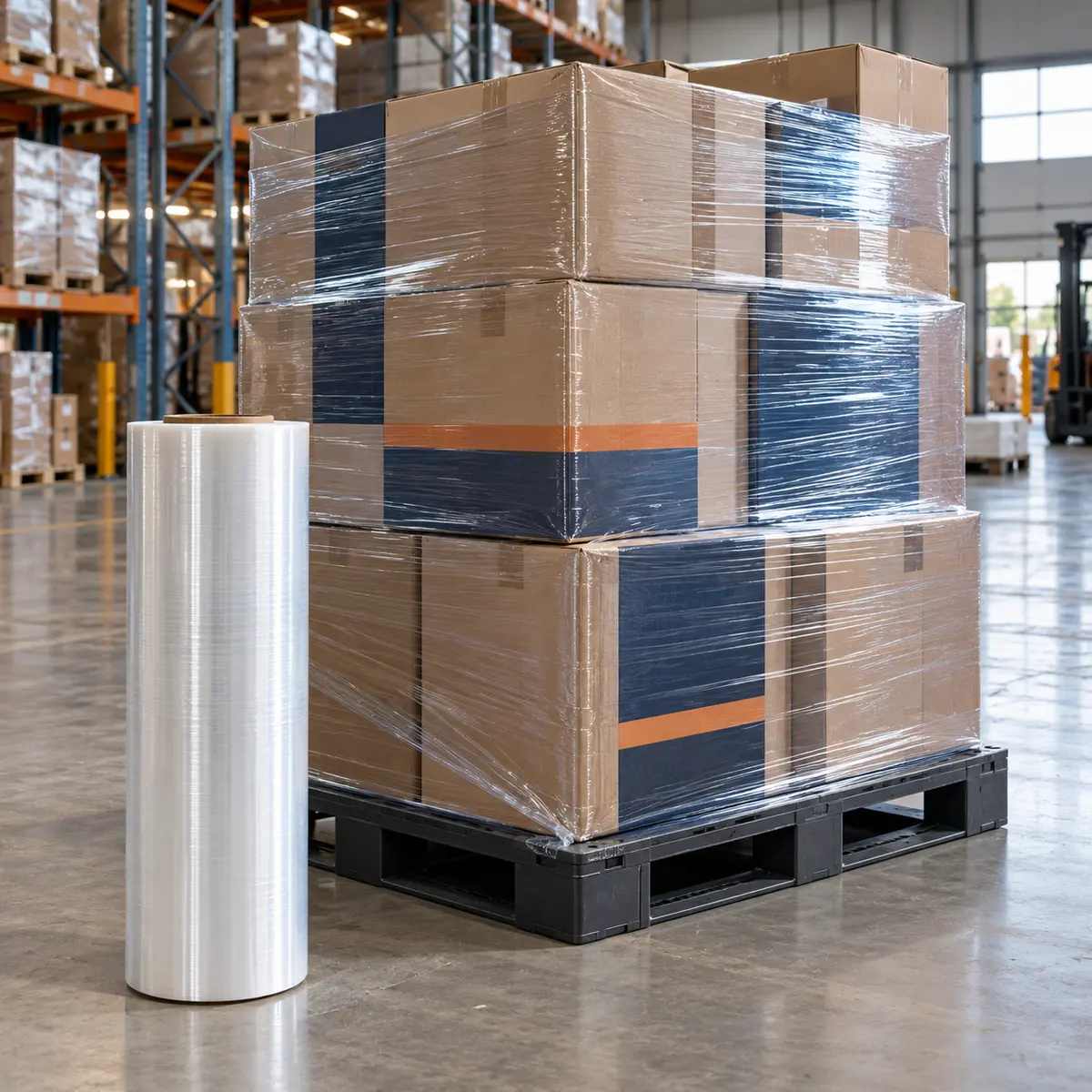
Define the wrap pattern and acceptance criteria, then test initial and retained containment, tail adhesion and load stability on the actual pallet through the intended handling cycle.
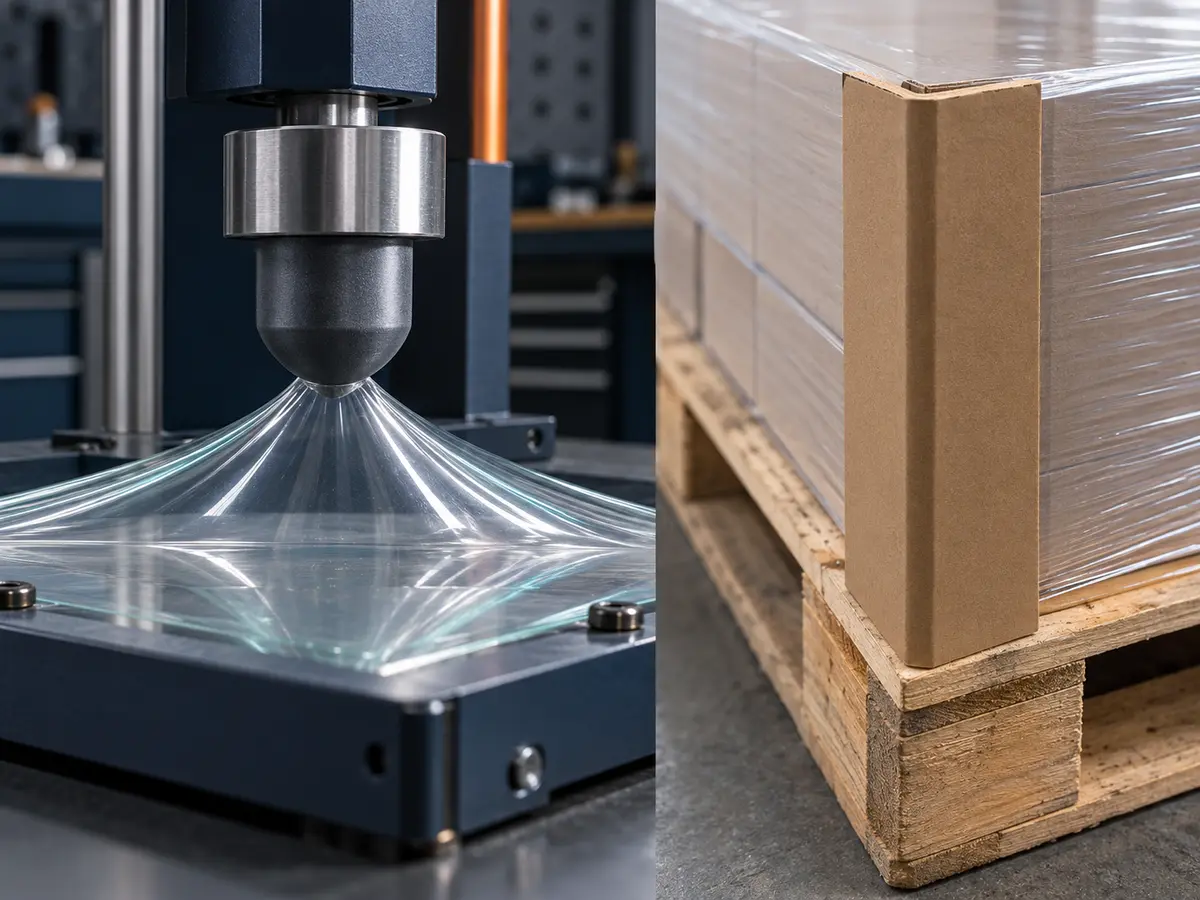
Map sharp, abrasive and protruding areas before trial. Use corner boards, edge protectors, separators or a different protective system where film alone is not appropriate.
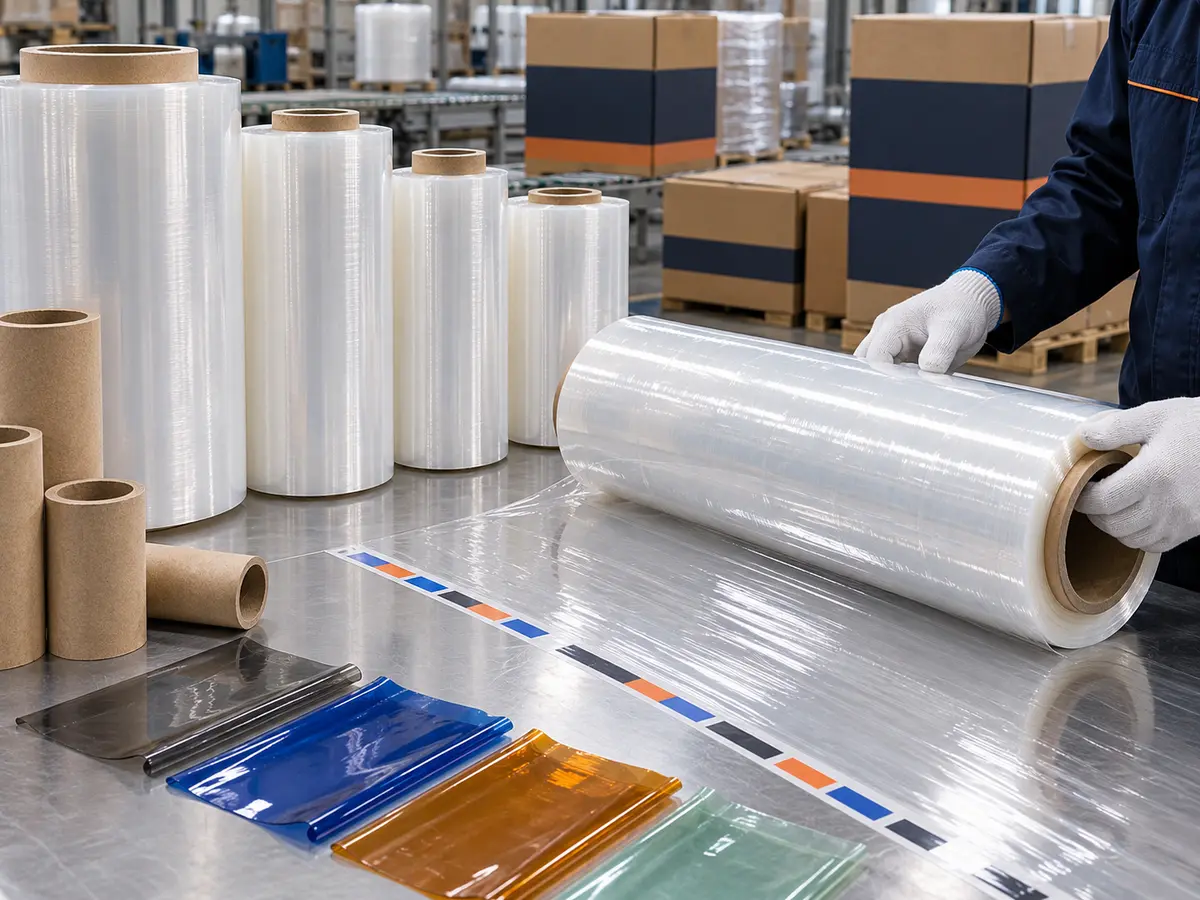
Approve tint, edge artwork, roll label, batch coding, carton marks and pallet pattern while keeping every customised element inside the required evidence and claim scope.
Applications
Choose the relevant operation and share its practical requirements with your inquiry.

A custom-film candidate for protected aluminum extrusions, boxed machine components and automotive parts after edge mapping and representative load-containment testing.
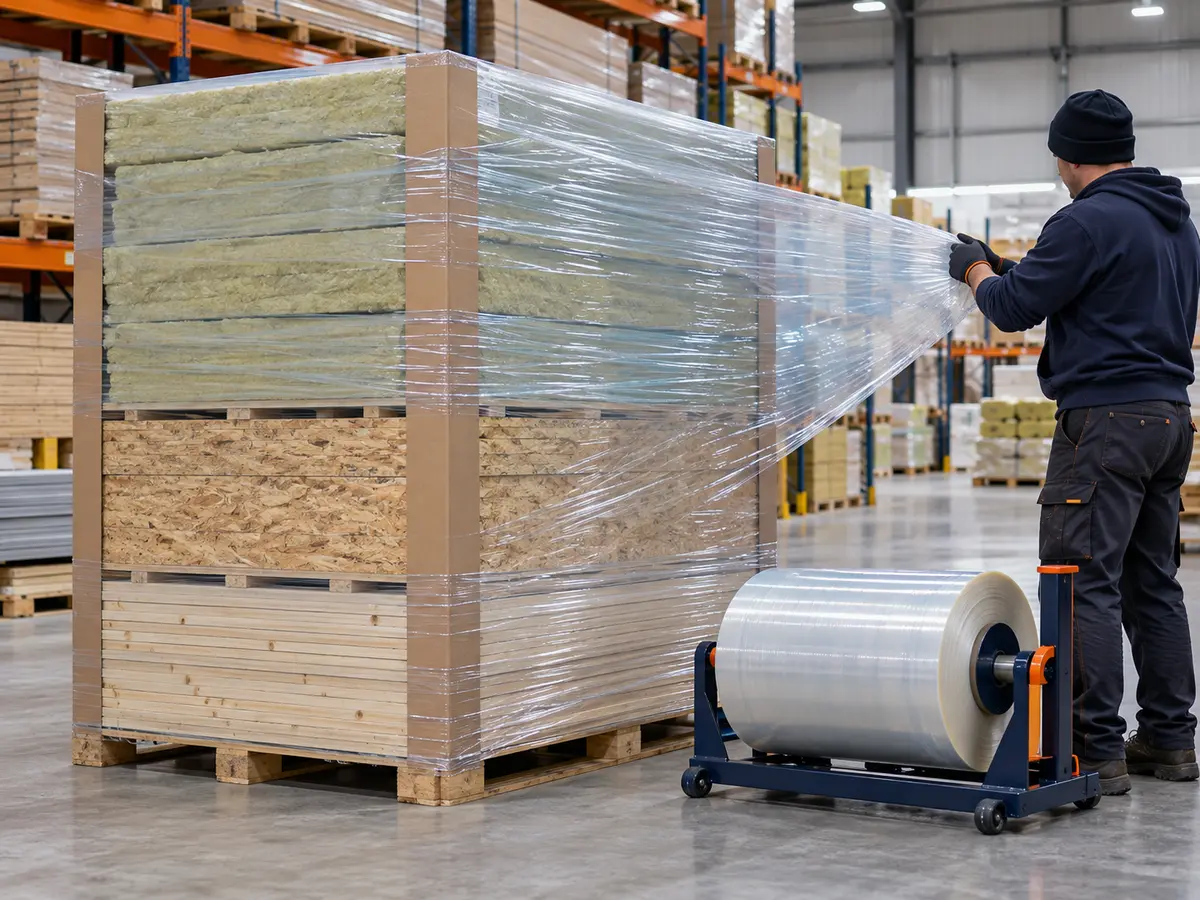
Use wide formats for protected insulation, engineered timber or panel loads when corner boards, storage conditions and the complete wrap pattern have been validated.

Prepare dry, protected crates and pallet loads for container handling after testing the expected handling cycle. Do not infer salt-spray or outdoor-weather resistance without separate evidence.
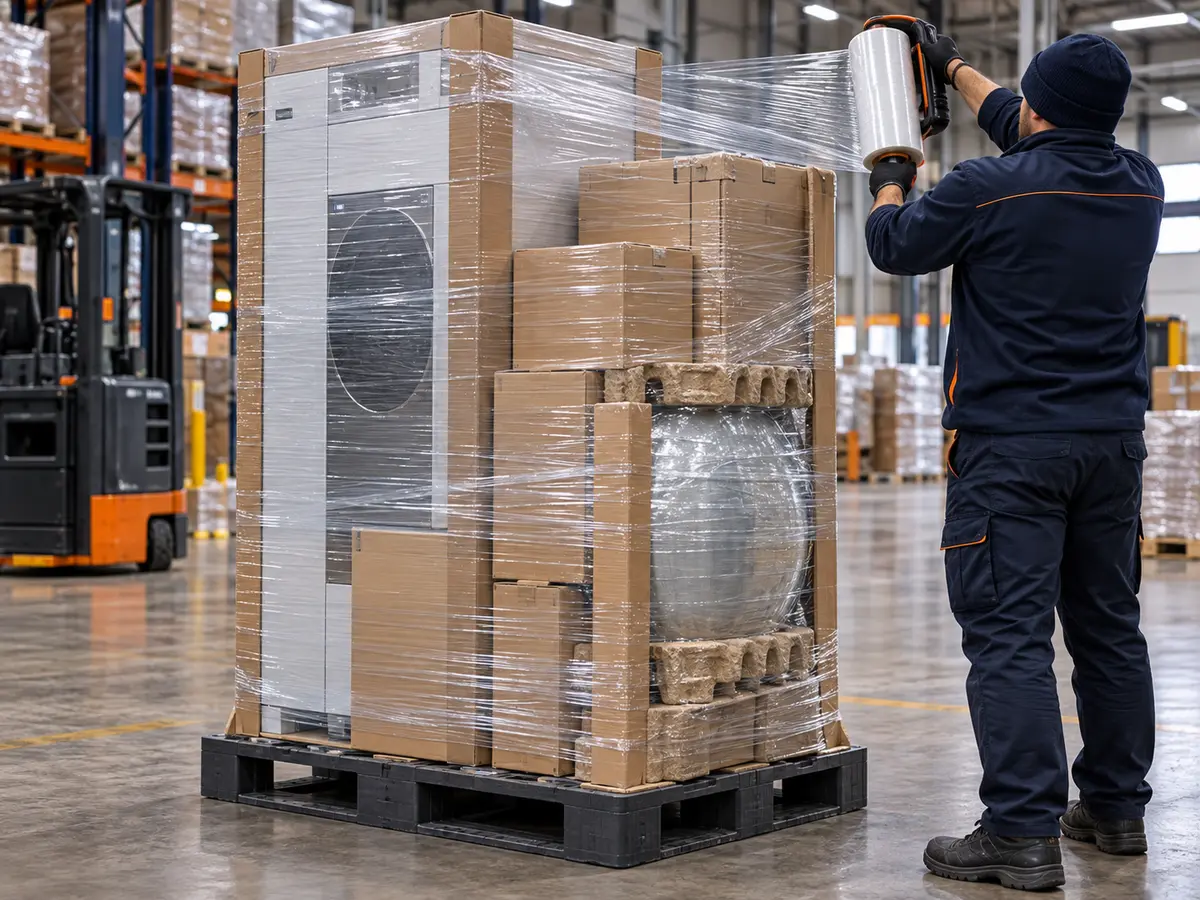
Configure width, gauge, core and application method for appliances, mixed cartons and non-standard pallets with suitable molded-paper or edge protection.
Certifications & product documents
Keep the specification, applicable certification and intended-use information connected to the product you order.
For an EU industrial-compostability claim, request current finished-product evidence and match the certificate or report holder, product identity, formulation, maximum thickness, colour, printing and validity to the quoted roll.
For North American commercial-composting claims, confirm that the exact finished film falls within current ASTM D6400 evidence. A resin document or a result for another gauge is not automatic coverage.
If BPI certification is required, verify the exact supplier and item in the current BPI catalog and confirm permitted mark use. Do not display the BPI mark based only on an ASTM report.
If the OK compost INDUSTRIAL route is specified, verify the current certificate number, holder, product scope, thickness and mark-use rules for the exact construction. This route does not mean home compostable.
Sample review
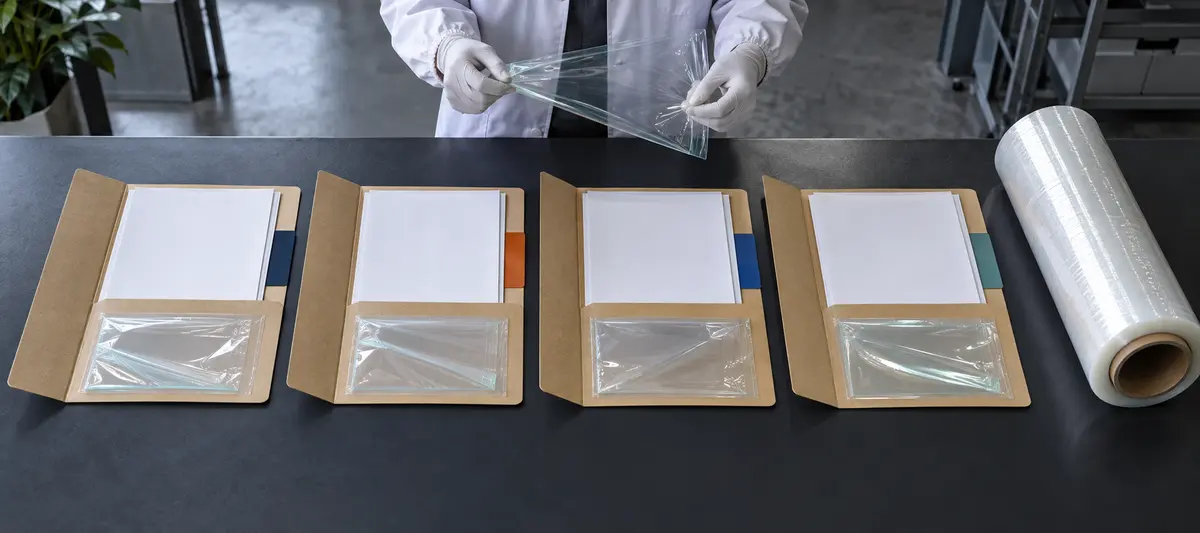
A useful sample represents the construction and use you plan to order. Share the benchmark and the observations that matter.
Record the load, equipment and wrapper settings.
Observe representative wrapping and agreed handling or transport checks.
Approve roll geometry, film specification and packing for the tested program.
ES-SW-03 is not a universal heavy-load solution. Final performance depends on formulation, gauge, width, pre-stretch or tension, overlap, wrap pattern, core, equipment, load geometry, temperature, storage and handling. Protect sharp, abrasive, hot or protruding edges; validate the actual pallet and journey. Do not claim a fixed tensile strength, material saving, degradation time, salt-spray resistance or guaranteed LLDPE replacement without construction-specific test evidence. Industrial-compostability wording does not imply home composting, soil, marine, landfill or litter degradation, and it does not guarantee local facility acceptance. Keep sealed stock cool, dry and out of direct sunlight; confirm shelf life and stock rotation in the signed specification.
From comparison to quotation
Build a short sourcing brief. Add the details you know, then send it with your request for pricing, samples or product documents.
Specifications, a suitable sample and the commercial details for your selected configuration.
Product questions
Choose ES-SW-03 when the actual load, wrap pattern or equipment requires a width, length, gauge, core, tint or cling format outside the standard range. If a stock 450–500 mm construction already passes the load trial, a standard product may be simpler and more economical.
The range can be configured for different application methods, but one construction is not automatically interchangeable across every dispenser and machine. Share the wrapper model, carriage type, core, film path, speed and tension settings, then complete a line trial.
Start with load geometry, mass distribution, edges, friction, storage temperature, journey and wrap cycle. Compare candidate gauges using one agreed containment and damage protocol; the thickest option is not automatically the best or lowest-impact option.
Do not assume a one-for-one substitution. Compostable film can differ in stretch window, tear response, cling, transparency and machine settings. Benchmark the current wrap pattern and total film per secured pallet, then qualify the proposed construction.
Continue comparing