What documents should buyers request for compostable cling film in 2026?
Start with the finished-product specification and build outward. Ask for the certificate or test evidence that supports the proposed compostability claim; the applicable food-contact declaration and migration evidence; PFAS and restricted-substance declarations supported by an appropriate test strategy where required; technical data, batch traceability and change-control records; and the final label or artwork proof. Then match the product code, formulation, thickness, printing, contact conditions and destination market across every file.
A document can be authentic and still be unsuitable for your order. It may cover only a base resin, an unprinted film, a different thickness, a different food-contact condition or a different country. Treat document review as a scope-matching exercise, not a file-counting exercise.
Why material-level certification is not enough for the finished SKU
Material-level evidence is useful, but conversion can change the scope. Film thickness, blend ratio, color masterbatch, slip or anti-fog additives, inks, coatings, adhesives, roll format and manufacturing site may all affect which evidence can be applied to the finished product. A certificate should be read literally: product name, grade, permitted thickness or composition range, certificate holder, site, standard, validity period and exclusions all matter.
Do not assume that every order must have a certificate that names the buyer's private-label SKU. Certification schemes structure scope differently. Instead, ask the supplier to map the exact finished SKU to the certified material or product, explain any conversion steps, identify supporting tests and confirm whether the certification body permits the proposed mark and claim. If the scope is unclear, verify it with the issuing body before artwork approval.
The same principle applies to food contact and chemicals. A declaration for dry food at ambient temperature cannot automatically support hot, fatty or long-duration contact. A laboratory result for an unprinted sample may not answer questions about the printed finished roll. The evidence should follow the use case described in your purchase specification.
The six-part compostable cling film evidence pack
1. Product identity and document-scope map
Request a one-page cross-reference that identifies the supplier SKU, buyer SKU, formulation or grade, nominal thickness and tolerance, roll width and length, finished format, print or coating status, production site and document revision. Each certificate, declaration and test report should map to one of those identifiers. Record any gap rather than relying on a verbal assurance.
2. Compostability certificate and supporting test evidence
Ask for the current certificate, its public verification link where available, the applicable standard and a clear description of what is certified. Depending on the intended claim and market, buyers commonly encounter industrial-composting frameworks associated with EN 13432 or ASTM D6400, while home-composting claims require a separate pathway. Do not describe industrially compostable film as home compostable unless separate evidence supports that claim.
Where a full laboratory report cannot be shared for confidentiality reasons, request a test summary or scope statement sufficient to confirm the product, thickness range, test method, result, laboratory and report date. Certification or conformity under controlled test conditions does not guarantee acceptance by every local composting facility, so disposal wording should also reflect available infrastructure.
3. Food-contact declaration and migration evidence
For film intended to contact food, request the documentation required by the destination market. The file should identify the material, applicable legal basis, food types or simulants, contact time and temperature, surface-area assumptions, overall and relevant specific migration conditions, restrictions and the responsible issuer. Confirm that the evidence covers the actual application, such as chilled produce, bakery use, refrigerated storage or another defined condition.
A broad phrase such as food grade is not a substitute for a scoped declaration. If the film is printed, coated or produced with a revised formulation, confirm whether the supporting assessment includes those components and whether a new review is required.
4. PFAS and restricted-substance evidence
Ask the supplier to state which substances and regulatory limits were assessed, for which product revision and by which method. Total fluorine can be a useful screening tool, but it is not identical to targeted PFAS analysis and does not by itself establish absolute absence. A non-detect result also depends on the method and reporting limit. Work with a qualified laboratory or adviser to select evidence appropriate to the destination-market threshold and the claim you plan to make.
Keep supplier declarations, laboratory reports and formulation-change controls together. If a sales sheet says PFAS-free, request the exact basis for that statement before repeating it in buyer-facing copy.
5. Technical data, batch records and change control
Collect the technical data sheet, specification limits, certificate of analysis or batch QC format where offered, lot-coding method, manufacturing-site identity, shelf-life and storage guidance, and the process for notifying you of changes. A strong change-control clause requires review before the supplier changes resin grade, blend, additives, ink, coating, gauge range, site or test basis.
6. Artwork, disposal wording and claim approval
Approve the exact artwork, not just the marketing concept. Check the certification mark authorization, qualifier language, industrial-versus-home compost wording, disposal instructions, required color or identification features, translations and destination-market restrictions. Keep the approved artwork revision with the evidence pack used to authorize production.
Check documents for my order before artwork and production are locked. The review should identify the intended market, use conditions and exact SKU rather than promise universal compliance.
How EU PPWR changes food-contact packaging review in 2026
Regulation (EU) 2025/40 on packaging and packaging waste, commonly called the PPWR, generally applies from 12 August 2026. It applies broadly to packaging placed on the EU market, but individual obligations, transition dates and responsible economic operators vary. Buyers should not treat PPWR as a single certificate or a blanket approval for compostable packaging.
For food-contact packaging, Article 5 restricts placing packaging on the market when it contains PFAS at or above the specified limits from 12 August 2026. Procurement teams should therefore connect chemical evidence to the exact food-contact packaging specification and verify that the laboratory method and reporting limits can address the relevant thresholds. Avoid converting a supplier declaration into an unqualified PFAS-free claim.
PPWR also does not make every compostable format mandatory or automatically preferable. Compostability, recyclability, labeling, minimization and conformity-documentation requirements must be evaluated for the specific packaging category and timeline. Use the official regulation and current implementing guidance as the source of truth, and keep a dated regulatory-review note in the product file.
What California SB 54 and truth-in-labeling rules change
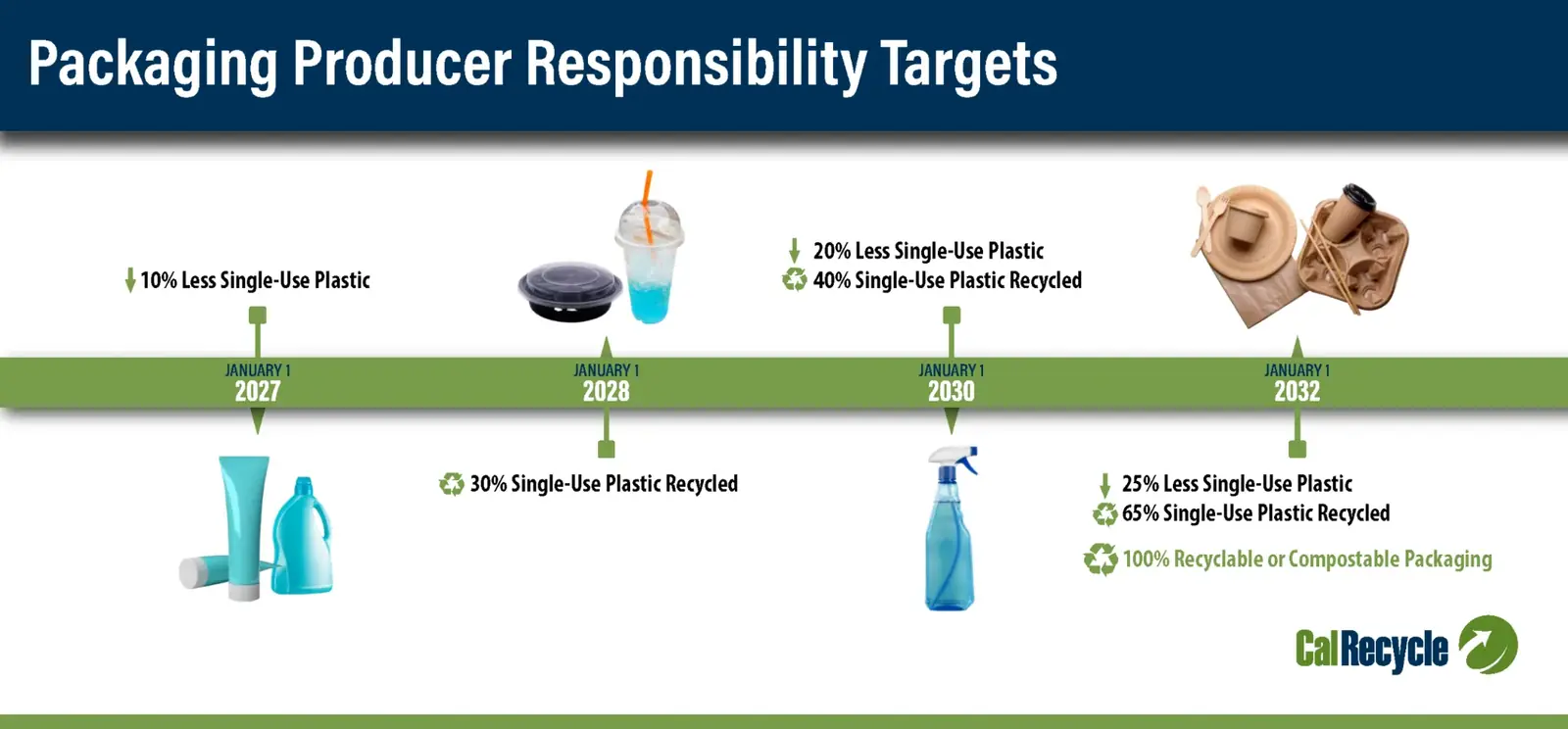
California's SB 54 establishes an extended producer responsibility system for covered packaging and plastic food service ware. CalRecycle states that the permanent SB 54 regulations became effective on 1 May 2026. Whether a particular film is covered, which entity is the producer and which reporting or participation duties apply depend on the product and supply chain. Confirm your status rather than relying on a supplier's general summary.
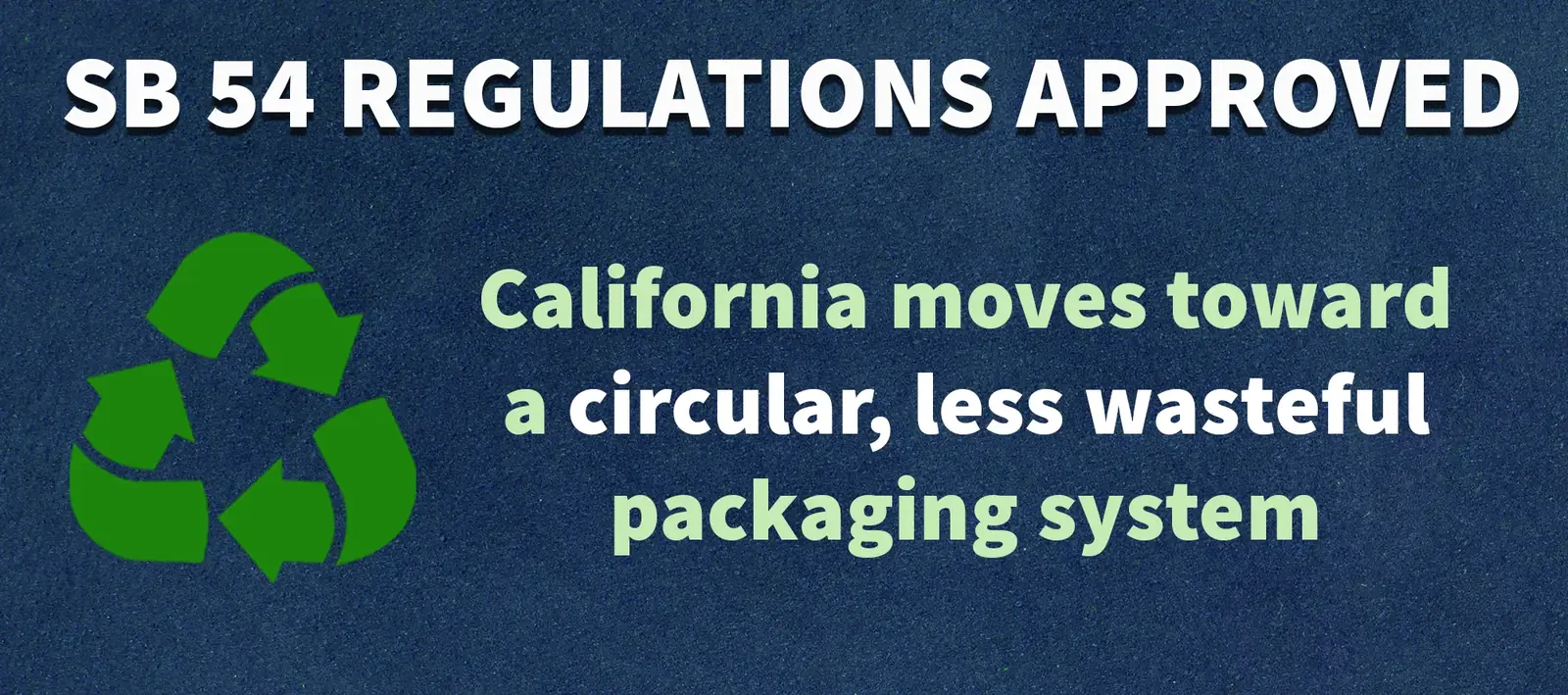
California also regulates environmental marketing terms separately. Review CalRecycle's current truth-in-labeling guidance before using compostable, home compostable, biodegradable or similar wording. Product classification matters: requirements for bags, food-service products and other plastic products are not necessarily identical. Certification evidence does not replace a market-specific label review, and a certification logo should only be used within the certifier's authorization.
For California-bound orders, add an artwork checkpoint that records the applicable product category, standard or certification basis, claim wording, disposal qualifier and reviewer. This keeps packaging claims aligned with the evidence rather than allowing marketing copy to outrun the file.
Buyer document matrix: what to request, match and verify
| Document | Request | Match against | Verification question |
|---|---|---|---|
| Product specification and scope map | SKU, formulation reference, gauge, dimensions, print, site and revision | Purchase order and approved sample | Do all files describe the same finished product? |
| Compostability evidence | Certificate plus public record or supporting scope/test summary | Claim, thickness, composition, format and valid dates | Does the evidence support industrial or home composting, and in which market? |
| Food-contact file | Applicable declaration and migration assessment | Food type, time, temperature and printed/unprinted condition | Does the assessment cover the intended use? |
| PFAS/restricted-substance file | Supplier declaration and appropriate analytical evidence | Destination threshold, method and reporting limit | Is the proposed claim narrower than the evidence? |
| Technical and batch records | TDS, QC/CoA format, lot coding, storage and change control | Contract specification and received lots | Can a complaint be traced to material and production records? |
| Artwork and label approval | Final proof, mark authorization and disposal wording | Destination-market claim rules | Is every visible claim approved and qualified? |
Why one document pack cannot cover every market
Standards, food-contact rules, chemical restrictions, claim wording and available composting infrastructure differ by jurisdiction. Even when the physical film is unchanged, the lawful label, responsible economic operator and supporting declaration may change. Build a core technical file, then add a market annex for each destination.
The annex should name the market, product classification, importer or responsible party, applicable claims, required language, recognized certification pathway, food-contact basis, chemical restrictions and disposal instructions. Record the review date and source links so the team can update the file when guidance changes.
ESINLE's certifications reference page can help buyers organize the standards they want to discuss, but applicability still has to be verified for the exact order and destination.
Match sample approval to the compliance file before a bulk order
Performance approval and document approval should meet at one controlled product revision. The sample does not always need to come from the same batch as an older certification test, but its formulation, thickness, printing and conversion route should be traceably equivalent to the version covered by the evidence. If it is not, document the difference and decide whether further testing or certification review is needed.
Create a sample protocol for the intended use. Depending on the application, it may cover cling and stretch behavior, unwinding and cutting, puncture and tear behavior, transparency, odor, condensation or anti-fog performance, temperature exposure, food-contact conditions and print rub. Define acceptance criteria before testing; do not invent performance limits after seeing the sample.
Use the compostable cling film performance test checklist to structure evaluation, then compare the approved sample with the compostable cling wrap product reference and your signed specification.
Request film samples with your target width, thickness, format, application and destination market so the sample review answers a real purchasing question.
A 10-field compliance-ready RFQ for compostable cling film
Include these ten fields in the first request so suppliers can quote and document the same product:
Destination markets and sales channels: countries, states, retailers, food-service or private-label programs.
Buyer and supply-chain role: brand owner, importer, distributor, converter or contract packer.
Finished format: roll or sheet, width, length, core, dispenser and packing configuration.
Film specification: nominal thickness and tolerance, color, transparency and required functional features.
Formulation and conversion: resin or grade reference, additives, print, ink, coating and production site.
Food-contact use: food type, contact time, temperature, storage and whether the film will be reheated.
Compostability claim: industrial or home pathway, intended standard, certification mark and disposal wording.
Evidence required: certificate scope, food-contact file, migration data, PFAS/restricted-substance support, TDS and traceability.
Sample and approval plan: sample revision, test methods, acceptance criteria, artwork approval and change control.
Commercial response: ask the supplier to state MOQ, tooling or print charges, price basis, production lead time, sample timing and document availability instead of assuming values.
For a reusable request format, see the custom compostable packaging RFQ checklist. Buyers still comparing available formats can start at the compostable cling film category page.
Frequently asked buyer questions
Is a resin certificate enough for the finished cling film?
Not by itself. It can be part of the evidence chain, but you must confirm whether its scope and the certifier's rules allow it to support the finished formulation, thickness, printing, format and proposed claim. Ask for a written scope map and supporting conversion or test evidence.
Does industrial compostability mean home compostability?
No. They use different conditions and verification pathways. Only use a home-composting claim when evidence specifically supports it. Also check whether the destination community or facility accepts the product; certification does not guarantee local collection.
Does a food-contact declaration cover every food and temperature?
No. Review the declared food types or simulants, contact time, temperature, restrictions and product revision. A different use condition can require a different assessment.
Can total fluorine testing prove that film is PFAS-free?
Total fluorine is generally a screening measurement, not a complete identification of PFAS. The appropriate evidence may combine supplier formulation information, a scoped declaration, total-fluorine screening and targeted analysis. Interpret results using the method, reporting limit and applicable regulatory threshold.
What should buyers check before approving printed film?
Confirm that inks, coatings and the printed thickness remain within the evidence scope; verify authorization for certification marks; review every environmental claim and disposal instruction for the destination market; and lock the approved artwork revision into the purchase specification.
How often should the document pack be refreshed?
Review it before a new market launch, after a material, site, gauge, ink or process change, when a certificate approaches expiry, and when relevant law or guidance changes. Add a regular review date even when no change has been reported.
Build a market-matched evidence pack before requesting a quote
A high-quality quote should describe one defined product and one defined evidence package. When documents, sample and commercial terms all reference the same revision, procurement can compare suppliers more fairly and reduce late-stage artwork, testing and compliance surprises.
ESINLE can review the information you provide and discuss document availability for the proposed specification without treating a general certificate as universal proof. Share the destination market, use conditions, target format, artwork status and evidence checklist with the RFQ.
Get pricing & MOQ for a defined compostable cling film specification, then confirm every claim and document scope before placing the bulk order.