Fit the real dispenser
Confirm core diameter, roll width and tear-off pitch on the target supermarket spindle. A size listed on a sheet does not prove trouble-free one-at-a-time use.
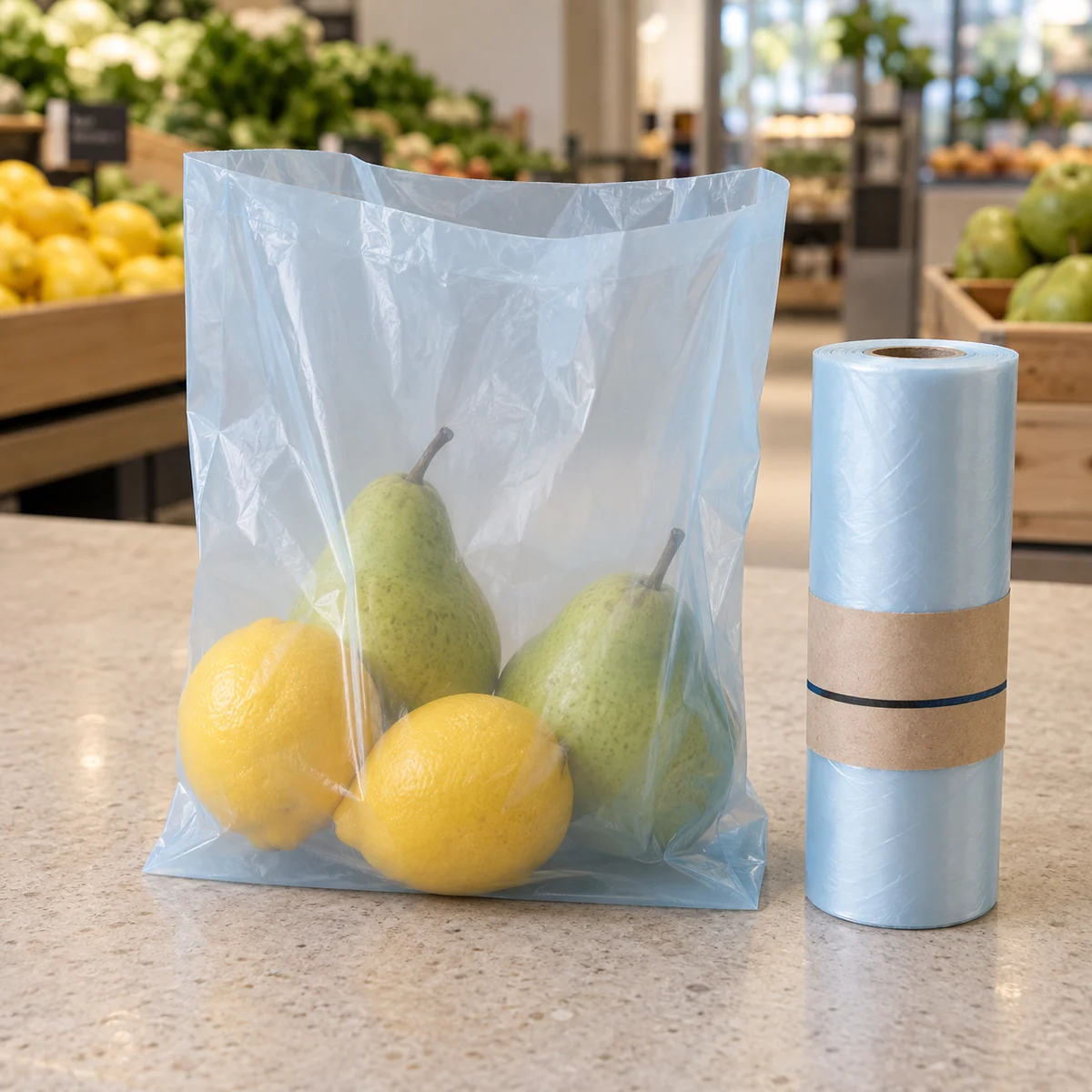
Roll-dispensed compostable produce bags for grocery departments, wholesale programs and private label
| Material | PLA + PBAT + plant-starch film; final blend and applicable claims confirmed by the finished-SKU evidence |
| Thickness | 15–30 μm starting range; final gauge and tolerance set in the approved specification |
| Dimensions | 30 × 45 cm reference size; custom dimensions available after dispenser and sample review |
| MOQ | Indicative stock starting point: 60 cartons; OEM print and color quantity quoted after specification review |
| Lead Time | Indicative 15–25 days after specification and artwork approval; confirm for each order |
Ask for a production-representative roll, bag sample, gauge and finished-SKU evidence · Packing, color, lead time, storage and mark use are confirmed on the approved order
PRODUCT OVERVIEW
Start with a bag that tears cleanly from the roll and keeps produce visible. Then agree its gauge, load check, printed construction, packing and evidence scope before scaling the retail program.
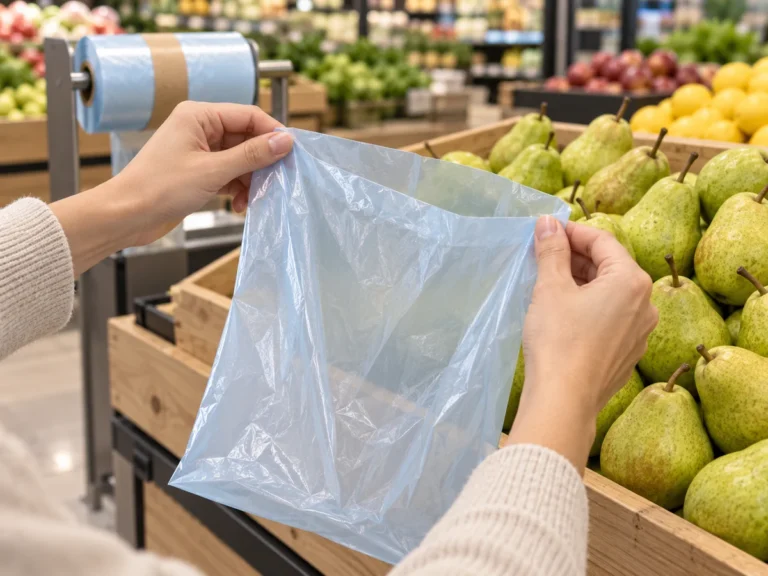
Confirm core diameter, roll width and tear-off pitch on the target supermarket spindle. A size listed on a sheet does not prove trouble-free one-at-a-time use.
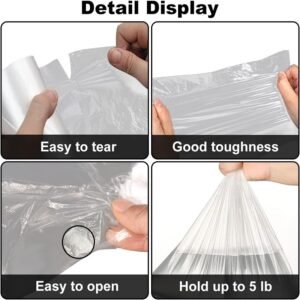
Check film handling and bottom-seal strength with your apples, citrus or other target produce. Treat the current 3 kg figure as a validation target, not a universal promise.
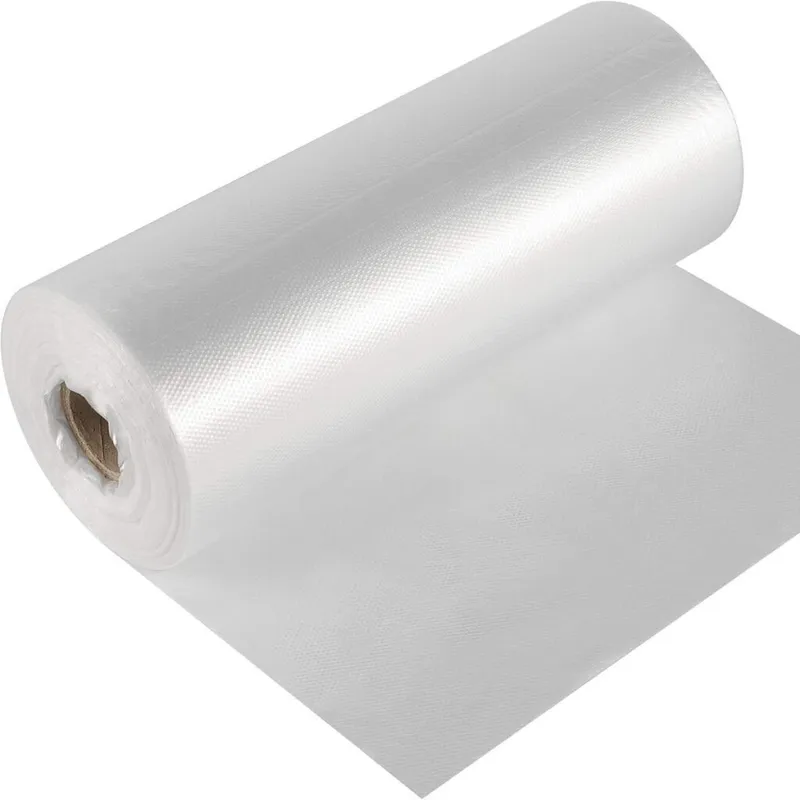
Evaluate transparency, film feel and bag opening in the aisle. The mist-blue photographs are an OEM color study; approve production color and packaging against a physical sample.
Review the license or test scope for film, tint, print and gauge. Agree bag disposal wording with the destination market and receiving composting program.
Complete inputs reduce back-and-forth and help us match the sample, evidence and commercial quote to one defined construction.
WHY CHOOSE THIS PRODUCT
Check that each flat handleless bag separates cleanly on your roll stand without feeding the next bag into the aisle. Approve perforation pitch and core fit with a production sample.
Inspect how the selected 15–30 μm construction shows fruit color and labels in real store light. Compare natural film against the illustrated pale-blue OEM tint before choosing a color.
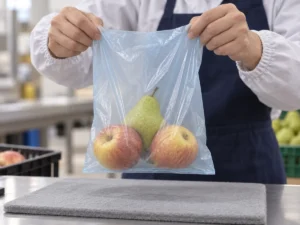
Test the bag with the chosen produce and a defined lift routine. Verify gauge and seal design rather than treating a nominal 3 kg target as a blanket performance claim.
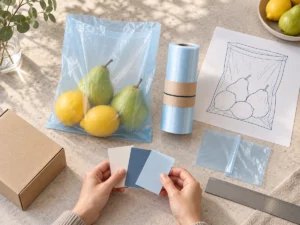
Coordinate film color, print colors, ink coverage and roll-band artwork. Obtain evidence-scope and mark-use approval for the finished printed or tinted SKU before production.
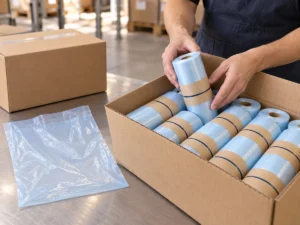
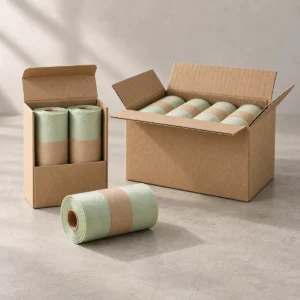
Start from the listed 250-bag roll and 50-roll carton reference, then confirm physical roll diameter, case count, storage conditions and purchasing MOQ on the final pack plan.

Request inspection criteria for roll winding, bag dimensions, film thickness, tear line and bottom seal, with batch traceability and approved production samples.
TECHNICAL SPECIFICATIONS
| Material | PLA + PBAT + plant-starch film; final blend and applicable claims confirmed by the finished-SKU evidence |
| Thickness | 15–30 μm starting range; final gauge and tolerance set in the approved specification |
| Dimensions | 30 × 45 cm reference size; custom dimensions available after dispenser and sample review |
| Color | Natural translucent stock; pale mist-blue shown as an illustrative custom-color option requiring separate approval |
| Capacity | Up to 3 kg is an existing reference target; validate the selected gauge and load-test method with actual produce |
| Pack Count | Reference pack: 250 bags per perforated roll, 50 rolls per carton; verify on the final packing list |
| MOQ | Indicative stock starting point: 60 cartons; OEM print and color quantity quoted after specification review |
| Lead Time | Indicative 15–25 days after specification and artwork approval; confirm for each order |
| Carton Dimensions | Confirm master-carton dimensions and roll count on the approved packing list |
| Packaging | Kraft-banded dispenser rolls in bulk cartons; private-label roll bands and case marks by approval |
CERTIFICATIONS
These four buyer checks explain which documents to request; they are not four independent certificates held by the illustrated blue bag. Match the current evidence to the exact finished SKU and confirm local collection acceptance before approving a claim or mark.
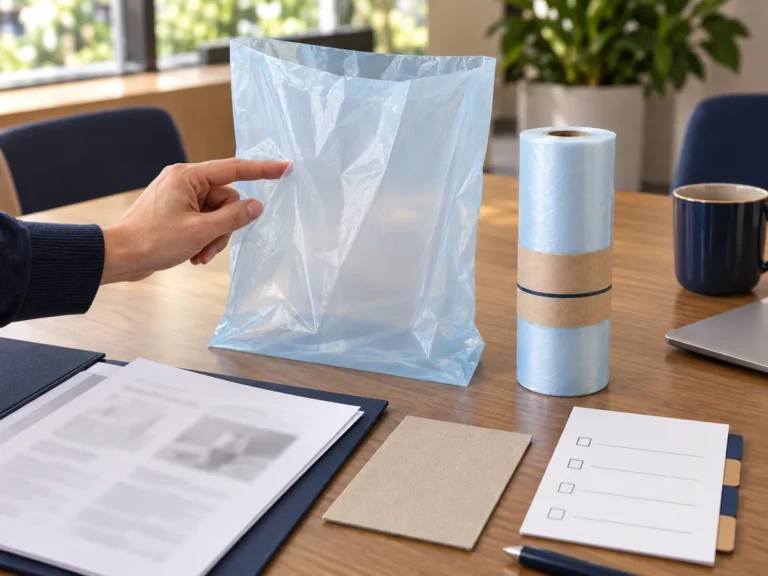
Request current documentation that identifies the holder and exact produce-bag construction, film, gauge range, tint, print and validity. This standard concerns managed municipal or industrial aerobic composting; it does not by itself establish home compostability.
If a BPI claim or mark is required, look up the finished bag by company and item in BPI’s certified-product catalog. Confirm the licence covers the marketed roll, permitted mark artwork and any distributor or private-label arrangement.
For an EU program, request a separate current EN 13432 certificate or report that actually includes this finished variant. An ASTM D6400 reference does not automatically confer EN 13432 approval.
Check whether the quoted color, ink coverage, labels and gauge sit inside the issued scope. Review food-contact declarations for the intended food, duration, temperature and sales market separately; compostability evidence does not establish food-contact suitability.
OEM / ODM
Choose bag width and length, film gauge, perforation pitch, bags per roll, dispenser core, natural or custom film tint, printing and carton configuration. Send print coverage, ink system and market-specific claim wording for review. A change in film color or printing requires confirmation that the exact finished construction is covered by the current compostability evidence before any mark is printed.
FACTORY CAPABILITIES
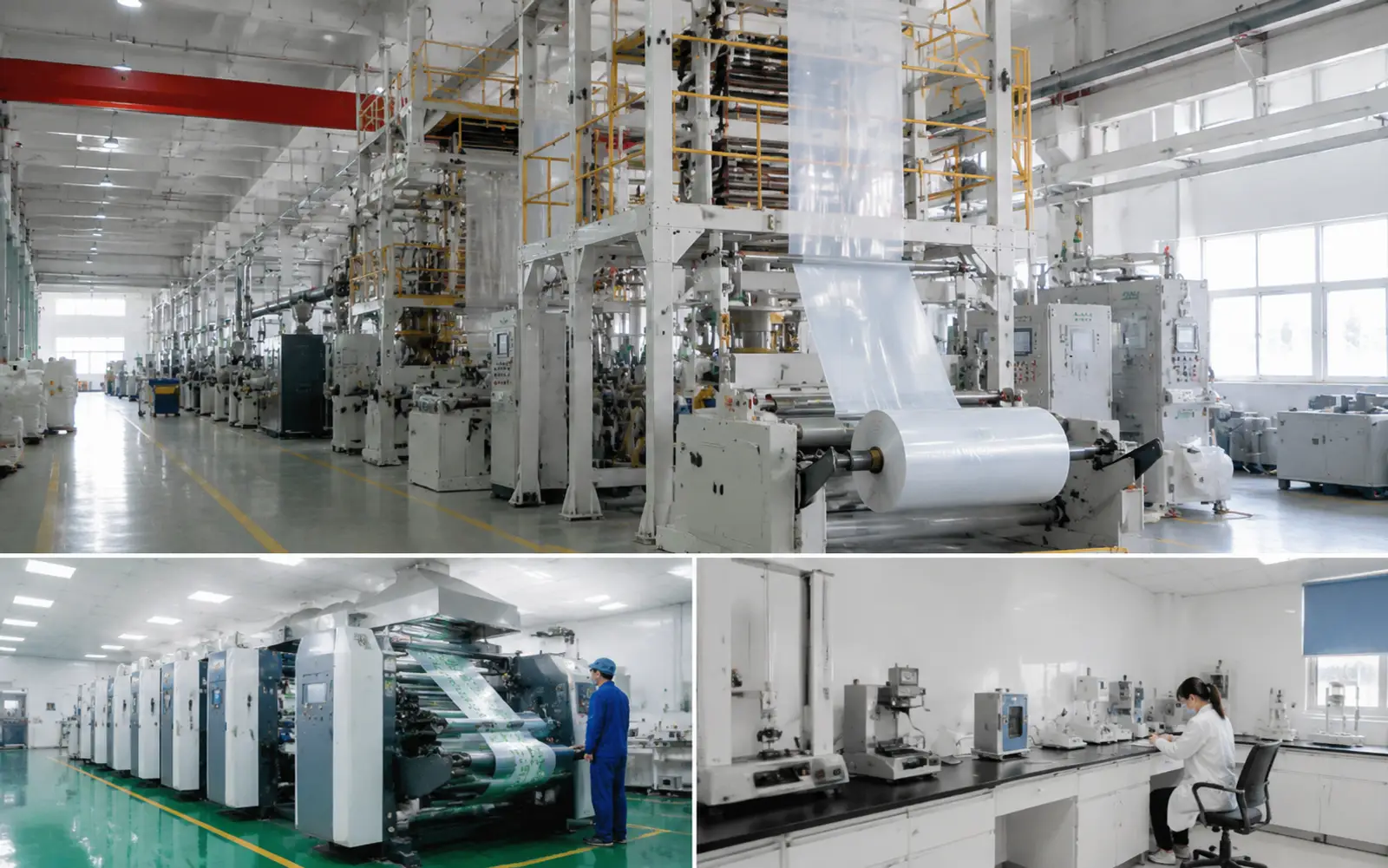
The selected format can be reviewed against these Guangzhou manufacturing capabilities. Final feasibility, tolerances and MOQ are confirmed in the approved specification.
Width, gusset depth and length can be reviewed against your packaging-line requirements and converting limits.
Flexographic artwork, colour count, print coverage and plate requirements are checked before MOQ and pricing are confirmed.
PLA, PBAT and starch blend options are selected around flexibility, strength, processing and the documented claim required for the SKU.
BEHIND EVERY PRODUCT
The workflow covers compounding, film blowing, printing and bag conversion, with the order specification used as the reference for in-process and final checks.
USE CASES
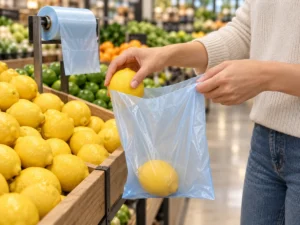
Position a roll at the fruit-and-vegetable display for customers to separate loose citrus, apples and pears. Validate dispenser fit, easy opening and local bag-label requirements before chain-wide rollout.
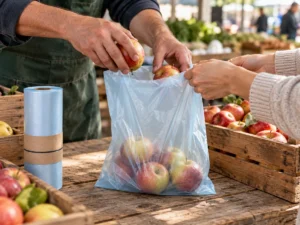
Offer one-at-a-time bags for small quantities of fresh produce without adding a checkout carrier. Choose the bag gauge and tint against the actual fruit mix and handover routine.
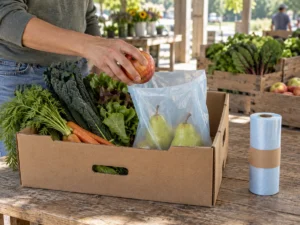
Portion selected fruit inside a subscription box while keeping produce visible at pickup. Agree pack-out, moisture exposure, distribution distance and disposal instructions with the program.
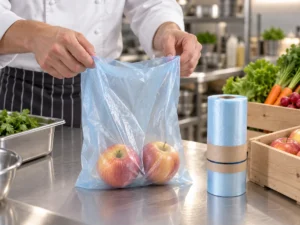
Separate dry whole produce at a preparation station before use. Verify any direct food-contact declaration and temperature/time scope independently; this bag is not a hot-fill, liquid or freezer-storage format.
HONEST TRANSPARENCY
A thin produce-bag format should be tested with the fruit and handling it is sold for. Sharp stems, rough root vegetables, excess moisture and unusually heavy loads may require a different gauge or bag construction. Do not claim the same performance for every fruit or quote a universal degradation time. ASTM D6400 addresses managed aerobic municipal or industrial composting, not automatic home-compost suitability or acceptance by every organics collector. The pale-blue photographs illustrate a proposed OEM variant; stock color, printed claim, shelf life and storage limits require confirmation for the approved order.
FAQ
The current site listing names ASTM D6400, but buyers should request the actual current certificate or test report for ES-FB-06. Match the holder, item, film, gauge, tint, print, validity and permitted label to the bag being quoted before publishing a certified claim.
No. ASTM D6400 is a standard for plastics designed for managed aerobic municipal or industrial composting. BPI is a third-party program with a searchable product catalog and licensing rules. Check whether the exact finished item appears in that catalog.
The blue bag in the images is an illustrative custom-color concept. Color and printing can change the finished-product scope, so do not assume a certificate for natural film also covers this version. Request written confirmation and approved artwork before using a mark.
Not on ASTM D6400 evidence alone. This standard addresses managed municipal or industrial aerobic composting. Make a home-compost claim only when separate current evidence covers the exact finished bag and the target market permits it.
The current reference is 30 × 45 cm, a 15–30 μm starting range, 250 bags per roll and 50 rolls per carton. Custom widths, lengths, roll count and print are reviewed after the target dispenser, annual volume and sample are specified.
The existing listing cites up to 3 kg as a reference target. A meaningful rating needs a defined test method, fruit mix, bag gauge and seam design. Test a production-representative bag with your real produce before putting a number on retail artwork.
No. Request the applicable declaration and test scope for the food type, contact time, temperature and destination market. Do not infer a food-contact approval from ASTM D6400 or a compostability mark.
Send bag size, gauge, dispenser core and roll width, target produce, volume per location, roll and carton count, film color, artwork, destination market, required evidence and delivery address. We can align the sample, document review and quote to one construction.
DEEPER READING
GET A QUOTE
Share your dispenser dimensions, bag format, target fruit load, artwork, annual volume and destination market. We will match a production sample, relevant evidence review and wholesale quote to one finished bag.
Request samples & roll pricingRELATED PRODUCTS