Test clarity in the actual cold case
Review visibility after the proposed filling, refrigeration and display cycle. Agree the temperature, humidity, duration and comparison method before calling an effect anti-fog.
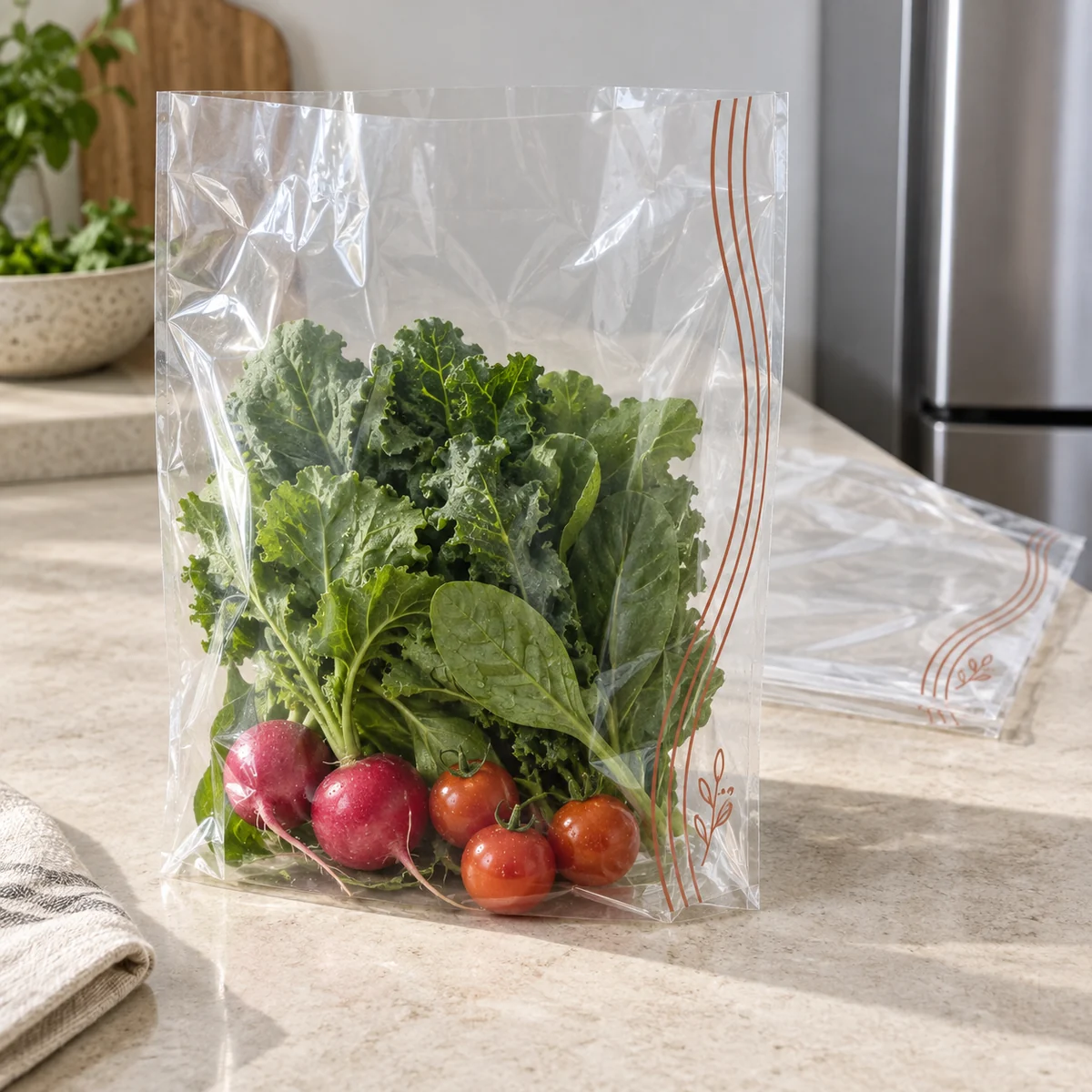
Clear anti-fog food bags for chilled produce, fresh herbs and prepared-food displays
| Material | Clear PLA + PBAT + plant-starch film with proposed anti-fog functionality; final additive and finished-bag evidence to confirm |
| Thickness | 20–45 μm current sourcing reference; agree actual gauge and tolerance in the approved specification |
| Dimensions | 20 × 30 to 40 × 60 cm current reference range; confirm the chosen flat-bag format on a sample |
| MOQ | Indicative stock starting point: 60 cartons; custom print and format quoted after sample and artwork review |
| Lead Time | Indicative 20–30 days after specification and artwork approval; confirm for the production order |
Ask for a production-representative clear bag and documented chilled visibility test plan · Film, ink, food-contact scope, storage, packing and timing are confirmed in the approved order
PRODUCT OVERVIEW
A buyer should be able to see the food clearly, open and fill the bag consistently, and verify that the quoted film, print and disposal claim belong to the same finished construction.
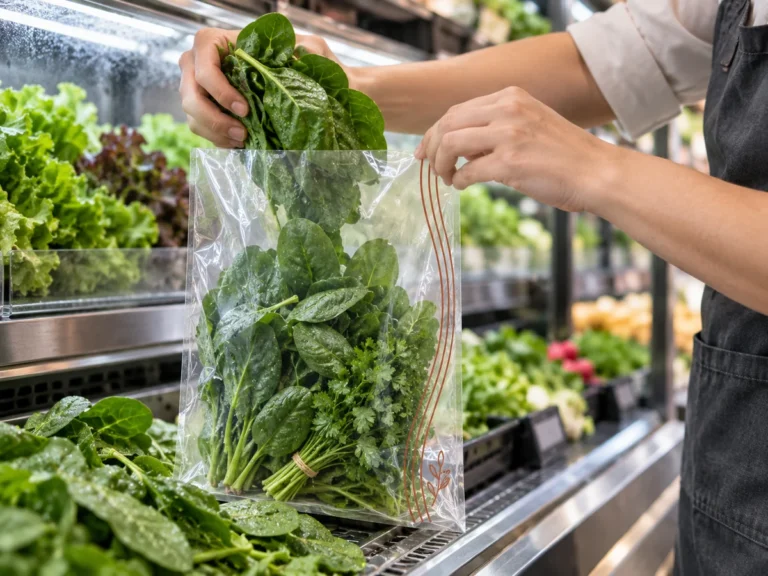
Review visibility after the proposed filling, refrigeration and display cycle. Agree the temperature, humidity, duration and comparison method before calling an effect anti-fog.
Match width, length, gauge, opening and bottom seal to delicate herbs, small produce or prepared food. Validate handling with the real contents and packing workflow.
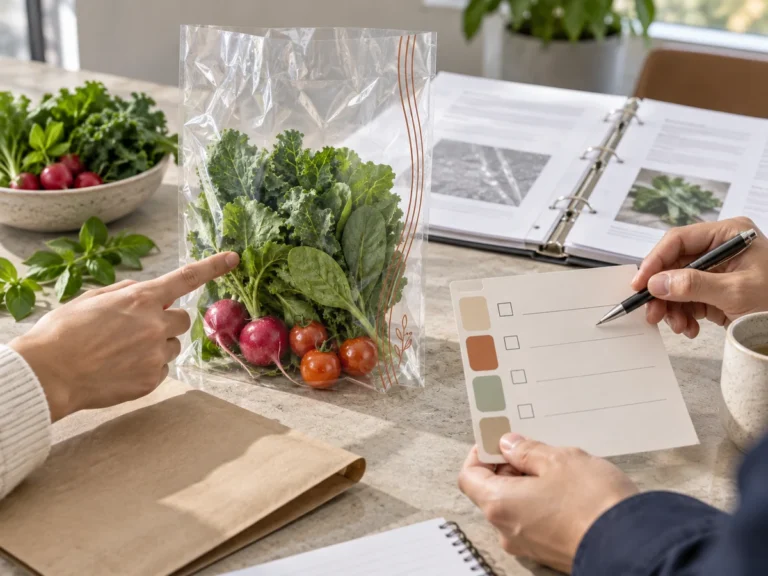
The illustrated terracotta lines occupy one narrow border; approve the clear viewing area and artwork on a physical sample. Confirm ink and any labels in the finished-product evidence.
Align anti-fog testing, any food-contact declaration and applicable compostability certificate with the final film, additive, print, gauge and destination market.
Complete inputs reduce back-and-forth and help us match the sample, evidence and commercial quote to one defined construction.
WHY CHOOSE THIS PRODUCT
Inspect a production-representative bag in the actual cabinet. Record the food view, condensation conditions, anti-fog test method and exposure duration rather than assuming a permanent fog-free result.
Check appearance when a chilled bag is filled, moved to the counter and handled for purchase. Film folds and moisture can change the view even when a lab specimen looks clear.
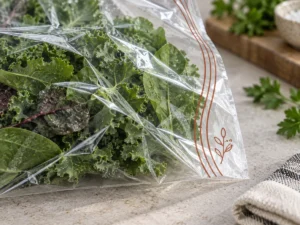
Start from the current 20–45 μm reference and compare opening, crease recovery, food visibility and tolerance with the target bag size. The photograph cannot establish the actual gauge.
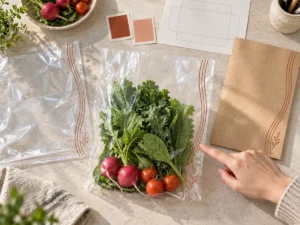
Use a narrow edge motif or approved alternative so artwork does not obscure food. Agree coverage, inks, registration and certification-scope review before production.
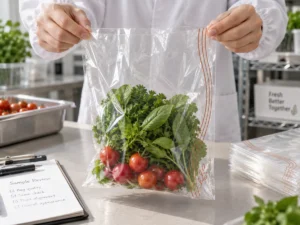
Test the flat bag with the intended contents and lift routine. Check bottom seal, dimensions and fill method rather than treating the listed 2 kg figure as a universal rating.
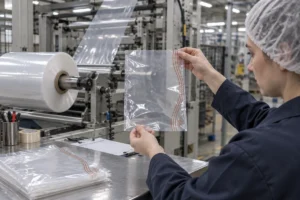
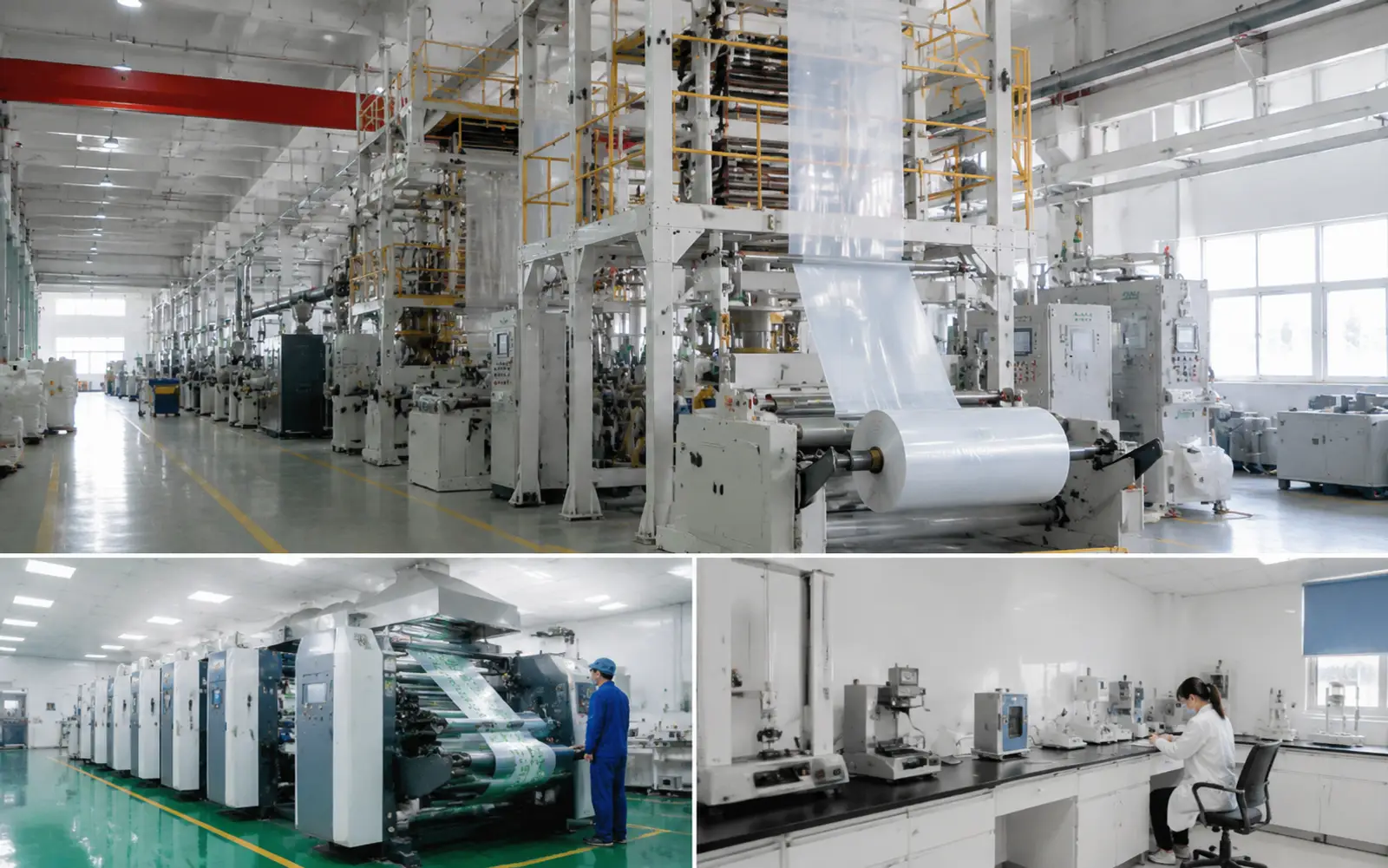
Request QC criteria for film appearance, seal, dimensions, printed edge and anti-fog sample check. The factory image illustrates a workflow and is not a record of the supplied batch.
TECHNICAL SPECIFICATIONS
| Material | Clear PLA + PBAT + plant-starch film with proposed anti-fog functionality; final additive and finished-bag evidence to confirm |
| Thickness | 20–45 μm current sourcing reference; agree actual gauge and tolerance in the approved specification |
| Dimensions | 20 × 30 to 40 × 60 cm current reference range; confirm the chosen flat-bag format on a sample |
| Color | Clear film; burnt-terracotta border shown as illustrative private-label print requiring separate approval |
| Capacity | The existing listing cites up to 2 kg by size; validate the chosen bag and bottom seal with the actual food load |
| Pack Count | Confirm bags per pack and packs per master carton against the approved packing list; historical listings conflict |
| MOQ | Indicative stock starting point: 60 cartons; custom print and format quoted after sample and artwork review |
| Lead Time | Indicative 20–30 days after specification and artwork approval; confirm for the production order |
| Carton Dimensions | Confirm master-carton dimensions and case weight on the agreed packing plan |
| Packaging | Flat packs with optional kraft sleeves and printed case marks; packing count and closure agreed on the finished order |
CERTIFICATIONS
These are four possible verification routes, not four certifications proven for the terracotta concept photographed here. Match any claim to the current finished SKU. Food-contact declarations and anti-fog performance test methods must be checked separately for the intended foods, contact conditions and sales market.
If the destination program requires EN 13432, obtain the current certificate or report and check that the anti-fog formulation, thickness range and printed bag are actually named or covered. A film-resin document alone does not verify the finished food bag.
For a North American industrial-compostability claim, request the current ASTM D6400 evidence for the marketed finished bag, with holder, item, construction, validity and permitted wording. It does not by itself establish home compostability or collection acceptance.
If the BPI mark is proposed, verify the exact item and licensed company in the searchable BPI catalog. Confirm that the anti-fog additive and any terracotta ink or private-label modification are inside the approved scope and that mark usage is authorized.
Request the current licence or certificate identifying the marketed construction, thickness and print. Check the permitted mark and validity separately; a generic supplier certificate or EN 13432 reference is not a licence to place this mark on an unverified variant.
OEM / ODM
Review bag width and length, film gauge, clear-window area, single-side print placement, ink coverage, pack format and carton marks. The terracotta botanical edge print is a visual concept, not approved stock artwork. Any ink, color, additive or construction change needs confirmation within the actual finished-bag compostability and food-contact evidence before a licensed mark or claim is printed.
FACTORY CAPABILITIES
The selected format can be reviewed against these Guangzhou manufacturing capabilities. Final feasibility, tolerances and MOQ are confirmed in the approved specification.
Width, gusset depth and length can be reviewed against your packaging-line requirements and converting limits.
Flexographic artwork, colour count, print coverage and plate requirements are checked before MOQ and pricing are confirmed.
PLA, PBAT and starch blend options are selected around flexibility, strength, processing and the documented claim required for the SKU.
BEHIND EVERY PRODUCT
The workflow covers compounding, film blowing, printing and bag conversion, with the order specification used as the reference for in-process and final checks.
USE CASES
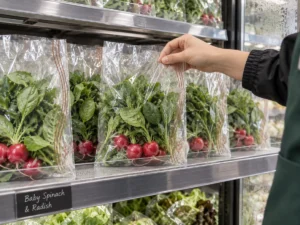
Present loose salad greens or small vegetables in a clear bag so customers can inspect leaf and produce condition without opening it. Test visibility, filling and condensation in the retailer’s own chilled display.
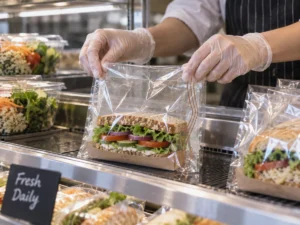
Use a clear bag for a cooled sandwich or similar grab-and-go item after confirming permitted direct-food-contact use, grease exposure, closure method and holding time. Do not infer hot-fill suitability from the image.
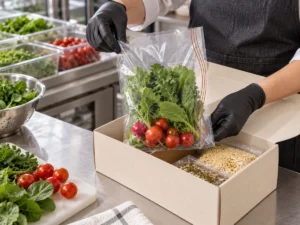
Portion selected fresh vegetables inside a separate kit component bag and keep ingredients visible at pack-out. Verify bag size, leakage risk, temperature route and contact documentation for the actual recipe.
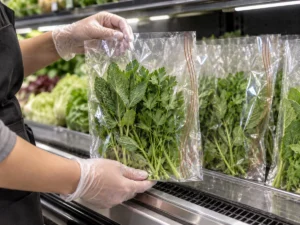
Show mint, parsley or other delicate herbs through an unprinted central window. Validate airflow, moisture handling, fill weight and shelf workflow before using one construction across several herb types.
HONEST TRANSPARENCY
Anti-fog performance is not a promise that every film stays optically clear under every humidity, temperature and handling condition. Test the selected construction on the actual chilled food and cabinet. The bag is not automatically qualified for freezer storage, hot filling, vacuum sealing, liquid containment or long-term prepared-food storage. Earlier published product versions disagree on bag form and gauge; approve one written specification and physical sample. Clear film, terracotta ink and any anti-fog additive need current finished-SKU compostability scope and food-contact evidence for the sales market. The photographs are generated concepts, including the factory scene, and do not prove certification or completed testing.
FAQ
Use a production-representative printed bag with the actual chilled food and display case. Record temperature, humidity, filling, storage time and visual assessment method. A rendering or a general film claim cannot prove performance for every cabinet.
Earlier product copy describes an integrated film additive, but request the current formulation specification and test method before repeating that as a verified claim. Ask how handling, moisture and storage affect the selected finished bag.
Only if the current document covers the exact finished construction being supplied. Check additive, film, gauge, ink, design, holder and validity. A source-resin certificate or a test for a different unprinted SKU is not sufficient.
No. ASTM D6400 is a standard for managed aerobic composting claims; BPI is an item-level third-party certification and licensing program. Verify the quoted item in the BPI catalog before proposing its mark.
Do not infer home compostability from an industrial-compostability standard or a generic supplier certificate. Request separate current finished-item home-compost evidence and confirm the marketed variant and local claim rules before using that wording.
Request the appropriate destination-market declaration and any applicable testing for the specific food, contact time, temperature, anti-fog ingredient and printing. Compostability evidence does not establish food-contact approval.
The current ES-FB-07 sourcing reference is 20 × 30 to 40 × 60 cm at 20–45 μm. The terracotta border is an illustrative OEM design. Agree the actual sample, clear-window area, ink coverage and minimum order before approving artwork.
Send food category, direct-contact conditions, bag width and length, film gauge, closure or filling method, refrigerated display cycle, artwork, annual volume, required evidence, case packing and delivery destination.
DEEPER READING
GET A QUOTE
Share your food, refrigerated display conditions, bag dimensions, artwork, annual volume and destination market. We will align a production sample, visibility review, documentation and wholesale quote to one finished construction.
Request anti-fog samples & quoteRELATED PRODUCTS