Designed for
PLA+PBAT Biodegradable Weed Control Mulch — Black Opaque Film for Organic Weed Suppression | ES-MF-02

PLA+PBAT Biodegradable Weed Control Mulch — Black Opaque Film for Organic Weed Suppression | ES-MF-02
Certification names shown here are a starting reference. Request the current certificate and confirm that its scope covers the selected formulation, printing and finished pack.
| Material | PLA+PBAT blend (50:50, carbon black masterbatch) |
| Thickness | 15–30 microns |
| Dimensions | 1.2m × 400m (standard); 1.5m × 400m also stocked |
| MOQ | 60 cartons (approx. 1 ton) |
| Lead Time | 15–25 days |
Free samples shipped within 3 business days via DHL/FedEx. Custom-printed samples: 7–10 days. · 12-month shelf-life. Free replacement of any stock showing premature degradation or defects when stored at 15–30°C, <60% RH, away from direct sunlight.
PRODUCT OVERVIEW
PLA+PBAT Biodegradable Weed Control Mulch — Black Opaque Film for Organic Weed Suppression | ES-MF-02

PLA+PBAT Biodegradable Weed Control Mulch — Black Opaque Film for Organic Weed Suppression | ES-MF-02
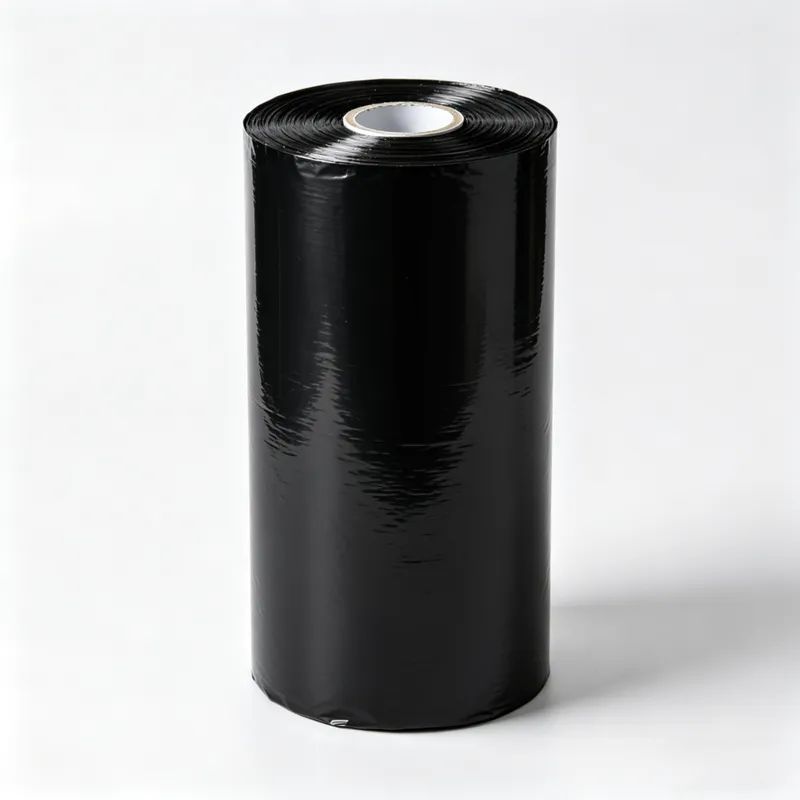
Material: PLA+PBAT blend (50:50, carbon black masterbatch). Format: 1.2m × 400m (standard); 1.5m × 400m also stocked. Gauge: 15–30 microns.
Target: 400 meters per roll. Validation: Free samples shipped within 3 business days via DHL/FedEx. Custom-printed samples: 7–10 days..
Evidence starting point: EN 17033, TÜV OK Biodegradable SOIL, EN 13432. MOQ: 60 cartons (approx. 1 ton). Timing: 15–25 days.
Complete inputs reduce back-and-forth and help us match the sample, evidence and commercial quote to one defined construction.
WHY CHOOSE THIS PRODUCT
vegetable-carbon black pigment blocks light with zero herbicide input
standard bed widths ready to ship for orchard and vineyard understory
agronomically negligible difference for most temperate crops
covers 6–8 month growing seasons without mid-season replacement
polymer and pigment both biodegrade with no carbon black accumulation
carbon stored in soil rather than released to the atmosphere
TECHNICAL SPECIFICATIONS
| Material | PLA+PBAT blend (50:50, carbon black masterbatch) |
| Thickness | 15–30 microns |
| Dimensions | 1.2m × 400m (standard); 1.5m × 400m also stocked |
| Color | Opaque Black (standard) / White-Black / Silver-Black |
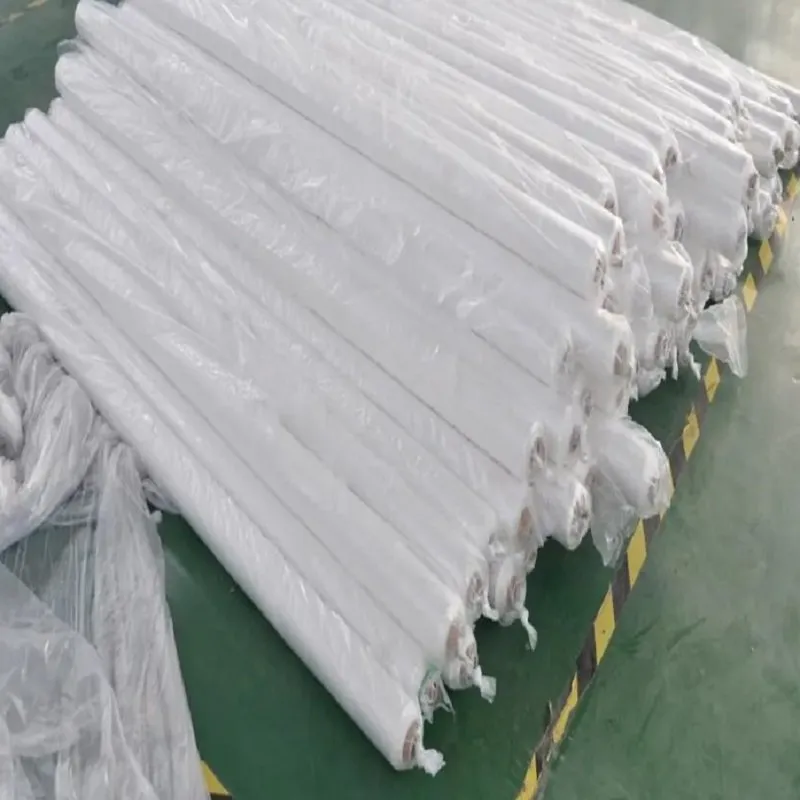
| Capacity | 400 meters per roll |
| Pack Count | 2 rolls per carton |
| MOQ | 60 cartons (approx. 1 ton) |
| Lead Time | 15–25 days |
| Carton Dimensions | 125 × 35 × 35 cm |
| Certifications | EN 17033, TÜV OK Biodegradable SOIL, EN 13432, OK Compost INDUSTRIAL, TÜV |
CERTIFICATIONS
The European standard written for biodegradable mulch films: 90%+ biodegradation in soil within 24 months, ecotoxicity testing, and no-harmful-residue limits. The certification that matters for a film tilled into the field.
Independent TÜV certification confirming real-soil biodegradation with no ecotoxic effects — audited annually, certificate verifiable on the public TÜV database. Covers the polymer matrix and the vegetable-carbon black pigment as one unit.
Verifies the film also breaks down in managed composting facilities, so film fragments removed with plant residues can be composted rather than landfilled.
OEM / ODM
Custom width: 0.8m–2.4m. Custom thickness: 15–30μm. Opaque black standard; other colors available (white-on-black, silver-on-black). Perforated options for seeded crops. Custom roll lengths. MOQ 500 kg.
FACTORY CAPABILITIES
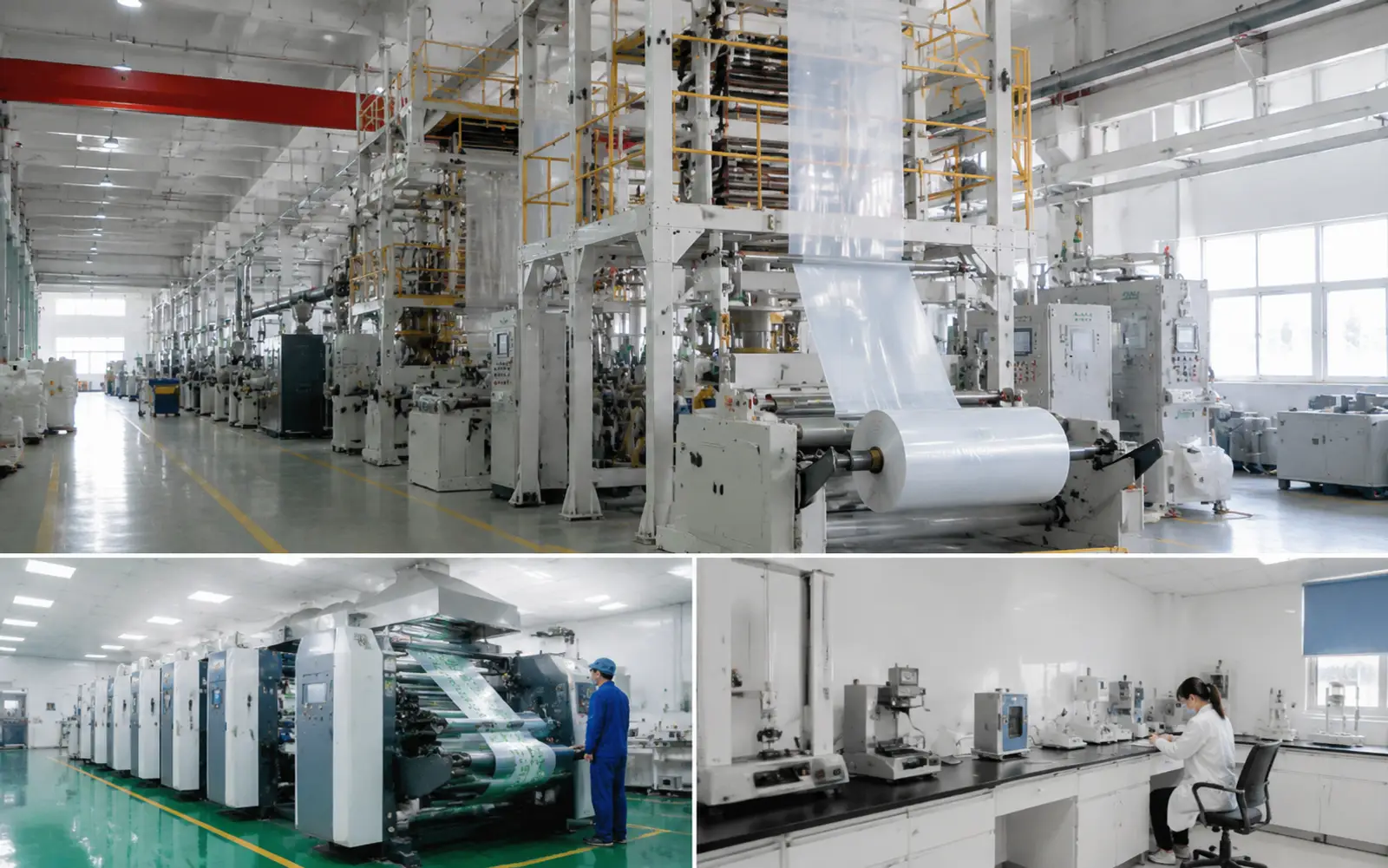
The selected format can be reviewed against these Guangzhou manufacturing capabilities. Final feasibility, tolerances and MOQ are confirmed in the approved specification.
Width, gusset depth and length can be reviewed against your packaging-line requirements and converting limits.
Flexographic artwork, colour count, print coverage and plate requirements are checked before MOQ and pricing are confirmed.
PLA, PBAT and starch blend options are selected around flexibility, strength, processing and the documented claim required for the SKU.
BEHIND EVERY PRODUCT
The workflow covers compounding, film blowing, printing and bag conversion, with the order specification used as the reference for in-process and final checks.
USE CASES
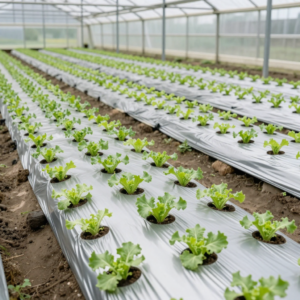
Weed control without herbicides and without plastic pollution — the only mulch film that meets both organic certification and soil health requirements
Row crops with high weed pressure sensitivity — the opaque black film eliminates weed competition during critical early growth stages
Weed suppression around tree and vine bases without herbicide or permanent plastic — film biodegrades as the canopy fills in
HONEST TRANSPARENCY
Weed suppression depends on complete soil coverage — gaps, tears, or improper edge burial will allow weed emergence. For fields with aggressive perennial weeds (thistles, bindweed), biodegradable mulch alone may not provide sufficient suppression — consider integration with cover cropping. In very hot climates (> 35°C soil surface), film degradation may accelerate — monitor integrity and plan for potential mid-season replacement in extreme conditions.
FAQ
Yes. We use a biodegradable carbon black masterbatch specifically formulated for compostable polymers. The carbon black is derived from vegetable carbon (E153, plant-based charcoal), not petroleum-based carbon black. The entire film — polymer matrix and pigment — is certified biodegradable per EN 17033. Post-degradation soil analysis shows no accumulation of carbon black residues.
Yes, with a small difference. Black biodegradable mulch achieves soil warming of approximately 3–5°C above bare soil at 5cm depth, compared to 4–6°C for LDPE black mulch. The 1–2°C difference is due to the slightly higher thermal conductivity of the PLA+PBAT film. For most temperate crops, this difference is agronomically negligible. For crops requiring maximum soil warming in cool climates, consider our clear biodegradable mulch option.
For crops with 6–8 month growing seasons in temperate climates, we recommend our 25μm or 30μm gauge options which extend mechanical integrity to 7–8 months. For tropical/perennial applications, we can formulate a thicker 35μm+ film with degradation inhibitors for 12+ month integrity. Contact our agronomic team for crop-specific recommendations.
DEEPER READING
GET A QUOTE
Send the destination market, dimensions, gauge, artwork and forecast volume. We will reply with the missing decisions, sample path and available documentation.
Request current specs & quoteRELATED PRODUCTS