Start with a real caddy
Measure the rim, inner depth and desired fold-over before approving the bag width, length and bottom-seal geometry. Capacity labels alone do not guarantee a good fit.
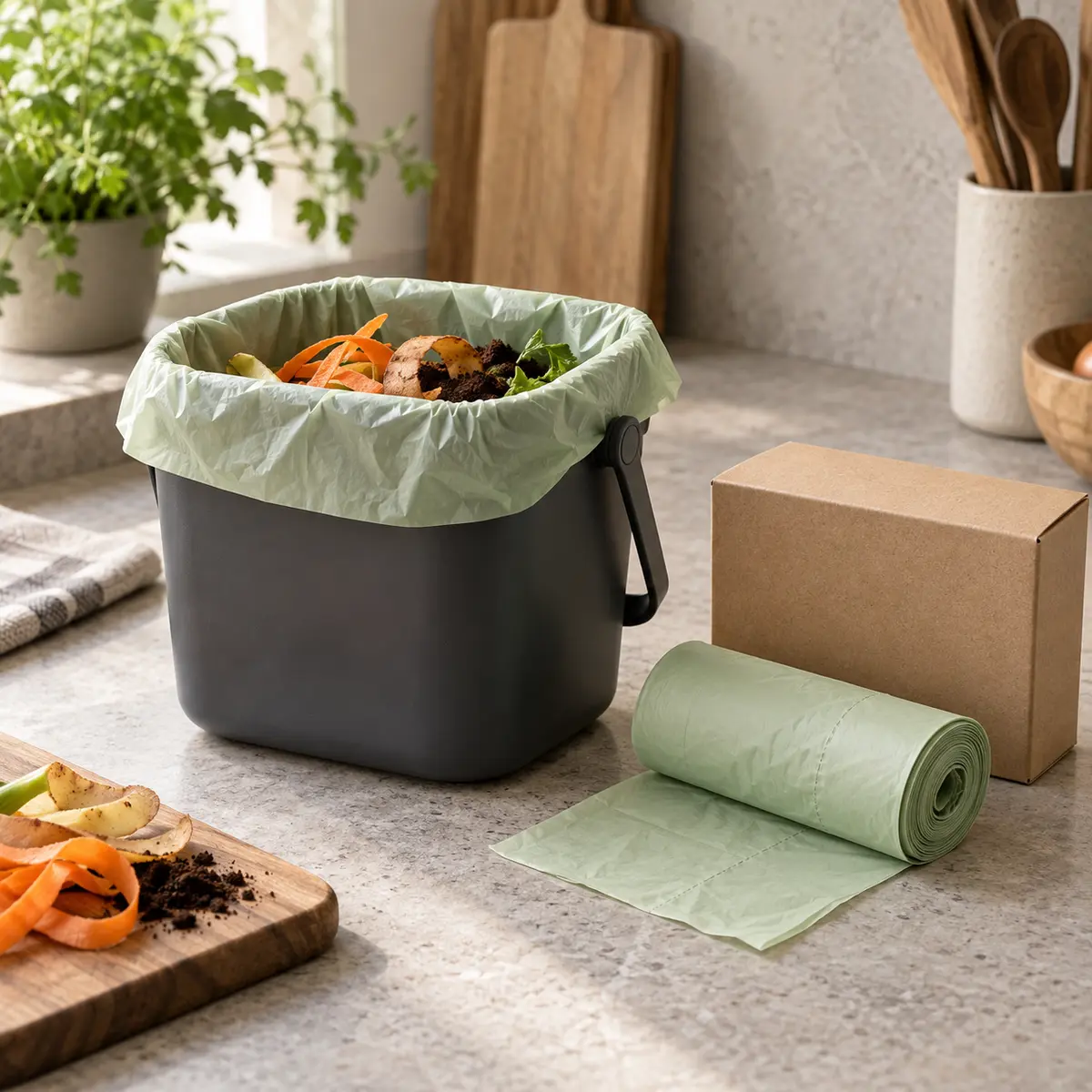
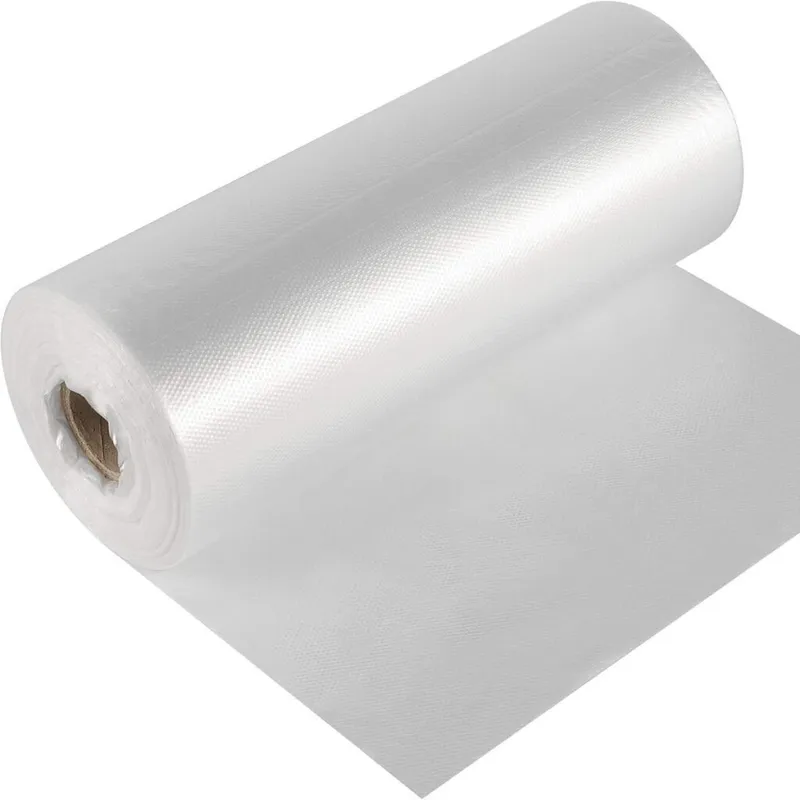
Wholesale food-waste caddy liners on rolls for kitchens, food service and organics programs
| Material | PLA + PBAT + plant-starch film; final formulation and claim scope confirmed for the finished SKU |
| Thickness | 16–25 μm starting range; confirm gauge tolerance on the approved specification |
| Dimensions | 5 L / 7 L / 10 L / 25 L starting formats; custom fit reviewed against caddy dimensions |
| MOQ | Indicative stock starting quantity: 60 cartons; fully custom orders quoted after specification review |
| Lead Time | Indicative 15–25 days after specification and artwork approval; confirm per order |
Request a production sample to test caddy fit, tear-off, wet scraps and bottom-seal handling · Gauge tolerances, storage, shelf life, performance targets and document scope are confirmed in the order specification
PRODUCT OVERVIEW
Fit the liner to the caddy, then verify wet-scrap handling and the industrial-composting evidence for the exact bag you will distribute. ES-FB-05 is a roll-format starting point for kitchen, food-service and community food-waste programs.
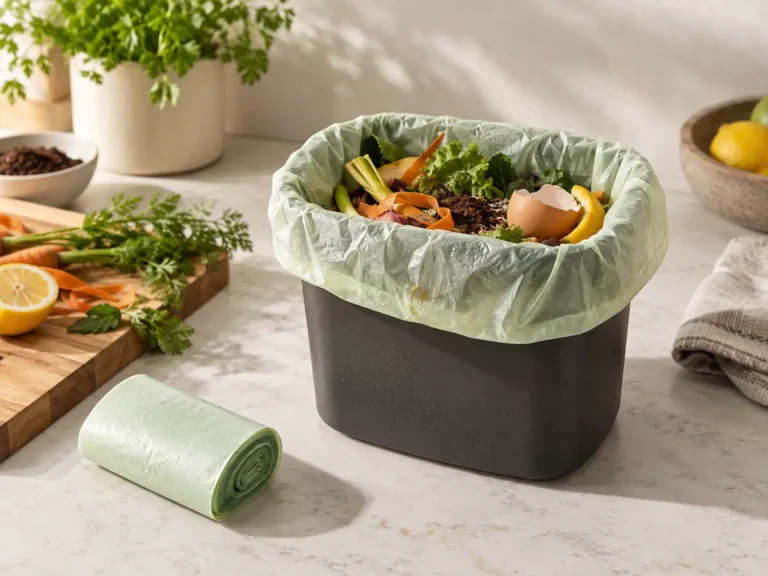
Measure the rim, inner depth and desired fold-over before approving the bag width, length and bottom-seal geometry. Capacity labels alone do not guarantee a good fit.
Define the type of food waste, fill weight, collection interval and storage conditions; then test seal strength and seepage with a production-representative liner.
ES-FB-05 targets a managed industrial-composting pathway. Confirm that the local collector accepts certified liners and keep home-compostable wording for a separately evidenced home-compost SKU.
Lock gauge, perforation, roll count, colours, artwork, permitted marks, carton labels, documentation and batch traceability before releasing production.
Complete inputs reduce back-and-forth and help us match the sample, evidence and commercial quote to one defined construction.
WHY CHOOSE THIS PRODUCT
Select bottom-seal construction and 16–25 μm starting gauge around the expected wet-scrap weight. Ask for the test method and repeat the lift-and-carry check with your real caddy and contents.

Review material blend, gauge tolerance, colour and film feel against the finished liner sample. Resin identity by itself does not determine a bag’s composting claim or wet-waste performance.
Match ASTM D6400, EN 13432, BPI or OK compost INDUSTRIAL documents to the exact finished bag and destination market. Confirm local collection acceptance before writing disposal instructions.
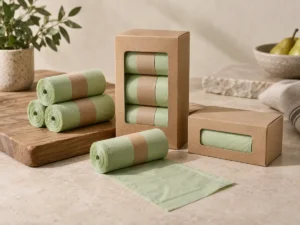
Specify perforation and bags per roll, then choose paper bands, kraft retail cartons or bulk supply cartons for household distribution and replenishment.
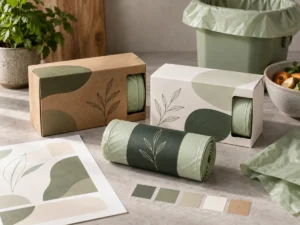
Coordinate size names, colour, program instructions and custom artwork. Inks, print coverage and certification-mark use must be reviewed before printing.

Approve practical controls for bag dimensions, film gauge, perforation, roll winding and bottom seal; request a production sample and traceability records before volume rollout.
TECHNICAL SPECIFICATIONS
| Material | PLA + PBAT + plant-starch film; final formulation and claim scope confirmed for the finished SKU |
| Thickness | 16–25 μm starting range; confirm gauge tolerance on the approved specification |
| Dimensions | 5 L / 7 L / 10 L / 25 L starting formats; custom fit reviewed against caddy dimensions |
| Color | Pale green, natural or white; custom colour and printing subject to claim review |
| Capacity | 5–25 L caddies; 5 kg wet-load reference requires the applicable test method and sample approval |
| Pack Count | Perforated rolls; bag count, retail pack and master-carton quantity confirmed per size |
| MOQ | Indicative stock starting quantity: 60 cartons; fully custom orders quoted after specification review |
| Lead Time | Indicative 15–25 days after specification and artwork approval; confirm per order |
| Carton Dimensions | Final carton dimensions confirmed after roll count and pack-out approval |
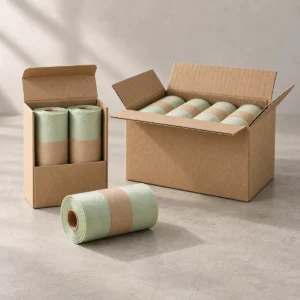
| Packaging | Paper-banded rolls, kraft retail cartons or bulk program cartons |
CERTIFICATIONS
These are four procurement checks for the ES-FB-05 evidence pack, not four independent claims of certification. Request current documents for the exact finished bag before printing marks or publishing approval language.
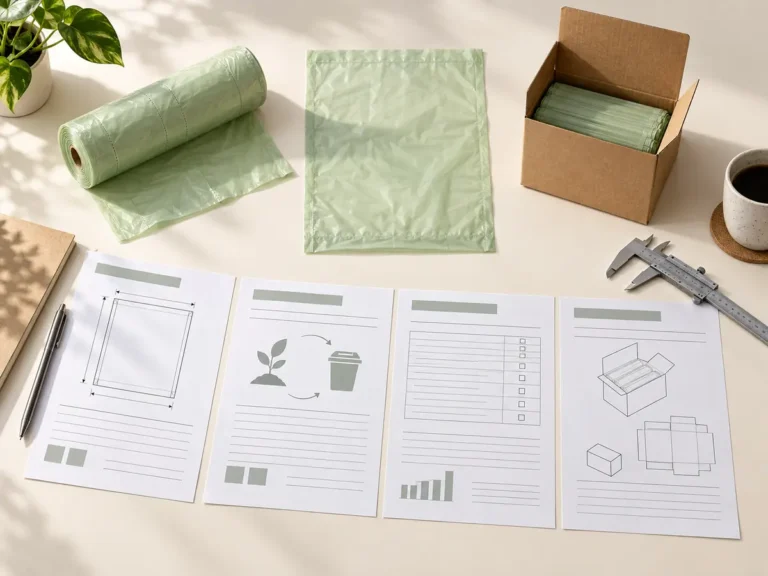
Request a current finished-bag test report or certificate and verify the holder, product name, formulation, gauge, colour, printing, validity and covered disposal route. A material certificate alone does not establish the claim for the printed caddy liner.
For North American distribution, request the current BPI listing or licence for the exact finished product and check whether the proposed carton and bag artwork may display the mark. Confirm local organics-collector acceptance separately.
For EU procurement, review current EN 13432 evidence covering biodegradation, disintegration and compost quality for the quoted construction. Check the tested thickness and any changes to colour, ink or components.
If using the TÜV AUSTRIA mark, verify the current certificate number, holder, validity and finished-product scope, then approve mark artwork. Industrial compostability is not a home-compostability claim.
OEM / ODM
Specify the caddy rim and depth, target fill weight, liner width and length, bottom-seal construction, 16–25 μm starting gauge, perforation, bags per roll, film colour, artwork and carton format. For private-label compostable food caddy bags, approve print coverage, inks, resident instructions, certification-mark permissions and the exact finished-SKU evidence before commercial production.
FACTORY CAPABILITIES
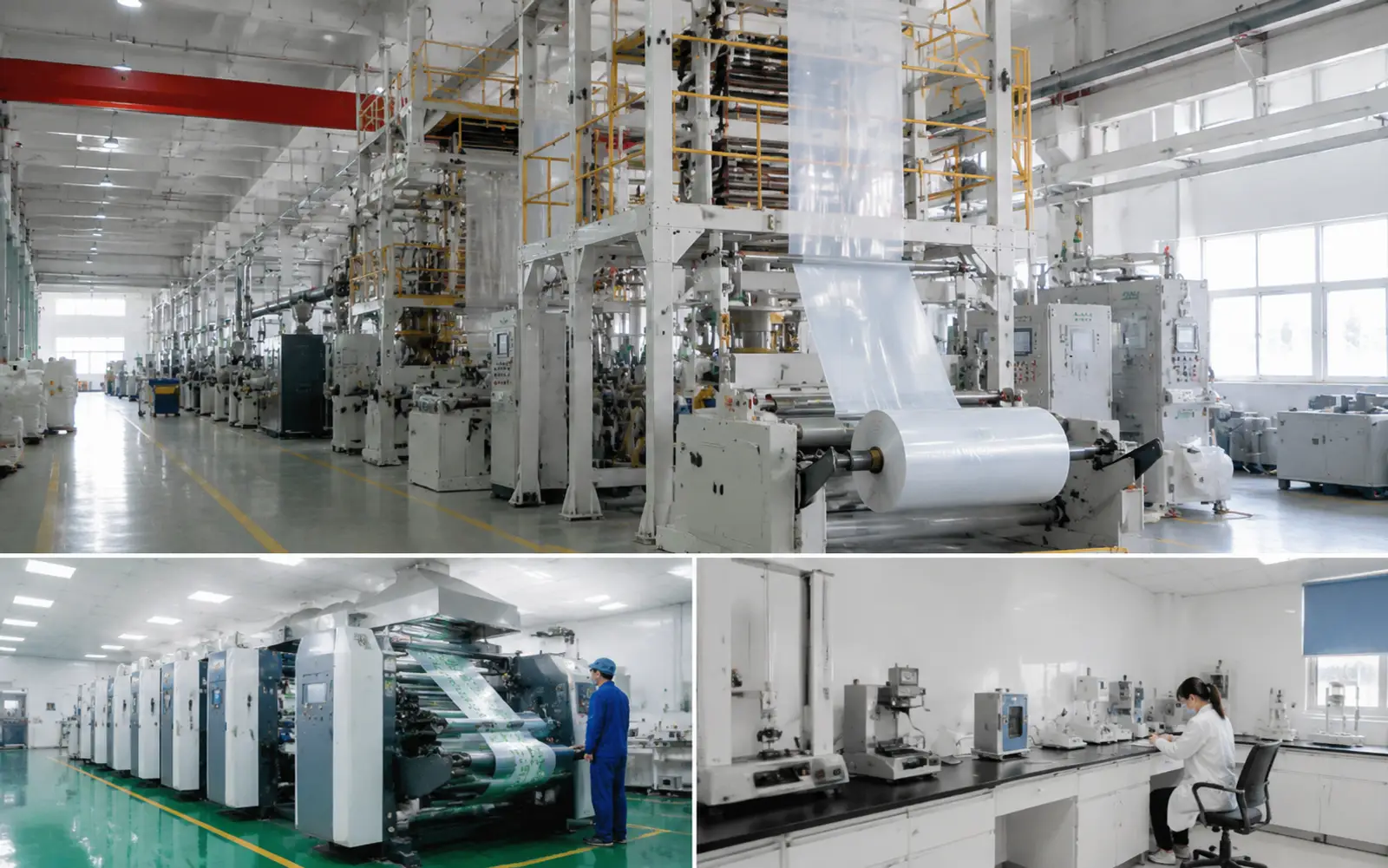
The selected format can be reviewed against these Guangzhou manufacturing capabilities. Final feasibility, tolerances and MOQ are confirmed in the approved specification.
Width, gusset depth and length can be reviewed against your packaging-line requirements and converting limits.
Flexographic artwork, colour count, print coverage and plate requirements are checked before MOQ and pricing are confirmed.
PLA, PBAT and starch blend options are selected around flexibility, strength, processing and the documented claim required for the SKU.
BEHIND EVERY PRODUCT
The workflow covers compounding, film blowing, printing and bag conversion, with the order specification used as the reference for in-process and final checks.
USE CASES
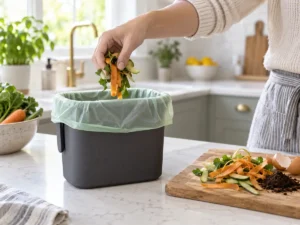
Line a 5–10 L food-scrap caddy for vegetable peelings, coffee grounds and other locally accepted organics. Check the bag’s rim fit and replacement routine; follow the industrial collection route approved by the local program.
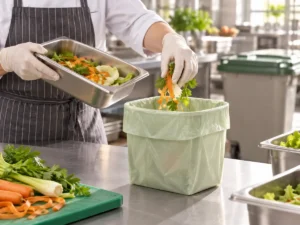
Collect moderate vegetable trimmings at prep stations before transferring them to the site’s organics stream. Validate wet-load, seal, holding time and collector requirements; use a larger liner where the station exceeds the caddy-bag specification.
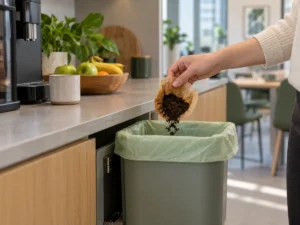
Provide tidy small-bin liners beside coffee or snack stations with clear accepted-material instructions. Match roll replenishment, bin capacity and change frequency to the site’s collection contractor.

Supply compact rolls in starter kits or replenish residents through local organics programs. Approve program-wide caddy sizes, printed instructions, industrial-composting evidence and receiving-facility acceptance before rollout.
HONEST TRANSPARENCY
This small-caddy format is intended for moderate food-scrap loads, not free liquids, hot contents, sharp bones or shells, general refuse or heavy garden waste. Wet holding and lift performance depend on the specified film, seal, load and temperature; validate your routine with an approved sample. Industrial-compostability evidence does not prove home-composting suitability or acceptance by every organics facility. Keep unused rolls sealed, cool and dry, away from direct heat and sunlight; confirm shelf life in the order specification.
FAQ
ES-FB-05 is specified for a managed industrial-composting route. Do not describe it as home compostable based on ASTM D6400 or EN 13432 evidence. For a home-composting program, review the separately specified ES-FB-04 format and its current finished-SKU evidence.
The starting range covers 5 L, 7 L, 10 L and 25 L caddies at 16–25 μm. Measure your actual caddy opening and depth; then confirm bag dimensions, seal design and tolerances in the approved sample.
A universal holding-time or leak-proof promise would be misleading. Performance changes with film gauge, temperature, free liquid, sharp scraps, fill weight and caddy ventilation. Tell us your routine so the selected construction can be tested.
Only if the current certificate or licence covers the finished formulation, dimensions or gauge range, colour and printing being quoted, and permits the mark’s use on your artwork. Request the scope and written approval before going to press.
Yes. Share caddy dimensions, target load, roll count, film colour, artwork, program instructions, annual volume and market. We will review print feasibility, MOQ, carton configuration and document scope together.
Facility and municipal rules vary. Send the collection operator’s accepted-material policy and destination market. Even a current industrial-compostability certificate does not automatically make a liner acceptable in every local program.
Ask for a production-representative sample, dimension and gauge specification, wet-scrap and seal-test method, current compostability documentation for the finished SKU, approved mark wording, packing list, MOQ and lead time.
DEEPER READING
GET A QUOTE
Send your caddy dimensions, food-scrap mix, target load, roll count, annual volume, artwork and destination market. We will align the production sample, industrial-compostability evidence and wholesale quote to one finished construction.
Request sample & wholesale quoteRELATED PRODUCTS