You approve the film. Service starts. The roll keeps moving inside its box, the next edge disappears, and someone spends the rush trying to recover it.
This is a hypothetical purchasing failure, but a useful one: the material can meet your brief while the dispensing format still creates work.
When comparing a compostable cling film refill roll vs cutter box, start with the operating system around the film: where it will sit, how it is held, how the operator cuts it, and what happens at the next changeover. A roll price answers only part of that question.
For foodservice buyers, distributors and consumer brands, the decision is about approving a repeatable wrapping workflow. This guide compares the two formats, sets out a trial you can record, and shows what to include in an RFQ.
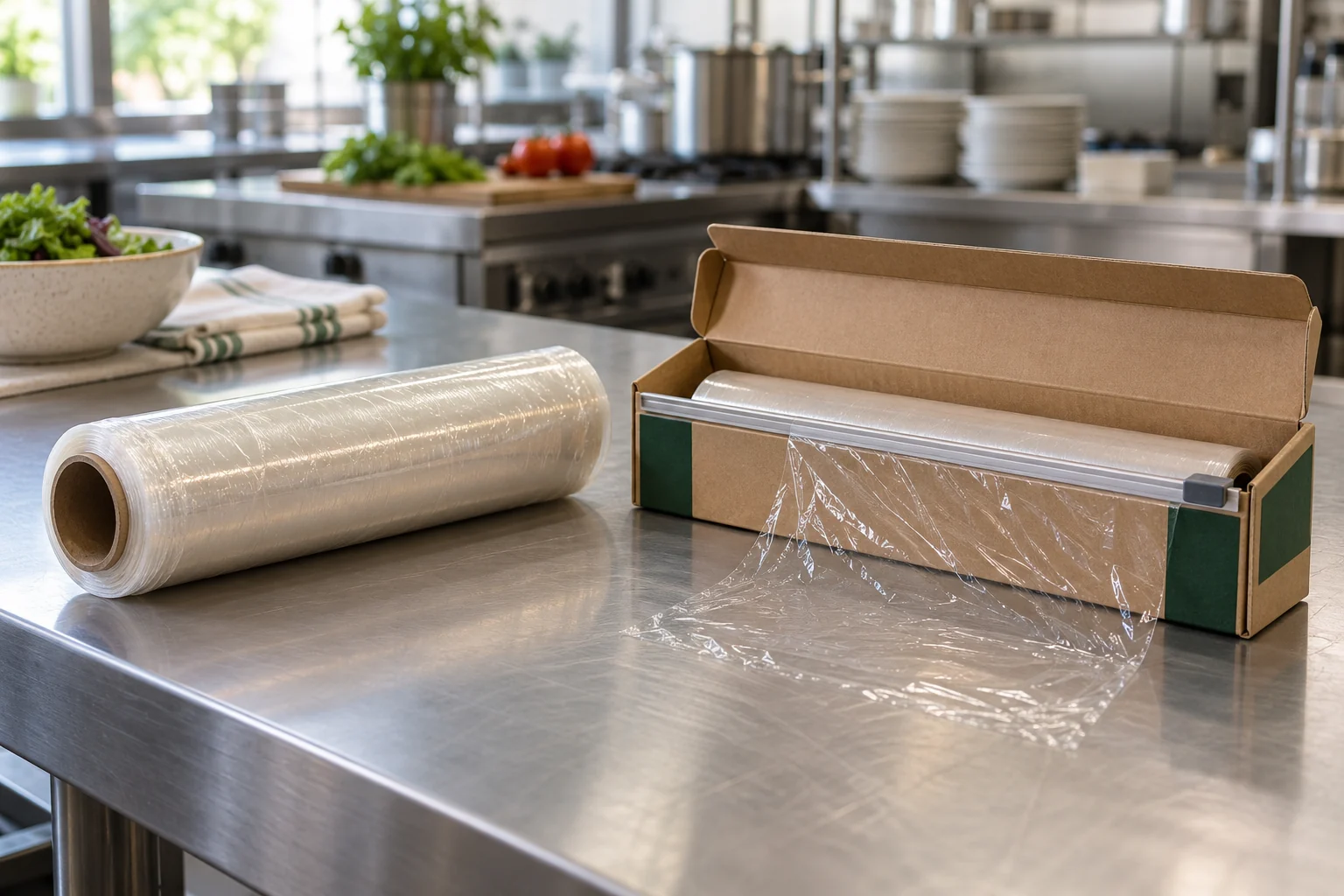
Both formats are candidates. Approval comes from the actual job, equipment and evidence.
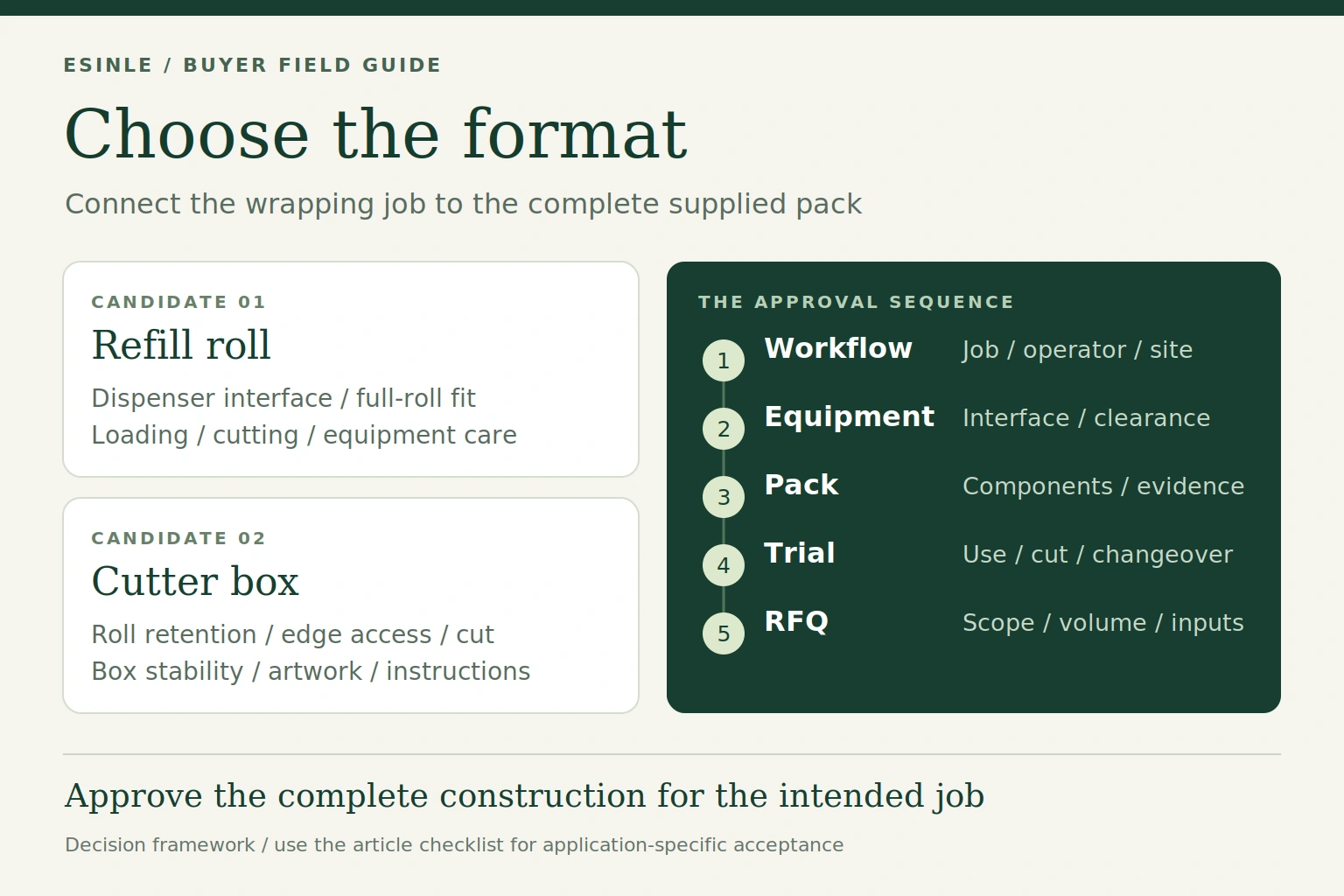
1. What are you actually buying?
A commercial refill roll normally supplies the wound film and core for a separate dispenser. Its purchase specification must describe the interface that holds, feeds and cuts that roll. The dispenser may be a reusable asset already installed at the site, or another item the buyer must source.
A cutter-box format supplies film together with a dispensing box and a cutting arrangement. That arrangement could use a slide cutter or another specified design. Roll retention, opening, first-edge recovery and instructions become part of the supplied packaging.
Avoid treating “refill” or “with cutter” as a complete specification. Those phrases leave important decisions open.
| Purchasing question | Refill roll | Cutter box |
|---|---|---|
| What holds the roll? | A named dispenser, spindle, adaptor or locking interface | The approved box supports and retains the roll |
| What cuts the film? | The dispenser's specified cutting mechanism | The cutter supplied or fitted to the box |
| What else needs approval? | Equipment fit, loading, cleaning and replacement arrangements | Box construction, cutter attachment, retention, opening and artwork |
| What does the quotation include? | Film, core and agreed shipping pack; equipment must be clarified | Film, core, box and cutter only where explicitly listed |
| What must the sample represent? | A production-intent roll in the intended equipment | The assembled pack, including its actual cutter and instructions |
A buyer can compare commercial compostable cling film options within either format. Changing the format also changes what must be sampled and accepted.
2. The compatibility trap: width is only one measurement
Matching roll width is a starting check. A roll can still fail to engage with the holder, rub against a sidewall or prevent the lid from closing.
Record the equipment make and model, core interface, end geometry, maximum full-roll diameter and loading direction. Include clear photographs of the empty holder and the currently accepted refill, where available.
Proprietary systems deserve particular attention. Wrapmaster's refill information identifies a dedicated locking interface and specifies its own refills. That is an example of an equipment-specific restriction, not evidence that an ESINLE roll fits that system. S1
For the dimensions behind these checks, use the compostable cling film specifications guide. Then ask the equipment owner or supplier to confirm the proposed interface before ordering a trial.
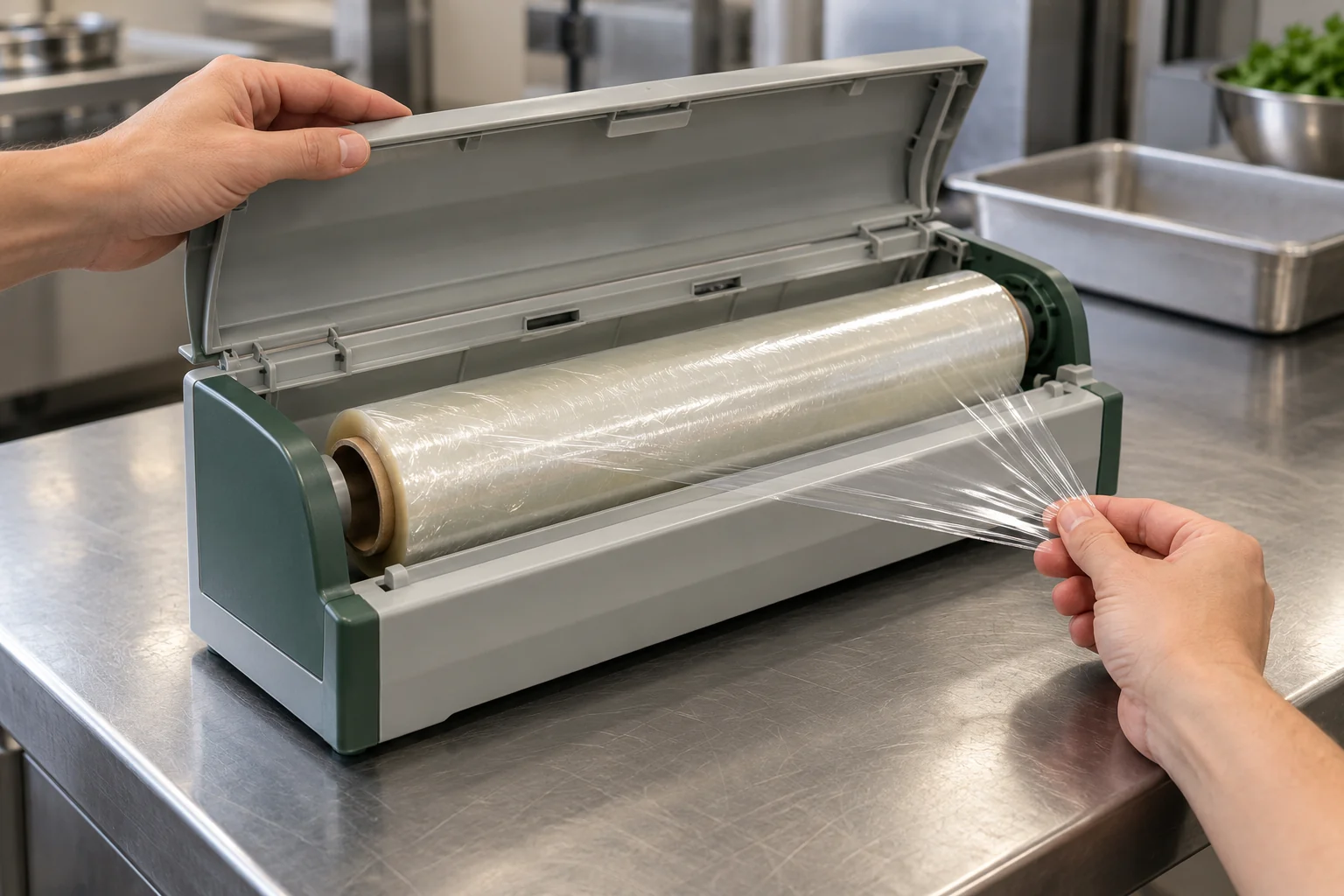
Three checks that belong in the sample request
- Full-roll fit: the sample represents the proposed finished diameter and axial dimensions.
- Interface fit: the core, spindle or end fittings engage as intended, without improvised modification.
- Operating fit: loading, feeding, closing and cutting follow the equipment instructions under the intended conditions.
Document the result and any restrictions. A loose strip of film can help assess material handling; an assembled production-intent roll is needed to assess the dispensing system.
3. Choose around the application
Foodservice and retail buyers often start with different problems. Use the following matrix to select a trial candidate, then validate it at the intended site.
| Buyer application | Candidate to assess first | Main purchasing question | Trial that resolves it |
|---|---|---|---|
| Commercial kitchen with an established dispenser fleet | Refill roll approved for that equipment | Can the proposed roll load, feed and cut consistently in each relevant model? | Full-roll installation, repeated wrapping and changeover checks |
| Deli or bakery with compact, varied workstations | Cutter box or compatible compact dispenser | Can staff dispense useful lengths in the available dry workspace? | Normal operators, actual containers and repeated edge recovery |
| Household retail range | Cutter box designed for the intended consumer experience | Can the customer open, retain, dispense and understand the pack? | Pack opening, cutting, instructions, shelf presentation and transit review |
| Private-label distributor serving several channels | Separate approved configurations by channel | Which interfaces, pack counts and labels does each customer require? | Channel-specific samples and approval records |
These are starting hypotheses rather than guaranteed format advantages. A kitchen may approve a cutter box for a particular workstation. A retail brand may have an existing reusable-dispenser programme. Capture that context before fixing the delivery format.
For a product-level discussion, browse the ESINLE cling film formats and the food wrap with cutter starting format. Confirm current construction and availability in the proposed order specification.
4. A cutter box is part of the product experience
The box has to work after the first photograph and the first cut. In a compostable cling film with cutter brief, describe how the roll is secured, where the cutter sits, how the user finds the film edge and how the pack closes between uses.
For a useful market example, Reynolds describes a slide cutter, roll-retention tabs and a starter-edge feature for its PE plastic wrap. These illustrate dispensing design decisions; they do not establish properties of compostable film or ESINLE packaging. S2
Ask the supplier to identify the proposed arrangement rather than assuming that every cutter box includes the same components.
Inspect the assembled pack
- Retention: the roll stays in its intended position while dispensing.
- Edge access: the operator can recover the next edge without dismantling the pack.
- Cutting: the approved mechanism cuts useful lengths with acceptable effort and results.
- Stability: the box remains usable through the agreed trial and handling conditions.
- Instructions: opening, operating, storing and disposing of components are clear.
- Delivery condition: the film, cutter and box arrive in the agreed state after representative transport handling.
These are acceptance topics. Agree the methods and pass criteria with the supplier; do not turn an informal inspection into an unsupported performance claim.
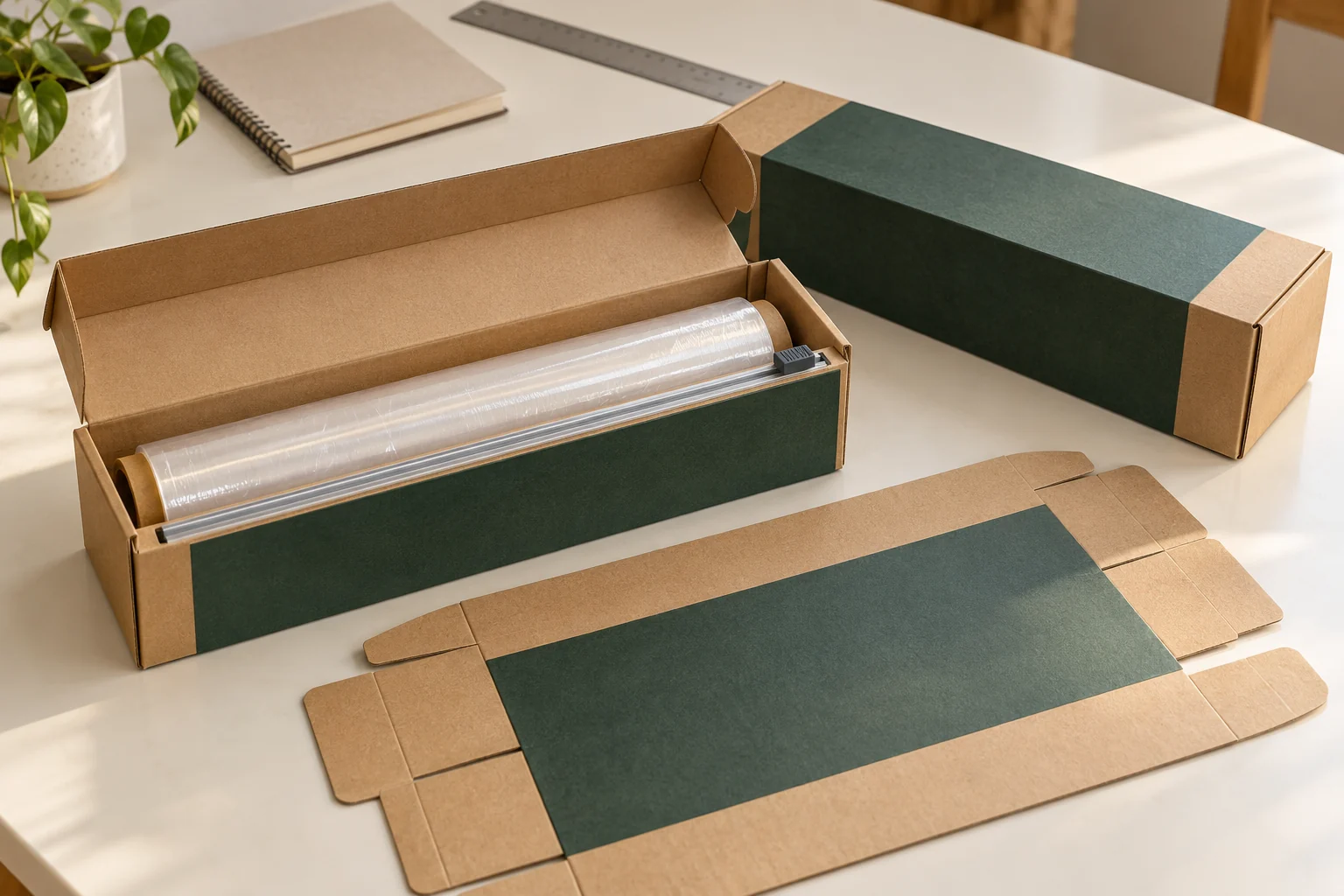
For OEM orders, keep the box dieline, cutter specification, artwork revision, instructions and approved sample together. A later packaging change can require another fit, handling or evidence review even when the film remains the same.
5. Run a trial that can explain the result
“The team liked it” is useful feedback. Add observations that procurement, operations and the supplier can reproduce.
Use representative operators and the actual wrapping jobs. Record the film and pack revision, equipment model, food or container type, relevant use conditions and the number of attempts. Keep the trial consistent enough to compare candidates fairly.
| Trial checkpoint | What to record | Why it matters |
|---|---|---|
| Loading | Fit, time, orientation and any adaptor | Identifies an interface problem before service |
| Dispensing | Feed consistency, roll movement and usable pull length | Separates handling problems from material performance |
| Cutting | Complete cuts, failed cuts and recovery time | Captures the cutter-and-film interaction |
| Next edge | Whether the next pull is easy to start | Reveals recurring interruptions |
| Wrapping | Accepted wraps on the actual bowls, trays or products | Connects the format to the intended job |
| Changeover | Replacement steps, time and required assistance | Captures work that roll price omits |
| Care and storage | Practicality of the specified equipment-care and pack-storage instructions | Tests whether the system can be maintained at the site |
| End of trial | Remaining usable film and pack condition | Shows whether early success continues through use |
Equipment care is model-specific. The Wrapmaster handbook, for example, provides separate loading, handling, storage and sanitation instructions. Use the instructions for the equipment actually being assessed; do not transfer another model's cleaning procedure. S3
For film-performance checks beyond dispensing, continue with the compostable cling film performance test guide. Keep the format trial and material trial linked by the same sample identification.
6. Compare cost per accepted wrapping job
A refill and a cutter box can include different items. Before comparing prices, align film requirements, supplied length, packaging scope, equipment needs and the application being served.
Then build a cost worksheet from your own trial:
| Cost input | What to include | Where the figure comes from |
|---|---|---|
| Delivered consumable | Film, core, supplied pack and agreed delivery costs | Matched supplier quotation |
| Equipment allocation | Purchase, servicing and replacement costs allocated over expected use | Your equipment policy and supported assumptions |
| Changeover and recovery | Agreed labour cost for loading, failed dispensing and restarting | Recorded trial time and your labour rate |
| Care and storage | Relevant cleaning work and consumables | Actual operating instructions and site records |
| Failed material | Film discarded or unusable during the same trial | Trial record; avoid counting it twice |
| Accepted wrapping jobs | Completed wraps meeting your defined criteria | The same trial on the same job mix |
Cost per 100 accepted wraps = total cost allocated to the trial ÷ accepted wraps × 100.
If the consumable cost already includes all film issued, discarded film is already within that cost. Record its quantity to explain performance rather than charging it again. Allocate reusable equipment over a stated expected service volume so a short first trial does not distort the comparison.
Use consistent boundaries for both candidates. A mixed tray-and-bowl workload needs the same job mix. Film width, handling requirements and acceptance criteria must also be comparable.
The worksheet can show where to investigate. It cannot promise a universal saving for refill rolls, cutter boxes or compostable materials.
7. Film evidence and whole-pack claims need separate checks
The finished pack may include film, core, board, print, adhesives, coatings and a cutter. Create a component list before approving claims or disposal instructions.
Ask which component each certificate or declaration covers, which construction is named, and which destination and use conditions are relevant. A film certificate does not automatically approve the entire assembled cutter box.
BPI's mark-use guidance specifically warns against using a component's certification to imply that an uncertified finished item is certified. Its consumer-packaging marking requirements also need careful interpretation: a mark identifying a certified product inside a pack should not be turned into a claim about every packaging component. S4
Food-contact evidence answers another question. The European Commission describes supporting documentation, declarations of compliance and migration testing under representative food-use conditions for plastic food-contact materials. Match the actual film and intended use, rather than inferring suitability from a compostability statement. S5
Use the compostable cling film document checklist for the wider evidence review. Confirm local collection acceptance separately, and make component-specific instructions clear before approving consumer artwork.
8. Put the format into the RFQ
A useful request connects the job to the supplied configuration. Copy these fields into the custom compostable packaging RFQ checklist:
- Destination market, customer channel and intended wrapping applications.
- Candidate format: refill roll, cutter box or both for comparison.
- Film specification reference and use conditions.
- Equipment make, model, core interface and full-roll clearance, or proposed box-and-cutter arrangement.
- Box dieline, artwork revision, instructions and component list where applicable.
- Representative trial jobs, acceptance criteria and sample configuration.
- Pack counts, initial order, forecast demand, delivery location and required quotation scope.
- Requested evidence, identified components and proposed claim wording.
Ask the supplier to identify unresolved inputs and differences between a stock sample and the production-intent construction. Retain one dated approval record linking the roll, packaging, evidence and trial result.
That record gives the next order a practical reference—and gives both sides a clear basis for reviewing changes.
Frequently asked questions
Is a refill roll usually the better choice for a commercial kitchen?
It is a candidate when the kitchen has compatible equipment and a repeatable operating procedure. Confirm the exact interface, care requirements and full-roll trial. A cutter box may suit another workstation or channel. Choose from recorded results rather than a format-wide assumption.
Will any 30 cm compostable cling film roll fit my dispenser?
Width alone cannot confirm fit. Core and end geometry, locking interface, finished-roll diameter and feed direction also matter. Some branded systems specify proprietary refills. Check the equipment instructions and confirm the proposed configuration before sampling.
Does compostable film make the cutter box and cutter compostable?
No automatic whole-pack conclusion follows. Identify the film, core, box, print, adhesives, coatings and cutter separately. Verify the scope of each claim and the instructions appropriate to each component and destination.
Can a loose film sample approve a private-label cutter-box order?
It can inform material assessment. The final approval also needs a representative assembled pack: actual roll, core, retention, cutter, box and instructions. Document which construction the sample represents and what still needs confirmation.
How should I compare refill-roll and cutter-box quotations?
Align the film requirements, supplied quantity, equipment allocation, included packaging and delivery terms. Use your own trial to compare accepted wraps, changeovers, recovery time and unusable film. State the assumptions and avoid counting discarded material twice.
Does choosing either format establish microwave or freezer suitability?
The delivery format does not establish temperature suitability. Check the exact film's food-contact evidence, restrictions and instructions for the intended conditions. Include those conditions in the specification and sample trial rather than transferring guidance from another material or product.
Compare formats for your workflow
Send your destination market, wrapping application, equipment model or proposed cutter-box brief, film requirements and forecast volume. ESINLE can review the format request and identify the specifications, sample configuration and documents that need confirmation.
Compare formats for my workflow
Sources and editorial scope
Primary references checked on 10 October 2026:
- S1: Wrapmaster refill information — example of a proprietary dispenser interface.
- S2: Reynolds plastic wrap with slide cutter — PE packaging example of cutter, retention and first-edge design; no compostable-film equivalence is implied.
- S3: Wrapmaster equipment handbook — model-specific equipment operation and care.
- S4: BPI certification mark guidance — product identification and limits on component-to-finished-item claims.
- S5: European Commission food-contact legislation overview — documentation and intended-use evidence for plastic food-contact materials.
The comparison matrices and cost worksheet are editorial procurement tools, not ESINLE test results, price quotations or universal acceptance limits. Named manufacturers illustrate specific equipment or packaging decisions; they do not endorse ESINLE or establish compatibility with its products. Confirm the selected construction and current evidence before ordering.
Photographic scenes are AI-generated editorial illustrations. The diagram is an original, precisely typeset summary. Neither is an approved product photograph, certificate or inspection record.