Research checked: 22 October 2026
A private-label compostable cling film order can look ready to launch while its packaging still has an unresolved problem: nobody has confirmed which environmental claims and certification marks the brand may actually print.
Before approving a cutter box, agree on five things: the selling market, the exact film and pack format, the evidence behind each claim, the right to use each certification mark, and the conditions that start production. Those decisions also make MOQ and lead-time quotations more useful. In 2026, a good private-label brief needs an artwork approval plan alongside the roll specification.
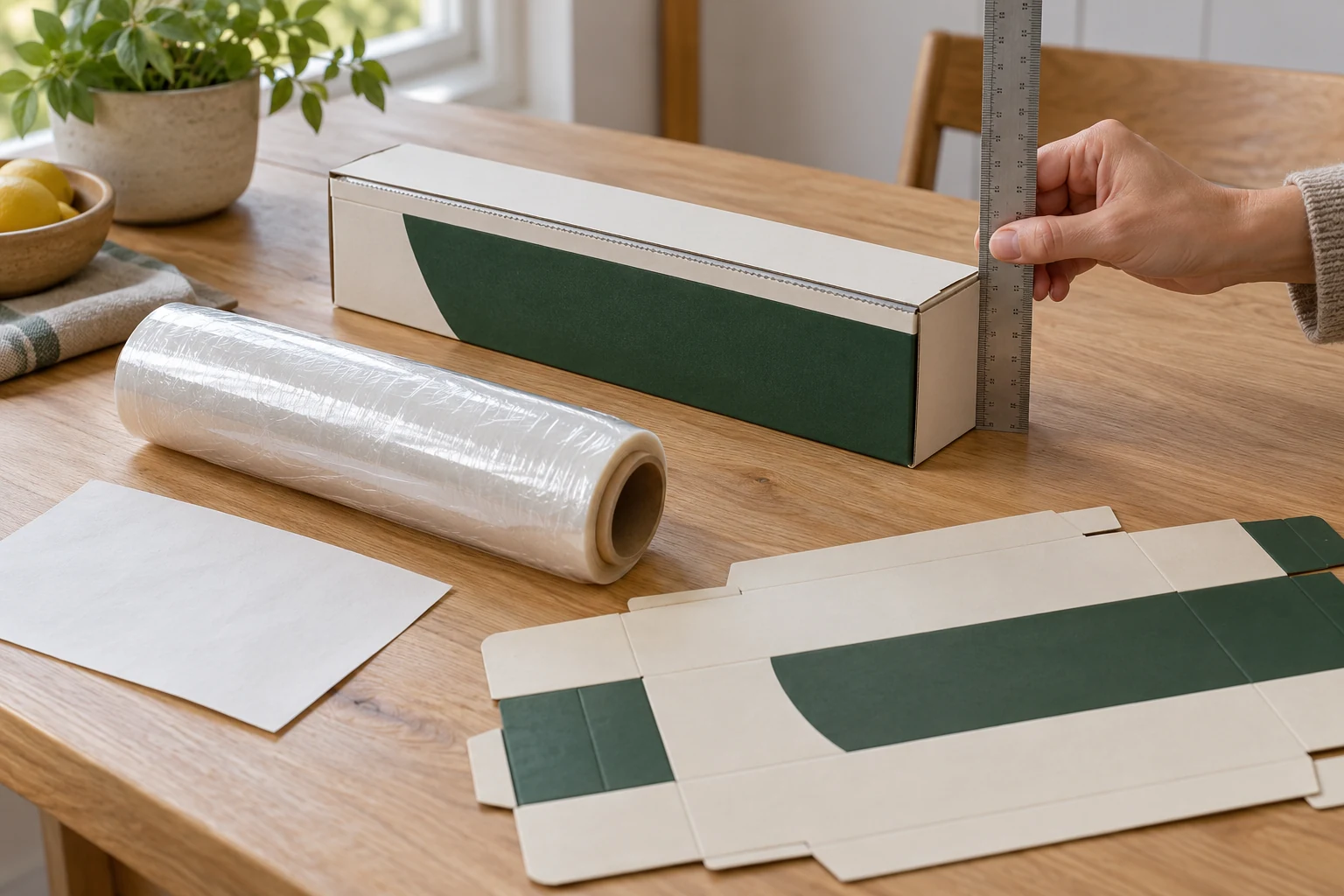
The buyer’s quick decision
- Choose the market and sales channel before writing front-of-box claims.
- Identify the film, core, box and cutter separately in the project specification.
- Ask what the evidence covers and who can authorize the mark.
- Request minimum quantities by film specification, printed box and finished SKU.
- Approve a production-intent pack before releasing the bulk order.
If you are still selecting the format, start with the compostable cling film range and the refill roll versus cutter box guide. This article covers the next decision: turning that format into a private-label SKU that your buying, packaging and quality teams can approve.
In this guide
- The 2026 packaging claim check
- Certification evidence and brand permissions
- Define the complete private-label pack
- Build an artwork file that can be approved
- Ask for MOQ and lead time by approval stage
- Approve the sample and send a usable RFQ
- Frequently asked questions
The 2026 packaging claim check
The EU’s Empowering Consumers for the Green Transition Directive, Directive (EU) 2024/825, sets an application date of 27 September 2026. The Commission explains that the amended rules concern business-to-consumer communications, including environmental claims on packaging, and also cover existing stock. For an own-brand retail roll, the box is therefore part of the review. The rules address how products are presented; they do not themselves make a film compostable. 1
The adopted rules prohibit generic environmental claims without recognised excellent environmental performance relevant to the claim. They also prohibit sustainability labels without the required certification-scheme or public-authority basis, and claims about a whole product that only concern one aspect. 2
Our procurement recommendation: review packaging claims before ordering printed cartons. Confirm the target country’s implementing rules with the person responsible for market compliance.
A useful review starts with the exact words, rather than a folder named “certificates”:
| Proposed artwork element | Question to resolve before printing | Approval record to request |
|---|---|---|
| “Eco-friendly” or “green” | Is this a generic claim, and is the required basis available? | Market-specific assessment of the exact wording |
| A compostability statement about the film | Which finished item, conditions and certification scope support it? | Matching product reference, evidence and approved qualification |
| A claim beside a photograph of the whole pack | Could readers think it covers the box, core and cutter too? | Component-by-component claim scope |
| A certification logo | Does the brand have permission for this product and artwork? | Applicable licence or authorization and current mark files |
| A food-contact statement | Which uses and conditions does the documentation support? | Applicable regulatory basis and relevant supporting records |
These are review questions, not pre-approved label copy. A narrow statement still needs evidence and a clear presentation.
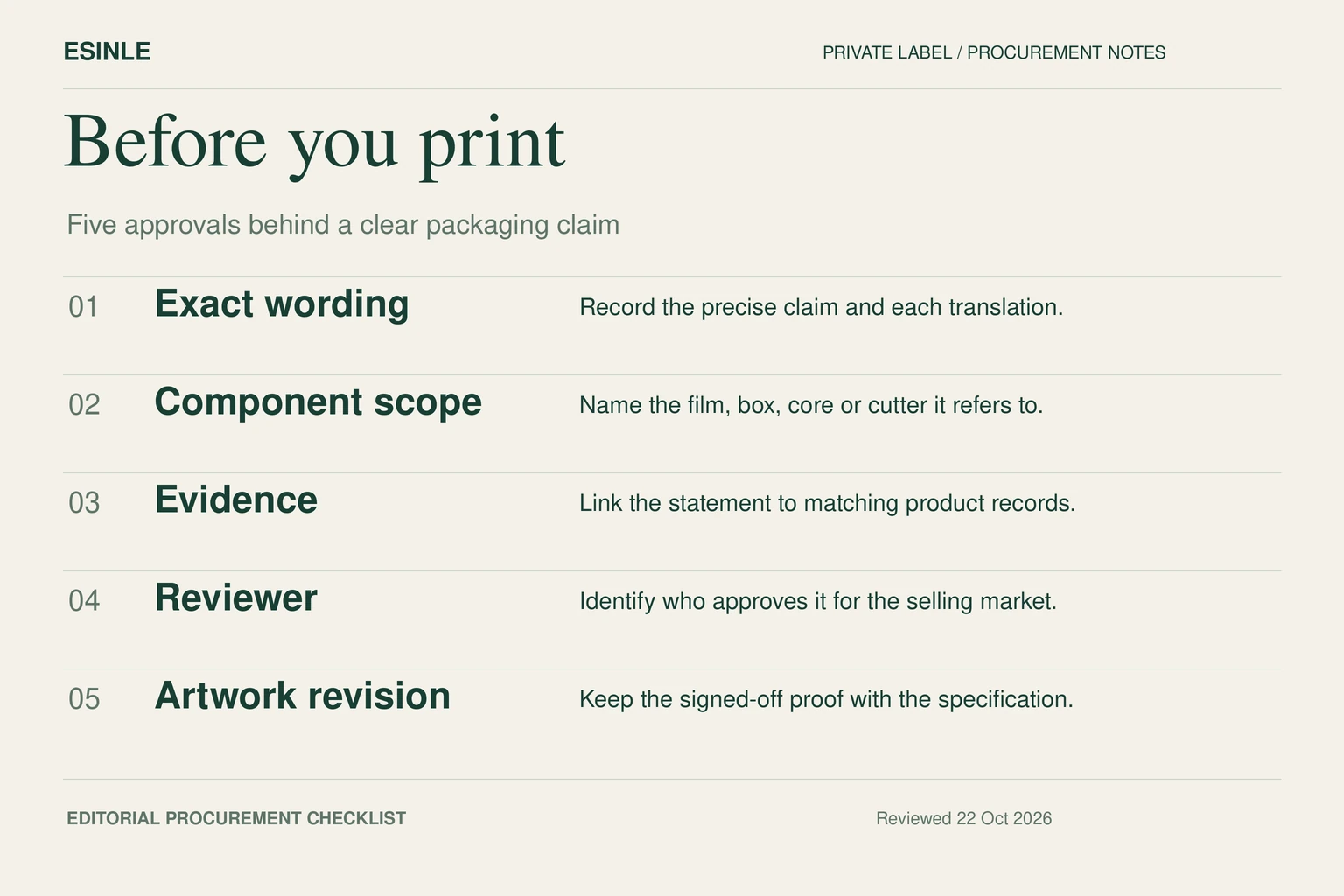
Create a claim register with five fields: exact wording, component covered, supporting document, reviewer and approved artwork revision. Include translations in the same register. A carefully qualified English claim should not become a broader claim when the carton is translated.
Certification evidence and brand permissions
A supplier’s evidence file and your right to print a certification mark are separate checks.
For example, BPI’s sublicensing guidance requires the selling brand to have the appropriate certification or sublicense to use its mark. Its FAQ distinguishes finished products from certified resins, film feedstock and other intermediates; those materials do not automatically make a downstream product eligible for private-label resale. Confirm how the exact retail roll is classified and covered. BPI also says customer modifications, including printing, must be notified in advance. 3
BPI’s process includes confirmation of product and packaging artwork before sublicensing is complete. Preliminary watermarked mark files are for design review; official files follow completion of the required process. Do not treat a downloaded logo as production authorization. 4
That example describes BPI’s process. It does not establish that a particular ESINLE SKU holds certification, that another programme has identical rules, or that a mark alone satisfies every target-market requirement. Request the applicable route for the exact proposed product.
Keep food-contact approval as a separate workstream. For US projects, FDA explains that food-contact components need a lawful basis for their intended use; an effective Food Contact Notification is specific to the identified manufacturer and substance. A compostability certificate does not answer that question. 5
For the wider evidence request, use the compostable cling film document checklist. The private-label task is to connect those records to the SKU, brand and artwork revision being ordered.
Define the complete private-label pack
“Put our logo on your standard roll” leaves several decisions open.
Specify what the customer will receive and how they will use it. A retail cutter box has a different approval task from a refill roll sold into an existing dispenser. A new box width, roll diameter or cutter arrangement can affect both pack fit and the user experience.
Build the specification around the complete sellable unit:
| Part of the project | What to define | Who should confirm it |
|---|---|---|
| Film roll | Width, length, gauge, tolerances, winding direction and intended use | Buyer and supplier technical team |
| Core and roll fit | Core dimensions, maximum roll diameter and dispenser interface | Packaging or operations owner |
| Printed box | Dieline revision, board specification, language and finish | Brand and packaging owner |
| Cutter or dispenser feature | Construction, placement, instructions and performance criteria | Quality and product owner |
| Outer carton | Units per carton, shipping marks, handling and destination needs | Logistics owner |
| Claims and artwork | Exact wording, evidence links, mark permissions and revision | Brand and market-compliance owner |
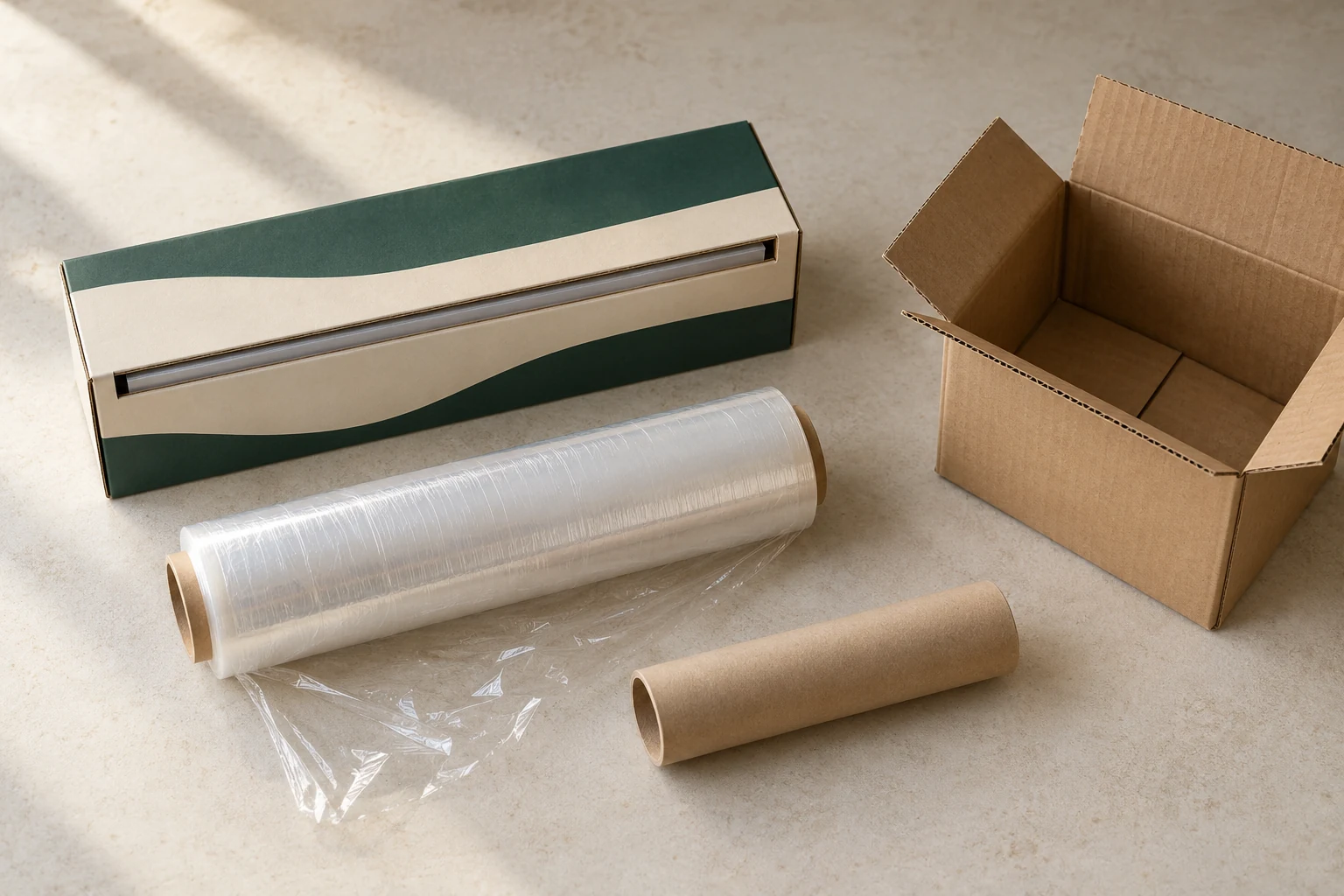
Use the cling film specification guide for the dimensional definitions. Keep one agreed specification with a revision number; asking different suppliers to quote different assumptions makes the price comparison unreliable.
If your team already uses a reference box or dispenser, send photographs and measured dimensions with the brief. State whether it is a compatibility requirement, a visual reference or simply an example of the format. A photograph alone cannot define the inside clearance or cutter position.
Keep optional treatments separate from required features. For example, request a base carton and a second quotation for an additional finish. That makes it easier to see what the design choice changes before the team commits to it.
Build an artwork file that can be approved
The first packaging PDF is a proposal. It becomes a production instruction only after the relevant owners approve it.
Start with the converter’s current dieline. Ask which layers show cut lines, creases, glue areas and safe zones. Confirm the print process and file requirements before spending time on finishing details.
A practical artwork handover should contain:
- A SKU code, file name and revision that also appear on the quotation.
- The approved dieline, with structural and printable areas identified.
- Final copy in every required language, including use and disposal instructions.
- Claims linked to their evidence and any required mark authorization.
- Brand assets, colour references and the agreed print or proof standard.
- The correct barcode artwork and a plan for checking it on the physical pack.
For barcodes, GS1 highlights factors including the check digit, clear spaces around the symbol, contrast, symbol size, height and positioning. Check the final printed pack: a code that looks fine on a screen can be compromised by a fold, seam or poor print quality. 6
Do not fill a mock-up with a plausible-looking barcode or certification number. Use the brand’s properly assigned product identifier and authorized artwork when the project reaches that stage.
Assign approval responsibilities explicitly. Marketing can approve tone and colour, while quality checks intended-use copy and packaging confirms structure. If one person coordinates the project, record whose decisions they are collecting. “Approved by the buyer” should have an identifiable meaning.
Store the approved proof and the matching specification together. If a revision changes the roll dimensions, claims, cutter instructions or language, reopen the affected checks. A new PDF should not quietly inherit approvals given to an earlier design.
Ask for MOQ and lead time by approval stage
MOQ: ask what quantity the minimum applies to
A single minimum-order number can hide the decision you need to make.
Ask the supplier to separate the minimums or constraints associated with the film specification, printed carton, packing operation and finished SKU. Confirm whether languages, artwork versions or roll sizes require separate quantities. Do not assume several designs can share a production run.
For a first order, request two comparable options:
- An available film specification with private-label packaging, if technically and commercially feasible.
- A fully customized film and pack specification.
For each option, ask which specification changes, setup charges, tooling or unused packaging stock are included. Request a unit basis that your team can reconcile: rolls, retail packs, cartons or film weight.
Then compare the total commitment, including any packaging inventory you must own. A lower price per roll may come with a larger printed-box commitment. That can be reasonable, but it should be visible in the quotation.
Lead time: agree on the event that starts the clock
“Production takes a few weeks” is incomplete if the box artwork, evidence route or sample is still open.
Ask for a dated schedule that shows dependencies and the conditions behind each estimate. Some work may run in parallel, but a team should not mistake a provisional plan for a released production slot.
| Stage | Evidence that the stage is complete | Scheduling question |
|---|---|---|
| Brief and format | Agreed SKU specification and market | Which open decisions prevent a firm quotation? |
| Claims and permissions | Required evidence and artwork permissions resolved | Is any external review on the critical path? |
| Artwork and structure | Approved dieline and final proof | What change would require a new proof or tooling? |
| Sample approval | Written acceptance against agreed criteria | Is the sample representative of the bulk pack? |
| Production release | Written release and agreed commercial prerequisites | When is the production slot confirmed? |
| Shipment | Inspection release and shipping documents | Does the estimate include transit and customs? |
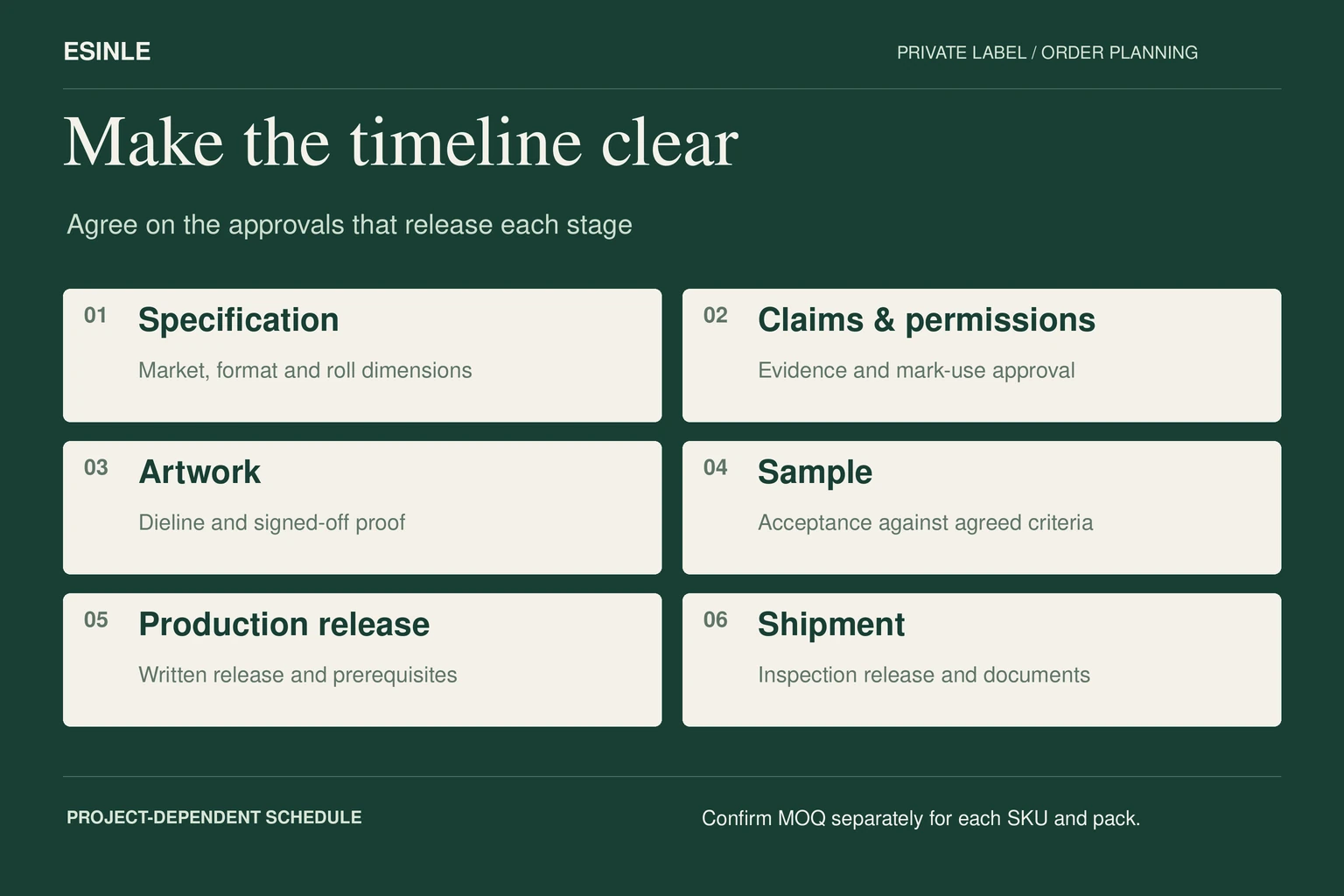
Use this table to request project dates, not as a promise of a standard timeline. Ask the supplier to identify the slowest unresolved dependency and its owner.
If the launch date is fixed, distinguish the requested warehouse arrival date from the factory dispatch date. Work backwards with logistics and allow the supplier to explain what remains provisional. Record the next decision and its due date after each review.
Approve the sample and send a usable RFQ
Test the pack your customer will receive
A loose film sample can help assess the material, but it cannot prove that the finished retail pack works.
For the final approval, request a production-intent sample or document clearly which features are still representative only. Check roll fit, lid movement, film access, cutter operation, copy legibility, barcode readability and carton handling against written criteria.
Use your actual operating conditions within the documented intended use. The cling film performance test guide provides the broader evaluation framework; there is no need to repeat every test when the unresolved issue is the box.
Record the outcome as accepted, accepted with stated conditions, or requiring revision. Identify the sample and artwork revision being assessed, attach photographs where useful, and list any remaining differences from bulk production. Agree which changes require another sample.
Retain the approved reference and define how production will be checked against it. If the sample used a temporary cutter or a manually assembled carton, record how the final construction will be verified before shipment.
Copy this private-label RFQ brief
A useful inquiry lets the supplier identify missing decisions before offering a price. Complete what you know and mark the rest “to be confirmed.”
- Selling market and channel: countries, retail or foodservice, and languages.
- Product format: cutter box, refill roll or another specified format.
- Film specification: width, length, gauge, tolerances and required roll dimensions.
- Intended use: food types, relevant contact conditions and operating limits to verify.
- Branding scope: box artwork, on-film print if requested, outer carton and instructions.
- Claims and marks requested: exact proposed wording and programme, with current evidence status.
- Quantity: initial quantity per SKU, number of artwork versions and expected repeat demand.
- Sampling need: material evaluation, structural pack or final production-intent sample.
- Timing and destination: required arrival date, delivery location and quotation basis.
- Attachments: specification revision, reference-pack measurements and available artwork.
Ask the supplier’s response to separate confirmed facts, assumptions and items that need review. Request the applicable MOQ, evidence route, sample plan, included costs and schedule dependencies for each proposed option.
If you are comparing broader custom packaging projects, the custom compostable packaging RFQ checklist provides the wider brief. Keep this cling film specification as the product-specific attachment.
Frequently asked questions
Can we put a compostability logo on our own-brand cutter box?
Only after confirming the exact product coverage and the permission required by that programme. A supplier’s certificate or a logo copied from another pack is insufficient evidence of your brand’s rights. BPI, for example, has a defined private-label sublicensing process. 3
Do the EU’s September 2026 rules only affect newly printed boxes?
No. The Commission’s Q&A includes existing products and old-stock packaging in its explanation of the rules’ application. Review current artwork as well as new print orders, and assess any corrective action for the relevant market. 1
Does a compostable film claim cover the core, box and cutter?
Do not assume it does. Identify the component covered by the evidence and check the impression created by the artwork. Record separate claims and disposal instructions for components where appropriate.
What is the MOQ for private-label compostable cling film?
Request a project-specific quotation. The relevant minimum may depend on film specification, box printing, packing and the number of SKUs. Ask what each minimum applies to and whether different artwork versions can share any part of the order.
How long does a private-label order take?
A useful estimate states its starting conditions and separates artwork, evidence review, sampling, production and shipment. Ask which approvals must be complete before the quoted production period begins, and distinguish dispatch from arrival.
Does compostability certification establish food-contact suitability?
No. Review food-contact documentation separately for the material, market and intended conditions of use. For US projects, check the applicable lawful basis rather than relying on a broad “FDA approved” statement. 5
Ready to brief your private-label cling film project?
Send ESINLE your target market, preferred roll format, initial quantity per SKU and available artwork. Identify the claims or certification marks you want to use, including anything still under review.
Ask for a response that clarifies the feasible specification, applicable evidence, MOQ basis, sample requirements and approvals needed before production. That gives your team a practical basis for deciding the next step.
Sources and scope
The workflow recommendations above are editorial procurement guidance. Regulatory statements use the official sources below. Product-specific claims, certification status, mark permissions, MOQ and dates require confirmation for the proposed SKU and selling market.
[1] European Commission, Questions and Answers on Directive (EU) 2024/825, especially questions 4 and 18.
[2] Council of the European Union, Empowering consumers for more sustainable choices, section “Protection against unfair practices.” Directive (EU) 2024/825 is the underlying legislation.
[3] BPI, Sublicense FAQs.
[4] BPI, Sublicensing Requirements and Forms, including artwork confirmation and mark-file requirements.
[5] US Food and Drug Administration, Determining the Regulatory Status of Components of a Food Contact Material.
[6] GS1, What should I check to ensure good quality barcodes?.